




Symptoms of a Ruptured Spleen


The spleen often goes unnoticed until something goes wrong. It’s an organ that plays a vital role in filtering blood, recycling old red blood cells, and fighting infections s a key component of the lymphatic system. While the body can live without a spleen, the organ itself is delicate and highly vascularized, meaning it’s filled with blood. Because of its fragility and rich blood supply, a spleen injury can quickly become a life-threatening emergency.
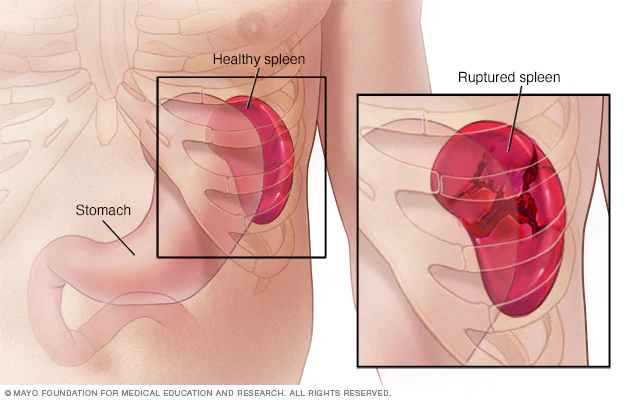
A ruptured spleen or splenic rapture occurs when the surface of the spleen is torn, allowing blood to leak into the abdominal cavity. This calls for immediate medical attention as the internal bleeding can be rapid and severe. A rupture can occur due to an accident or an underlying medical condition. Understanding the cause can help save lives.
Overview
The spleen is a small organ found in the upper left quadrant of the abdomen under the ribcage. It’s soft, spongy, and purple in color.
The spleen acts as the body’s blood filter. It removes old and damaged red blood cells from circulation and stores a reserve of blood that can be released in cases of severe blood loss or shock. Furthermore, it produces lymphocytes (white blood cells), which are essential for fighting off bacteria infections. Because the spleen is encapsulated and filled with blood vessels, any damage to its surface can lead to significant internal hemorrhage.
Common Causes of Raptured Spleen
Physical force is the most common cause of a spleen rupture. However, medical conditions can cause the organ to swell and become fragile.
Traumatic Injury
Most splenic ruptures result from blunt force trauma to the abdomen. Common causes are:
- Motor vehicle accidents
- Contact sports like football, rugby, hockey, or lacrosse
- Physical assaults
- Bicycle accidents
Spontaneous Rapture
In some cases, though rare, the spleen can rupture without any external traumas. This happens when the spleen becomes enlarged. An enlarged spleen has a stretched thin capsule, which makes it more susceptible to tearing. Factors that cause spontaneous rupture include:
- Liver disease: Cirrhosis and other liver conditions can lead to a backup of blood flow, leading to an enlarged spleen.
- Infectious Mononucleosis (Mono): Caused by the Epstein-Barr virus, mono is a common cause of spleen enlargement in young adults.
- Blood Cancers: Leukemia and lymphoma can cause leukemic infiltration of the spleen, causing it to swell and weaken.
Other infections like malaria, tuberculosis, and endocarditis can also cause a rupture.
Sigs and Symptoms of a Raptured Spleen
The symptoms of a ruptured spleen can manifest immediately after a trauma or, in the case of a delayed rapture, days or even weeks later.
Abdominal Pain and Tenderness
Pain is the most common sign. It usually starts in the left upper quadrant (LUQ) of the abdomen. The area may also be tender to the touch.
Kehr’s Sign
The Kehr’s sign is the classic symptom of a ruptured spleen. This refers to pain that’s felt in the left shoulder tip, even when there’s no injury to the shoulder. It occurs because blood from the spleen irritates the diaphragm, and the phrenic nerve shares nerve roots with the shoulder. This type of pain is a strong indicator of internal bleeding.
Symptoms of Hypovolemic Shock
As the spleen bleed internally, the body loses blood volume, which leads to hypovolemic shock. This is a medical emergency that’s characterized by:
- Rapid heart rate
- Pale, clammy, or cold skin
- Low blood pressure
- Dizziness or lightheadedness
- Fainting
- Confusion or anxiety
Delayed Symptoms
Sometimes, a delayed splenic rupture can occur. A small injury might form a hematoma (a collection of blood) that remains contained for days. When the hematoma eventually expands and breaks through the capsule, sudden symptoms appear. This is why monitoring after abdominal trauma is essential.
Treatment Options for Raptured Spleen
Treatment for a ruptured spleen has evolved significantly over the last few decades. Surgery is no longer the only option as modern medicine prioritizes saving the spleen whenever possible due to its immune functions.
Non-Surgical Management
For low-grade injuries in patients with normal blood pressure and heart rate, non-operative management is the standard of care. It includes:
- Hospital observation, where the patient is admitted to the ICU or a monitored bed.
- Strict bed rest to prevent further injury.
- Monitoring of vital signs and hemoglobin levels to ensure bleeding has stopped.
- Interventional radiology where a catheter is inserted into the splenic artery to block the bleeding vessel.
Surgical Intervention
This is done if the patient is unstable, has high-grade injuries, or non-surgical management fails. It includes:
Splenectomy: This is the complete removal of the spleen. It’s often performed laparoscopically (using small incisions and a camera) if the patient is stable, or via open surgery (laparotomy) in emergency trauma situations. The body can function without the spleen, but the immune system is compromised.
Splenorrhaphy: This is the surgical repair of the spleen rather than removal. Specialists use sutures, mesh wraps, or topical agents to stop the bleeding and preserve the organ. It’s most preferred in children, whose immune systems rely heavily on the spleen.
When to Seek Medical Attention
If you have experienced any trauma to the abdomen even if it seems minor, or if you have a current infection like mononucleosis, you must seek emergency care immediately. Also, when you experience:
- Severe pain in the upper left side of the abdomen
- Signs of shock, including confusion, dizziness, or fainting
- Pain in the left shoulder
- Abdominal distension or rigidity
Conclusion
A ruptured spleen is a serious and potentially fatal injury, but with prompt diagnosis and treatment protocols, the prognosis is excellent. Whether the injury results from an accident, a sports collision, or underlying illness, the key to recovery is speed. Recognizing the symptoms and getting toa trauma center can make the difference between life and death.
Frequently Asked Questions
How long before a ruptured spleen heals?
The spleen may take up to three months to heal. It’s important to take enough rest to let it heal.
Can a person live without a spleen?
Yes. One can live without a spleen. Once the spleen is removed, however, you have an increased susceptibility to infections.
Can the spleen grow back after removal?
If part of the spleen has been removed, it may regenerate. However, if you undergo splenectomy, where the whole spleen is removed, it will not regenerate, but many functions of the spleen are taken over by other organs.
