




Tinnitus: Causes, Symptoms, and Treatment


Hearing a ringing, buzzing, or hissing sound when the room is quiet can feel unsettling. Most likely, this is tinnitus—a sound you hear that isn't coming from anything outside your body. For some people it's brief, like a passing ping. For others, it hangs around and starts to wear on sleep, focus, and mood.
Tinnitus isn't a disease by itself, but rather a symptom. It’s often a signal that something in the ear, nerve pathways, or brain sound processing needs attention. The good news is that many causes are treatable, and even when the sound doesn't fully go away, it can often become much less bothersome.
What Causes Tinnitus
Tinnitus can start in a few places. It can begin in the ear, for example, blockage or inner-ear damage. Other times it is linked to the hearing nerve. In many cases, the brain turns up internal volume when it isn't getting a clean sound signal, which can create a phantom noise.
It’s due to this reason that two people can both have tinnitus, yet describe it in totally different ways. One person hears a high, steady ring. Another hears a low hum, or a hiss like steam. Also, tinnitus can be temporary after loud noise, or it can become chronic.
Most tinnitus cases are not dangerous, but sudden tinnitus, tinnitus in only one ear, or tinnitus with sudden hearing loss should be checked promptly.
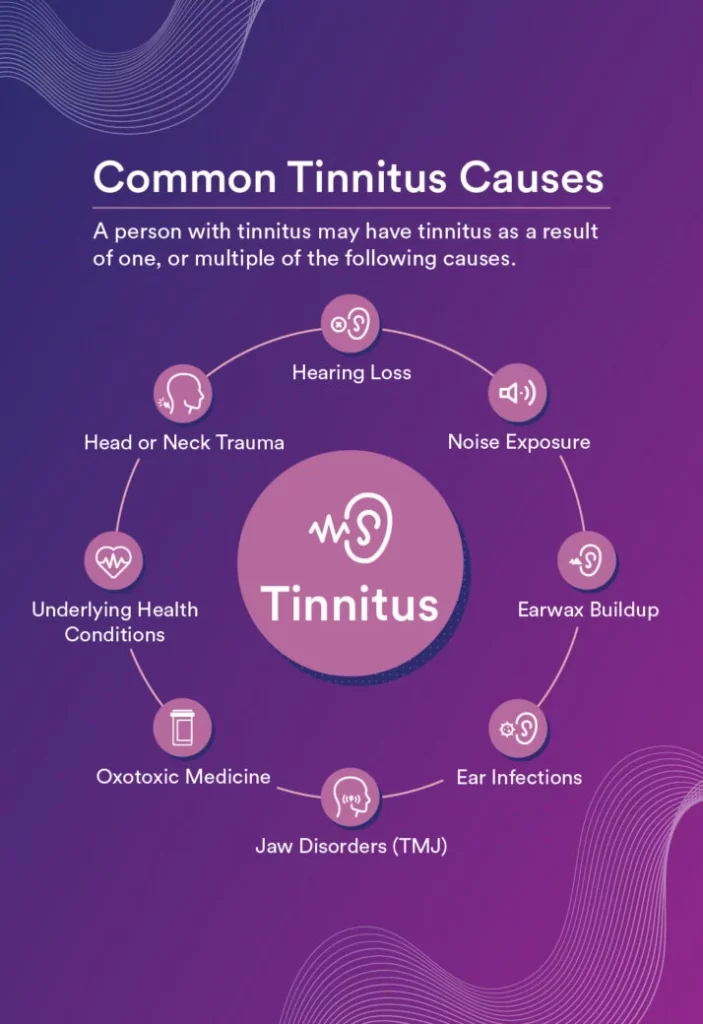
Common Causes
There a few known causes of tinnitus:
- Hearing loss, including age-related changes.
- Noise exposure
- Earwax blockage
Noise exposure can happen after one loud event, or after repeated exposure over time. And while earwax blockage is an often-overlooked cause, it's one of the more fixable ones.
Other Causes to Know
- Short-term ear problems, like ear infections or fluid behind the eardrum.
- Otosclerosis or bone changes in the middle ear can play a role.
- Jaw tension: Problems with the TMJ (the jaw joint) can refer pain and sound sensations to the ear area. Some people notice their tinnitus changes when they clench their jaw or chew.
- Head or neck injuries: Especially if they affect nerves or blood flow.
- Health conditions, including diabetes and Ménière's disease, can also be possible causes of tinnitus.
- Medications: Some people report tinnitus with certain antibiotics, high doses of NSAIDs like ibuprofen or aspirin, and some antidepressants.
Don't stop a prescription medication on your own. Instead, talk with the clinician who prescribes it, because the risk of stopping may be higher than the tinnitus itself.
Symptoms, Patterns, and Red Flags
Tinnitus doesn't always behave the same way each time. It can be persistent or come and go. It may show up in one ear, both ears, or feel like it's in your head. Many people notice it more at night, because quiet rooms make the sound stand out.
Stress, poor sleep, and noise exposure can also make tinnitus feel louder. This doesn’t mean that it’s in your head, it means that your nervous system is more on edge, so your brain pays more attention to the sound.
Tinnitus can also affect daily life. Some people report trouble falling asleep, difficulty focusing, or feeling irritable. If you experience any of these, it’s important to mention them during your doctor’s appointment as it will guide treatment.
Red Flags
Some symptoms call for faster medical review and include:
- Pulsatile tinnitus: A sound matching the heartbeat. It can be harmless, but it can also relate to blood flow changes, so it deserves evaluation.
- Sudden hearing loss, with or without tinnitus.
Other red flags include sudden hearing loss, severe dizziness (vertigo), new weakness or numbness, head injury, or fever with ear pain and drainage.
For a practical medical summary of symptoms and when to seek care, see Cleveland Clinic's tinnitus guidance.
Tinnitus Treatment Options
A good tinnitus plan usually has two parts. First, treat the underlying cause when possible. Second, reduce how much the sound grabs your attention and disrupts life.
That second part matters because tinnitus isn't only about the ear. The brain's threat system can latch onto the sound and keep it front and center. When treatment lowers stress and improves sleep, many people notice the tinnitus fades into the background more often.
Treat the underlying cause first
Sometimes the fix is straightforward. Removing impacted earwax can improve hearing and quiet tinnitus for some people. Treating an ear infection or fluid can also help.
If tinnitus is a result of taking certain medication, a review might be helpful. Your doctor can discuss safer dosing, timing changes, or substitutes when appropriate.
Managing health conditions can reduce triggers too. Bringing blood pressure under control, stabilizing blood sugar, or addressing anemia can make a difference for certain people. If jaw tension or TMJ issues seem involved, dental evaluation, physical therapy, or a night guard may reduce symptoms.
Managing the Symptoms of Tinnitus
If you are experiencing hearing loss, hearing aids can be of great help. Many modern devices include built-in tinnitus sound features.
Sound masking is another practical tool. A fan, white-noise machine, nature sounds, or soft music can make tinnitus less noticeable, especially at bedtime. Silence often makes tinnitus feel louder, so gentle background sound can help your brain relax.
Conclusion
Tinnitus is common, and it often connects to hearing loss, noise exposure, or fixable ear issues. Even when the sound doesn't fully disappear, the right plan can make it much less intrusive and restore a sense of control.
Frequently Asked Questions
How long does tinnitus last?
If it is caused by a loud noise, tinnitus symptoms will usually go away after 16 to 48 hours, although in some cases they can last up to a few weeks. If it’s due to an ear infection, tinnitus will last until the infection has cleared.
Is it okay to leave tinnitus untreated?
Most of the time, tinnitus is temporary. But when the ringing in the ears continues for several weeks, it can become unbearable. Whether it’s hearing-related or there’s another factor at play, it’s important to see a healthcare provider, especially if the symptoms lasts more than two weeks.
Will I go deaf if I have tinnitus?
Tinnitus doesn’t affect your hearing. However, it may affect your ability to focus and your attention span.
