




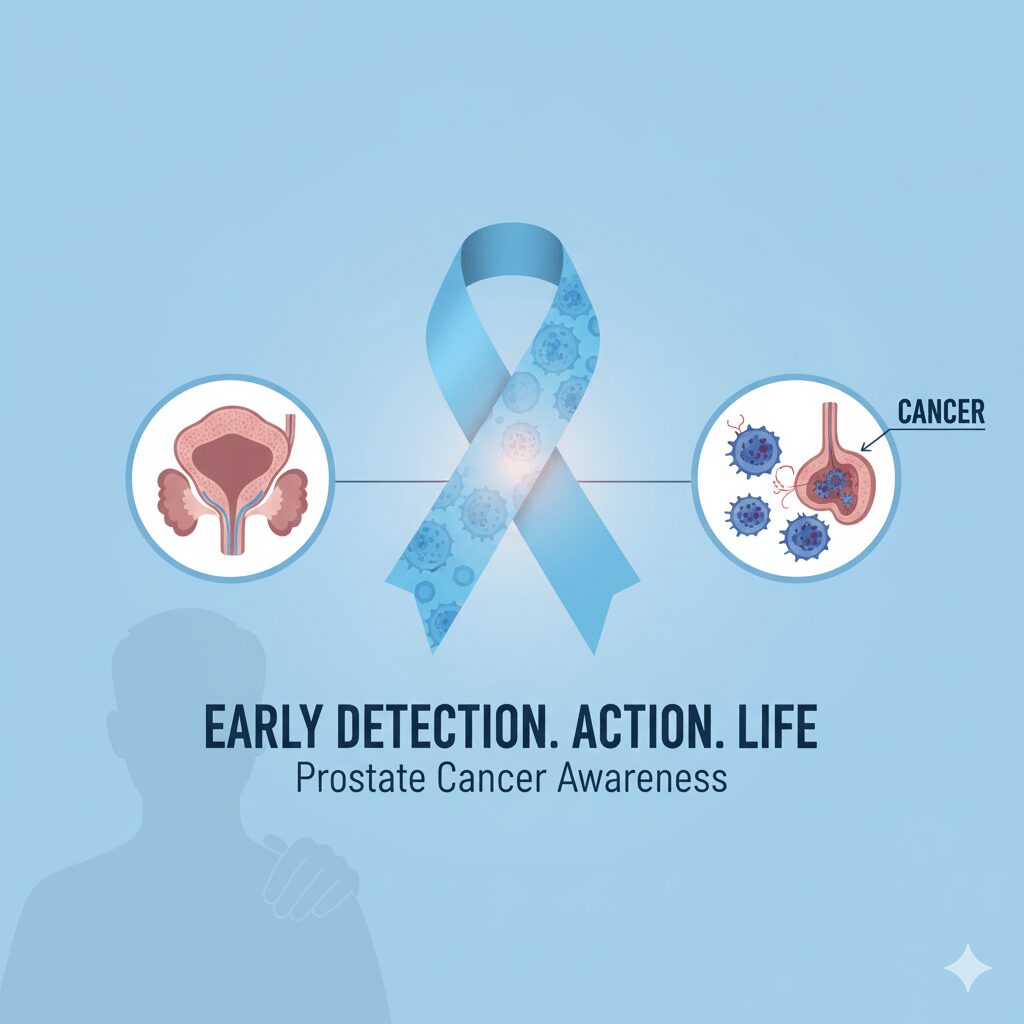
Prostate Cancer


Prostate cancer often develops silently. Like any other type of cancer, it shows little to no symptoms until it is in its advanced stages. But with the proper awareness and routine screening, thousands of lives can be saved before the disease ever gets a chance to grow.
What is Prostate Cancer?
As a type of cancer, prostate cancer develops in the prostate gland. The prostate gland is a small, walnut-sized organ in the male reproductive system that produces seminal fluid. This condition is one of the most common cancers among men, especially those over 50. [1]
This type of cancer is most common in men of older age, because it’s a strong risk factor. As men age, cell changes and the risk of developing cancerous cells in the prostate increase significantly. Other factors include family history and ethnicity.
The disease is characterized by the uncontrollable growth of abnormal cells that form tumors. They can be either slow-growing or aggressive.
Typical forms of prostate cancer are:
- Slow growing. Many of these conditions are slow-growing and may not cause significant problems for years. This can sometimes be managed with active surveillance.
- Some forms are aggressive. They grow and spread more quickly. These forms require more urgent treatment options like radiation therapy, surgery, or chemotherapy.
Raising awareness about prostate cancer is essential because, in its early stages, it often presents no symptoms. This lack of warning signs makes regular screening and early detection vital for effective treatment and improved outcomes.
Recognizing how this condition develops leads us to the next crucial point, spotting the signs early.
Signs and Symptoms
Even though this condition does not present signs and symptoms in its early stages, there are warning signs to look for, primarily in its advanced stages.
Here are some of the common symptoms to look for: [2]
- Difficulty starting to urinate
- Interrupted urine flow
- Pain during urination
- Needing to urinate frequently
- Blood in the urine
- Pain during ejaculation
Symptoms in its advanced stage include:
- Unexplained weight loss
- Swelling in the lower body
- Bone pain
- Persistent pain in the back, hips, or chest
- Fatigue
Because symptoms can be subtle, it is vital to understand the risk factors that may increase your chances.
Risk Factors
Several factors put you at risk of the disease. Lifestyle behaviors and environmental factors primarily influence these risks.
The main risk factors include: [3]
- Age
- Family history
- Genetics
- Race
- Ethnicity
- Obesity
- Smoking
- Unhealthy diet
- Chemical exposure
While knowing your risk is essential, regular screening is what truly enables early detection.
Importance of Screening
Prostate screening can be done through tests and physical examinations. The most commonly used screening methods are the PSA blood test and the digital rectal exam (DRE).
PSA is a screening test that measures the level of prostate-specific antigen, a protein produced by the prostate. This can indicate an issue with the prostate, such as infection or cancer.
However, there is a limitation to the PSA blood test. There is no single PSA number that confirms cancer.
DRE is a physical examination done by your healthcare provider. Your doctor inserts a lubricated, gloved finger into the rectum to feel the prostate gland for any abnormalities.
The primary limitation of DRE is that the procedure can only feel a portion of the prostate and is not a standalone screening tool. It can miss some prostate cancers. But it can still detect aggressive cancers in men with normal PSA levels.
Through regular screening, early detection becomes crucial. Early detection helps achieve higher cure rates, thereby increasing survival. It is also associated with the administration of fewer, less invasive treatment options, thereby reducing the risk of side effects.
If prostate cancer is detected, several effective treatment options are available.
Treatment Options
The stage of your condition will significantly influence the treatment options. For an early stage, your healthcare provider can recommend less invasive treatment.
But if the condition is at an advanced stage, invasive procedures like chemotherapy become the most effective treatment options available.
Some of the available treatment options, whether invasive or less invasive, include:
- Surgery
- Radiation therapy
- Hormone therapy
- Stress individualized treatment plans
Along with medical treatment, lifestyle choices can support long-term health.
Prevention and Healthy Habits
Your lifestyle choices and environmental factors generally influence your health status. Other factors, such as genetics, also play a significant role.
Incorporating healthy habits into your daily routine can have a positive impact on your life and help keep disease at bay.
These tips can be helpful:
- Maintain a healthy weight
- Engage in regular exercise
- Healthy diet
- Limit smoking and alcohol
Protecting your health starts with awareness and action. Early action can save your life. Start today.
Sources
- Mayo Clinic. Prostate cancer - symptoms and causes. Mayo Clinic. Published 2024. https://www.mayoclinic.org/diseases-conditions/prostate-cancer/symptoms-causes/syc-20353087
- Cleveland Clinic. Prostate Cancer: Symptoms, Diagnosis & Treatment. Cleveland Clinic. Published January 17, 2023. https://my.clevelandclinic.org/health/diseases/8634-prostate-cancer
- CDC. Prostate Cancer Risk Factors. Prostate Cancer. Published February 23, 2024. https://www.cdc.gov/prostate-cancer/risk-factors/index.html