




STD Test


Talking about sexually transmitted diseases (STDs) is not exactly a dinner conversation. But here is the truth: if you are sexually active, getting tested for an STD is one of the most important steps you can take for your health.
It is easy and can save you and your partners from serious complications down the road. Whether it is your first time or you are just due for a checkup, understanding when, why, and how of STD testing can empower you to take control of your sexual health without fear or stigma.
What Are STDs?
A sexually transmitted disease is a serious infection that spreads through sexual contact, including oral or vaginal sex. STDs are caused by bacteria, viruses, or parasites. [1]
Common types of STDs include:
- Gonorrhea
- Chlamydia
- Syphilis
- HIV
- HPV
- Genital herpes
Some of these infections can be asymptomatic, meaning they do not show symptoms. This is why testing is crucial.
Notable symptoms include: [2]
- Painful or burning urination
- Discharge from the penis
- Sores or bumps on the genitals
- Pain during sex
- Odorous vaginal discharge
- Lower abdominal pain
Why Is STD Testing Important?
Early detection of sexually transmitted infections can prevent complications, as many infections do not have symptoms, so you may not be aware that you are infected and probably transmit the disease to another person, probably your sexual partner.
Frequent testing allows for early detection and treatment, which can prevent long-term health complications like infertility and can also protect your reproductive health.
Using condoms correctly and consistently during sexual activity is an effective way to prevent STDs.
If you happen to contract the infection, your medical expert recommends proper medication to manage your condition.
Other conditions like HIV have no cure. This should be the end of the road, as it can be managed with proper treatment. Antiretroviral therapy (ART) is commonly used to control the virus, prevent its progression to AIDs, and allow you to live a long, healthy life.
Studies have shown that ART has greatly reduced HIV to a chronic condition in many parts of the world, as it has led to a 60% to 80% decline in rates of AIDs, hospitalization, and death. [3]
When Should You Get Tested?
If you are a sexually active person, you should get tested every 3 to 6 months. This is crucial to understanding your overall health status.
Get tested if:
- You have unprotected sex
- Have a new partner or multiple partners
- Experience symptoms like pain, sores, or discharge
What Types of STD Tests are Available
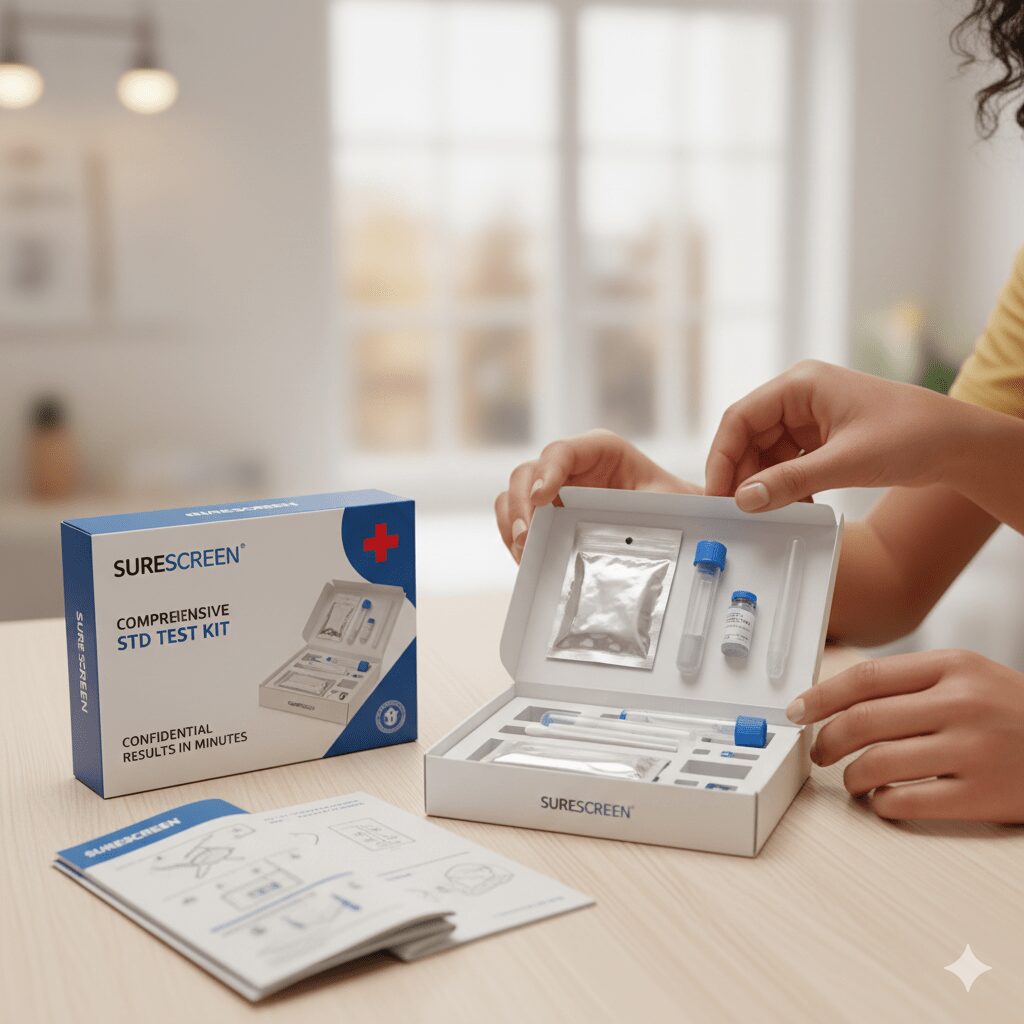
Common types of STD tests include blood, urine, and swab tests. In some cases, a physical examination or a more specialized test like a lumbar puncture may be used. At-home testing kits are also available.
- Urine tests. These tests are used to detect infections like chlamydia and gonorrhea
- Blood tests. Test for HIV, herpes, and syphilis
- Genital, oral, or rectal, depending on sexual practices
What to Expect During an STD Test
This is usually a quick, simple, and often painless process. Your healthcare professional will ask about your sexual history and might perform a physical examination. Testing involves collecting samples through blood, urine, or swab tests to check for infections.
However, the particular tests and sample collection method mostly rely on the types of STDs you are at risk for.
The results are, in most cases, instant. Some may take a few days.
Cost and Accessibility
The cost for testing an STD varies depending on the type of test, where you get it, and your insurance plans.
Accessibility options include low-cost or free clinics, primary care providers, and at-home testing kits.
You can find testing options near you through the CDC’s “Get Tested” website, contacting your local health department, or through private clinics.
What Happens If You Test Positive?
If you test positive for an STD, seek immediate medical attention to prevent long-term health problems. Also, inform your recent sexual partner or partners so they can be aware and get tested and treated. [4]
There are support services and counseling that help you live with the condition. This should be the end of the road, but rather an opportunity to stay strong and live your life normally by following your medical expert's guidelines.
Bottom Line
Normalize testing as part of regular health care. This can help you detect infections that can cause serious complications in the future if left unattended.
Encourage open communication with your partners and medical experts to better understand your overall health and prevent contracting the infections.
Ending stigma starts with knowledge and action.
Frequently Asked Questions
- Can you get tested anonymously?
Yes, a number of clinics and at-home test providers offer confidential STD testing.
- How often should couples get tested?
Couples should get tested before becoming sexually active together and then regularly every 3 to 6 months.
- Are STD tests accurate?
Yes, STD tests are highly accurate when done at the right time after exposure and with proper testing methods.
- Can I get tested while on my period?
Yes, you can get most STD tests while on your period, although some providers may recommend waiting for certain swab tests.
Ready to take control of your health? Find a local clinic or order an at-home STD test kit today.
Sources
- Mayo Clinic. Sexually transmitted diseases (STDs) - Symptoms and causes. Mayo Clinic. Published September 8, 2023. https://www.mayoclinic.org/diseases-conditions/sexually-transmitted-diseases-stds/symptoms-causes/syc-20351240
- MedlinePlus. Sexually transmitted infections. medlineplus.gov. Published June 26, 2024. https://medlineplus.gov/sexuallytransmittedinfections.html
- Kemnic TR, Gulick PG. HIV Antiretroviral Therapy. Nih.gov. Published September 20, 2022. https://www.ncbi.nlm.nih.gov/books/NBK513308/
- Cleveland Clinic. What Is STI Testing & Do I Need It? Cleveland Clinic. Published 2023. https://my.clevelandclinic.org/health/diagnostics/std-testing