




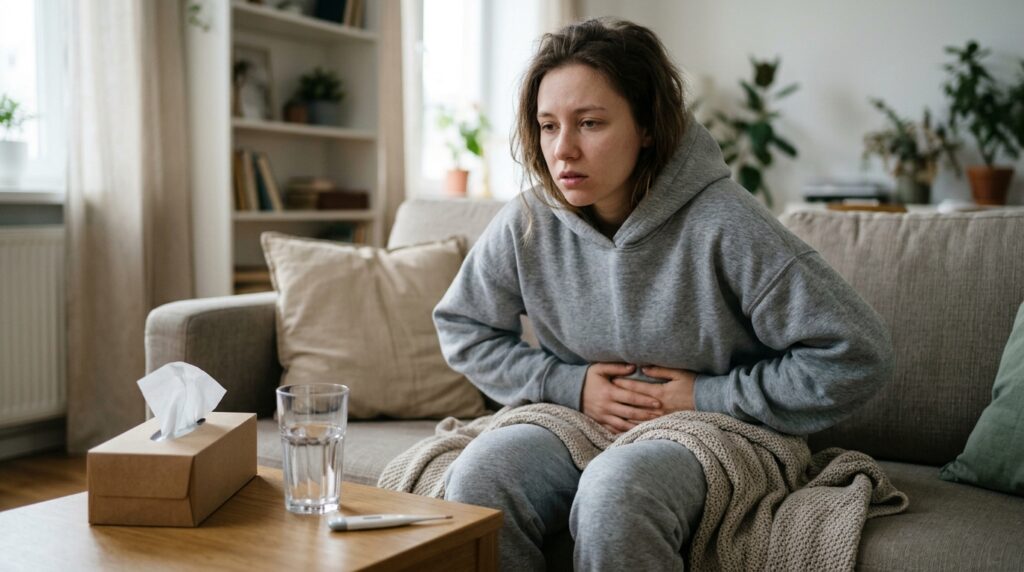
How Long Is Norovirus Contagious? Timeline, Prevention, and When to Return


Norovirus spreads extremely easily and can cause sudden vomiting, diarrhea, stomach cramps, and nausea. If you have recently been sick, you may wonder how long is norovirus contagious and when it is safe to return to work, school, or normal activities. People are most contagious while they have symptoms and during the first few days after they feel better. However, the virus can continue to be shed in stool for two weeks or longer after recovery.
Because vomiting and diarrhea can cause significant fluid loss, it is also important to recognize the signs of dehydration while recovering.
How Long Is Norovirus Contagious?
Norovirus is most contagious while you have symptoms and during the first few days after you recover. People can continue spreading the virus after they feel better because norovirus may remain in their stool for two weeks or more.
This does not mean that everyone remains equally infectious throughout that entire period. The greatest risk of transmission is generally around the illness itself and shortly afterward.
For practical purposes, you should take extra precautions even after vomiting and diarrhea have stopped.
When Are You Most Contagious?
Norovirus is particularly contagious when you are actively experiencing:
- Vomiting
- Diarrhea
- Nausea
- Stomach cramps
The virus is present in vomit and stool. Even tiny amounts can contaminate food, hands, surfaces, and objects.
The period immediately around symptom onset and the following few days is especially important for preventing transmission.
Can You Spread Norovirus Before Symptoms Start?
Yes. Norovirus can be present in vomit or stool before symptoms become obvious, although people are generally most contagious when they are sick and during the first few days after recovery.
This helps explain why norovirus can spread quickly through households, schools, workplaces, restaurants, and other shared environments.
Someone may not realize they are infected yet but can still contaminate their hands or surrounding surfaces.
How Long After Symptoms Stop Are You Contagious?
You should continue taking precautions after vomiting and diarrhea have stopped.
A commonly recommended practical rule is to stay home and avoid preparing food for other people for at least 48 hours after symptoms stop.
After that point, the risk is lower, but it is not necessarily zero because the virus can continue to be shed in stool for longer.
For people working with food, healthcare, childcare, or other settings involving vulnerable people, follow workplace and public-health guidance.
Can You Still Spread Norovirus After Two Weeks?
Norovirus can remain detectable in stool for two weeks or longer after recovery. However, detection of viral material does not necessarily mean that a person remains equally contagious throughout that period.
Good hygiene therefore remains important even after you feel completely recovered.
How Does Norovirus Spread?
Norovirus spreads when tiny particles of vomit or stool from an infected person enter another person's mouth.
Transmission can happen through:
- Contaminated hands
- Contaminated food
- Contaminated water
- Shared surfaces
- Objects
- Direct contact with an infected person
- Small droplets generated during vomiting
A person can become infected after touching a contaminated surface and then touching their mouth.
Norovirus can spread particularly quickly in enclosed or shared environments.
How Long Can Norovirus Live on Surfaces?
Norovirus can survive on surfaces for extended periods, which makes cleaning an important part of preventing household transmission.
High-touch areas may become contaminated, including:
- Bathroom fixtures
- Door handles
- Light switches
- Countertops
- Faucets
- Phones
- Remote controls
Regular cleaning alone may not always be enough after someone vomits or has diarrhea. Areas contaminated with vomit or stool should be cleaned and disinfected carefully.
Does Hand Sanitizer Kill Norovirus?
Hand sanitizer should not be relied upon as the primary method of preventing norovirus.
Soap and water are preferred. Wash your hands carefully after using the bathroom, changing diapers, cleaning contaminated areas, and before preparing or eating food.
Handwashing is particularly important because norovirus can be difficult to remove from the hands with alcohol-based hand sanitizers alone.
How Can You Prevent Norovirus From Spreading at Home?
If someone in your household has norovirus, take extra precautions.
Wash Your Hands
Use soap and running water and wash thoroughly, particularly after using the bathroom.
Avoid Preparing Food for Others
Do not prepare food for other people while you are sick and for at least 48 hours after symptoms stop.
Clean Contaminated Areas
Clean and disinfect surfaces that may have been exposed to vomit or stool.
Wash Contaminated Laundry
Clothing, bedding, towels, and other washable items contaminated with vomit or stool should be handled carefully and washed promptly.
Avoid Sharing Personal Items
Do not share food, utensils, towels, or other items that could become contaminated.
Can You Catch Norovirus More Than Once?
Yes.
There are multiple types of norovirus, and infection with one type does not necessarily provide long-term protection against others.
You can therefore become infected again, even if you have had norovirus previously.
This is another reason why careful hygiene remains important after recovery.
When Can You Return to Work or School?
For most people, returning to normal activities should wait until at least 48 hours have passed since vomiting and diarrhea stopped.
However, your workplace, school, childcare facility, or local health authority may have additional requirements.
If you work with food, children, older adults, or people with weakened immune systems, follow the specific guidance provided by your organization or public-health authority.
How Long Does Norovirus Usually Last?
Norovirus symptoms commonly begin suddenly and usually improve within a few days.
Typical symptoms include:
- Vomiting
- Watery diarrhea
- Nausea
- Stomach cramps
- Headache
- Body aches
- Low-grade fever in some people
The illness itself may be relatively short, but dehydration can become a concern when vomiting or diarrhea is significant.
What Should You Eat and Drink During Recovery?
The most important priority is replacing lost fluids.
Take frequent small sips if drinking a large amount at once makes nausea worse.
Depending on your symptoms, fluids may include:
- Water
- Oral rehydration solutions
- Broth
- Other suitable fluids
If vomiting continues, small amounts taken frequently may be easier to tolerate.
Severe dehydration can require medical treatment.
When Should You Seek Medical Care?
Contact a healthcare professional if symptoms are severe, prolonged, or getting worse.
Medical advice is particularly important if you have:
- Signs of significant dehydration
- Persistent vomiting
- Blood in stool
- Severe abdominal pain
- Very little urine
- Severe weakness
- Confusion
- Symptoms that are not improving
Young children, older adults, pregnant people, and people with certain chronic conditions can become dehydrated more quickly.
When Is Norovirus an Emergency?
Seek urgent medical care for severe dehydration, confusion, fainting, inability to keep fluids down, severe abdominal pain, or other serious symptoms.
If someone becomes extremely weak, difficult to wake, or shows signs of a serious medical emergency, seek immediate medical attention.
Conclusion
So, how long is norovirus contagious? The greatest risk of spreading norovirus occurs while you are sick and during the first few days after symptoms stop. Public-health guidance commonly recommends staying home and avoiding food preparation for others for at least 48 hours after vomiting and diarrhea have ended.
The virus can continue to be shed in stool for two weeks or longer, so good hand hygiene and careful cleaning remain important after recovery.
If you have had significant vomiting or diarrhea, pay attention to signs of dehydration and replace lost fluids carefully. Seek medical advice if you cannot keep fluids down, have very little urine, develop severe weakness or confusion, or have other concerning symptoms.
Frequently Asked Questions
How Long Is Norovirus Contagious After Symptoms Stop?
People are most contagious while sick and during the first few days after recovery. It is recommended to stay home and avoid food preparation for at least 48 hours after symptoms stop.
Can I Spread Norovirus After I Feel Better?
Yes. Norovirus can continue to be shed in stool for two weeks or longer after recovery, although infectiousness generally decreases after the acute illness.
How Long Should I Stay Home With Norovirus?
A practical minimum is 48 hours after vomiting and diarrhea have stopped. Follow any additional workplace, school, healthcare, or public-health requirements that apply to you.
Can Norovirus Spread Through Food?
Yes. Food can become contaminated when an infected person handles it, particularly if they have not washed their hands properly.
Does Hand Sanitizer Prevent Norovirus?
Soap and water are preferred for removing norovirus from hands. Hand sanitizer should not replace thorough handwashing.
Can You Get Norovirus Twice?
Yes. Infection does not necessarily provide lasting protection against all norovirus types, so reinfection is possible.
How Long Does Norovirus Usually Last?
Symptoms commonly improve within a few days, although recovery varies. Vomiting and diarrhea can cause dehydration, which may require additional care.
When Should I See a Doctor for Norovirus?
Seek medical advice for severe or persistent vomiting or diarrhea, significant dehydration, blood in the stool, severe abdominal pain, very little urine, confusion, or symptoms that are not improving.
