




Is an Enlarged Prostate Dangerous?


Picture this: it's 2:47 a.m., you're stumbling to the bathroom for the third time tonight, and once you're there... nothing. A weak stream. A lingering dribble. And that nagging voice in the back of your mind whispers: is something really wrong with me down there?
If that scenario hits a little too close to home, you're in good — if sleep-deprived — company. Roughly half of men between 51 and 60 have an enlarged prostate, and that number climbs past 90% for men over 80, according to the National Institute of Diabetes and Digestive and Kidney Diseases (NIDDK). But here's the question that keeps guys Googling at 3 a.m.: is an enlarged prostate actually dangerous?
The short answer: usually no. The longer, more honest answer: it depends — and ignoring it can land you in the ER. Let's break it down.
What Exactly Is an Enlarged Prostate?
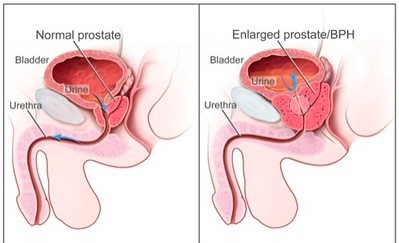
First, a quick anatomy refresher. The prostate is a walnut-sized gland that sits below your bladder and wraps around the urethra (the tube that carries urine out of your body). As men age, the prostate naturally grows — a condition doctors call benign prostatic hyperplasia (BPH).
The key word there is benign. That means non-cancerous. BPH is not prostate cancer, and having BPH does not mean you'll develop prostate cancer. The two conditions are entirely different beasts, even though they live in the same neighborhood. If you're unsure how to tell them apart, this guide to the early signs of prostate cancer walks through the warning signs worth watching.
What makes BPH annoying is mechanical: as the prostate swells, it squeezes the urethra like a kink in a garden hose. That's why you get the classic symptoms — frequent urination, weak stream, the feeling that you never quite emptied your bladder.
So... Is It Dangerous?
Here's where most online articles hedge. We won't.
On its own, BPH is not life-threatening. You won't die from getting up three times a night. But — and this is a big "but" — untreated BPH can lead to serious complications that are genuinely dangerous. The Mayo Clinic outlines several of them, and they're worth knowing by name:
- Acute urinary retention (AUR): Being unable to pass urine at all. This is a medical emergency that requires a catheter and often a hospital stay.
- Chronic urinary retention: A slow, silent overfilling of the bladder that can back up into the kidneys.
- Kidney damage: Long-term urinary obstruction can permanently harm your kidneys.
- Bladder stones: Stagnant urine crystallizes into painful stones.
- Recurrent UTIs: When urine pools in the bladder, bacteria throw a party.
- Bladder damage: The bladder muscle can weaken to the point where it never fully empties again.
A large peer-reviewed study published in Reviews in Urology confirmed that men with severe BPH symptoms face significantly higher risks of these complications — and the risk climbs the longer symptoms go untreated.
When Symptoms Cross the Line from Annoying to Alarming
So how do you know when BPH has crossed from "nuisance" to "call your doctor this week"? Watch for these red flags:
- You suddenly can't urinate at all (head to the ER)
- You see blood in your urine
- You're running fevers with chills (a sign of infection)
- Pain in your pelvis, lower back, or sides
- You're waking up four or more times a night to pee
- Your stream stops and starts mid-flow
- You feel burning or pain when urinating
These don't automatically mean cancer — but they do mean it's time for a proper workup, including a PSA screening test to rule out prostate cancer as the culprit. The American Urological Association's BPH guidelines recommend a PSA test, digital rectal exam, and symptom score for any man over 50 with urinary complaints.
BPH Is Highly Treatable
Here's where the conversation brightens. BPH is one of the most treatable conditions in men's health, with options ranging from lifestyle tweaks to in-office procedures:
Lifestyle changes
Cutting caffeine and alcohol (both irritate the bladder), bladder training, and timed voiding can work wonders for mild cases.
Medications
Alpha-blockers (like tamsulosin) relax the prostate muscle; 5-alpha reductase inhibitors (like finasteride) actually shrink the gland over time. The Cleveland Clinic has a thorough breakdown of how each class works.
- Minimally invasive procedures: UroLift, Rezūm (steam therapy), and PAE (prostate artery embolization) offer relief without major surgery. Most are outpatient.
- Surgery: For severe cases, TURP (transurethral resection of the prostate) or HoLEP (holmium laser enucleation) removes obstructive tissue. These have been refined over decades and carry high success rates.
When to Call the Doctor
If you're over 50 and noticing urinary changes — or if you're over 45 with a family history of prostate issues — don't wait. Schedule a visit. A simple PSA blood test and symptom questionnaire can tell you in one visit whether you're dealing with routine BPH or something that needs a closer look.
The worst move? The classic guy move: waiting it out, hoping it'll fix itself. It won't. And the longer you wait, the harder it becomes to reverse the damage.
Frequently Asked Questions
Can an enlarged prostate turn into cancer?
No. BPH and prostate cancer are different conditions. BPH occurs in the transition zone of the prostate; cancer typically starts in the peripheral zone. Having BPH does not increase your cancer risk — but both can coexist, which is exactly why screening matters.
At what age should you start worrying about your prostate?
Most urologists recommend beginning prostate health conversations at age 50. If you're African American or have a family history, start at 40–45. The key isn't worrying — it's screening.
What happens if BPH is left untreated?
Untreated BPH can lead to urinary retention, bladder stones, recurrent infections, and in severe cases, kidney damage. Many of these complications are reversible if caught early, so don't delay evaluation.
Can I shrink my prostate naturally?
Some studies suggest saw palmetto, pumpkin seed extract, and pygeum may help mild symptoms, but evidence is mixed. The most reliable approach combines lifestyle changes with proven medical treatments. Always talk to your doctor before starting supplements.
Does an enlarged prostate affect my sex life?
It can. BPH itself and some of its treatments (particularly medications and surgery) may impact ejaculation or erectile function. Newer minimally invasive procedures like UroLift tend to preserve sexual function better than traditional surgery. Be candid with your urologist — this is a common concern.
