




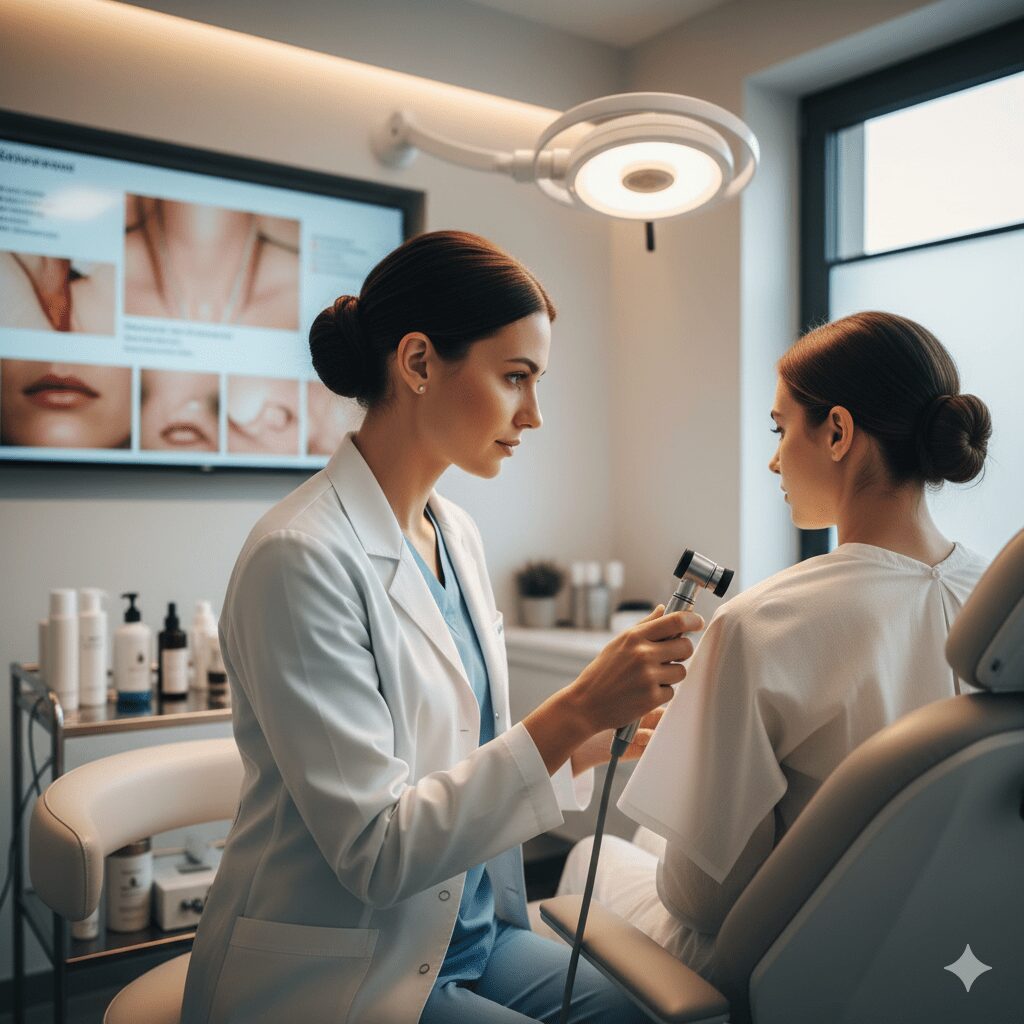
Dermatology


Your skin changes constantly throughout your life. In fact, your skin regenerates itself about every 27 days. However, several factors influence the time it takes for your skin to complete a cycle of regeneration. These include:
- Age
- Diet
- Skin care routine
- Hydration levels
- Environmental factors
Dermatology is a medical branch that is concerned with the skin. It’s a specialty with both medical and surgical aspects. This branch of medicine plays a crucial role in health and confidence, offering care for common conditions and early detection of serious issues.
What Do Dermatologists Do?
A dermatologist is a healthcare professional specializing in the diagnosis and treatment of conditions affecting the skin, hair, and nails. [1]
Your skin is the largest organ in your body. It performs essential functions. Your skin protects you from heat, cold, germs, and dangerous foreign substances.
The skin also turns out to be a great indicator of your overall health. You will definitely know there is a problem when your skin changes in color, which might require medical attention. Good skin means good health.
So, what do dermatologists do?
- Diagnose and treat conditions. These healthcare professionals handle issues like acne, hair loss, skin cancer, and eczema.
- Treats infections and infestations. The professionals are skilled in managing bacterial, viral, and fungal skin infections.
- Address scarring. Dermatologists can help with health problems like hypertrophic scarring, which is a thick, raised scar that is an abnormal response to wound healing. [2]
- Address cosmetic issues. The medical experts treat aesthetic issues like age spots and melasma.
Common Skin Conditions and When to See a Dermatologist
When you notice your skin starting to turn color, it is a sign that something is not right. Even though some skin conditions are minor, others cause severe symptoms that require immediate medical attention.
Common skin conditions include:
- This is a skin condition where the hair follicles become clogged with oil. This leads to blackheads and whiteheads. [3]
- Dry itchy skin that leads to swelling or cracking. [4]
- A chronic, non-contagious autoimmune disease that makes the skin scaly, leading to swelling or feeling hot. [5]
Some rare skin conditions include:
- Chromhidrosis
- Epidermolysis bullosa
- Actinic prurigo
- Argyria
If you notice skin changes, do not ignore them. Skin changes such as moles, persistent dryness, or itchiness. This is a wake-up call that something is not right; hence, consult your medical expert for professional guidance.
Other noticeable changes that would make you want to visit a dermatologist include:
- Significant hair loss
- Long-lasting skin irritation
- Unexplained rashes or hives
If you have a family history of skin cancer, annual skin checks are highly recommended. But most importantly, always seek the advice of your healthcare professional before taking any medication without a diagnosis.
Skin Health and Prevention Tips
Several factors contribute to skin conditions. These include lifestyle and environmental factors. Taking these factors into account and ensuring healthy living with proper skin care helps prevent skin issues.
Consider these valuable tips: [6]
- Avoid excess sunlight exposure
- Stay hydrated
- Eat a balanced diet
- Use antioxidants
- Manage stress
- Wisely choose skin care products
- Include healthy fats
Advances in Dermatology and Why It’s Evolving
Advances in dermatology are driven by technological innovations like AI, genetic testing, and laser therapies.
Evolving treatment approaches include precision medicine, improved biologics, and regenerative approaches.
Dermatology is evolving based on several factors. This includes:
- Patient demand is due to a growing public interest in personalized, effective, and less invasive treatments.
- Technology integration in the field of AI, genetic data, and digital platforms for more accurate diagnostics and personalized care plans.
- Addressing health disparities
- Ongoing scientific research into the mechanisms of skin disease and the development of new treatments.
Bottom Line
Dermatology is an essential field in medicine. This field is concerned with the skin and diseases that affect the skin. Dermatology plays a vital role in health and overall wellness.
If you suspect you have a skin problem, see your dermatologist as soon as possible. Early diagnosis and detection are crucial to guiding a proper treatment plan. Practice healthy lifestyle habits and avoid environmental exposures that can put your skin at risk.
Healthy skin is not just about appearance; it is about well-being.
Sources
- Cleveland Clinic. Skin Care Doctors. Cleveland Clinic. Published October 13, 2021. https://my.clevelandclinic.org/health/articles/12165-dermatologists-skin-care-doctors
- Cleveland Clinic. Hypertrophic Scar: What Is It, Causes, Treatment. Cleveland Clinic. Published June 1, 2021. https://my.clevelandclinic.org/health/diseases/21466-hypertrophic-scar
- Cleveland Clinic. Acne: Causes & Treatment. Cleveland Clinic. Published September 1, 2020. https://my.clevelandclinic.org/health/diseases/12233-acne
- John Hopkins Medicine. Eczema. www.hopkinsmedicine.org. Published 2024. https://www.hopkinsmedicine.org/health/conditions-and-diseases/eczema
- Mayo Clinic. Psoriasis - Symptoms and Causes. Mayo Clinic. Published October 8, 2022. https://www.mayoclinic.org/diseases-conditions/psoriasis/symptoms-causes/syc-20355840
- American Academy of Dermatology Association. 10 skin care secrets for healthier-looking skin. www.aad.org. Published October 29, 2024. https://www.aad.org/public/everyday-care/skin-care-secrets/routine/healthier-looking-skin