




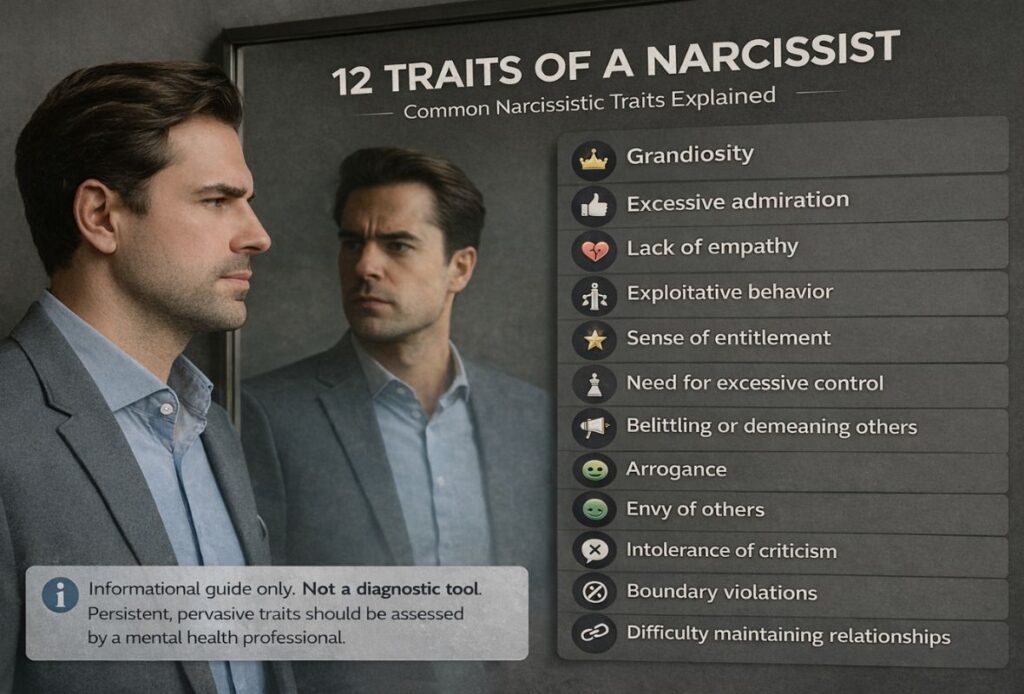
12 Traits of a Narcissist: How to Recognize Narcissistic Behavior Early


Introduction
Narcissism refers to a set of personality traits characterized by patterns of self-focus, need for admiration, and difficulties with empathy. While these traits exist on a spectrum and may appear in varying degrees, persistent and pervasive patterns can significantly affect interpersonal relationships and emotional functioning. It is important to distinguish between occasional narcissistic behaviors and enduring personality traits.
Narcissistic traits may emerge in different contexts, including personal relationships, family dynamics, and professional environments. The presence of these traits alone does not indicate a mental health disorder. A formal diagnosis of Narcissistic Personality Disorder (NPD) can only be made by a qualified mental health professional following established diagnostic criteria.
This article examines the 12 traits of a narcissist from an educational and clinical perspective. Its purpose is to support awareness, promote informed observation of behavior patterns over time, and guide readers on when seeking professional evaluation or support may be appropriate.
What Is Narcissism?
The word narcissism comes from a Greek myth about Narcissus, a god’s son who died of starvation due to obsessive self-admiration. In psychology, it describes excessive self-admiration that can evolve into a severe form called narcissistic personality disorder (NPD). This style is defined by a grandiose sense of oneself, a deep need for admiration, and reduced sensitivity to others’ needs. It exists on a spectrum, ranging from normal self-interest to more rigid and maladaptive patterns that studies suggest may affect approximately 1% to 2% of the population, although prevalence estimates vary across research.
Narcissism and Co-Occurring Personality Disorders
Narcissistic traits often intersect with other mental health disorders, making early recognition more complex. Borderline Personality Disorder (BPD) shares symptoms like emotional instability and interpersonal difficulties, and can co-exist with NPD. In some cases, antisocial Personality Disorder (ASPD) may mimic similar behavior, showing a lack of empathy and harmful actions. Other personality issues such as dependent, histrionic, or avoidant types may also exhibit overlapping signs, requiring careful diagnosis and treatment.
Research shows Narcissistic Personality Disorder (NPD) often co-occurs with conditions like depression (33-57%), bipolar, and anxiety. Obsessive-compulsive Personality Disorder (OCPD) is another linked issue, with rigidity and a desire for control. When occurring together, such as BPD in about 40% of cases, the combination creates intense, unstable relationships marked by admiration, fear, and abandonment. Other overlaps include Major Depressive Disorder (MDD) which affects 45-50% of people with NPD, often tied to injuries in self-esteem, loss of power, or confused grandiosity during mood elevation and hypomania. Traits like entitlement, aggression, and even chronic illegal activity in ASPD highlight how these disorders can co-occur and complicate recognition.
The Primary Causes of NPD
Genetics
NPD is a complex condition often influenced by a combination of environmental and biological elements. Studies have suggested that genetic factors and family history of personality disorders can contribute to the development of narcissistic traits. While genetics may determine risk, they do not seal a person’s fate as a narcissist or guarantee they will suffer from NPD.
Childhood Experiences
Childhood experiences strongly shape personality. Excessive praise or extreme neglect can lead to narcissism. Early emotional wounds, such as a lack of validation, spoiling children, or inconsistent parenting, create a fragile foundation that shapes future traits. To curb unhealthy patterns, parents should encourage empathy, reward effort over ability, and model respectful relationships.
Environmental Factors
Cultural heritage and influences also play a role. A mainstream emphasis on individualism, success, appearance, and popularity can foster narcissistic behaviors. Many cultures reward self-promotion and material value, making NPD more prevalent in certain countries. This interplay of hereditary risks, dysfunctional environments, and societal pressures shows how multiple drivers combine to shape the disorder.
Key Differences Between NPD and Narcissistic Traits
Severity and Impact
NPD is a narcissistic personality disorder with greater severity and long-term impact on daily life. It is a chronic, pervasive condition that affects relationships and reduces the ability to function.
Clinical Nature
Unlike fleeting traits, NPD is a diagnosable clinical disorder that may require structured treatment approaches, including psychotherapy, depending on individual needs. These patterns can be deeply ingrained and resistant to change without professional support.
Human Behaviors
By contrast, narcissistic traits are common human behaviors like arrogance or selfishness. These can exist without a formal disorder and may not always disrupt life.
What Are the 12 Traits of a Narcissist?
Clinical frameworks such as the DSM-5 describe Narcissistic Personality Disorder (NPD) as a pattern of enduring narcissistic traits that significantly impair relationships and overall functioning. These traits often overlap and reinforce one another, particularly when they persist across multiple situations over time. It is often diagnosed in adulthood, though childhood experiences can shape its roots. Meeting certain criteria helps identify when these traits cause harm to relationships and daily life.
1. Grandiose Self-Importance
A grandiose sense of self-importance is central to narcissistic behavior. Narcissists often see themselves as superior, deserving special treatment, and may show overt or covert signs of inflated self-worth. Their relentless need for attention and superiority drives them to manipulate situations to maintain control.
2. Excessive Admiration
The need for excessive admiration is another defining trait. They seek validation, often exaggerating successes to gain recognition. When admiration is lacking, they become angry, frustrated, or withdrawn, showing vulnerability tied to fragile opinions and unstable relationships.
3. Lack of Empathy
A lack of empathy is a core characteristic. Narcissists may dismiss others’ feelings, fail to acknowledge struggles, and appear uninterested in others’ well-being. This often leads to manipulative tactics, leaving people invalidated, ignored, or drained of emotional support.
4. Exploitation of Others
They often exploit others for personal gain, treating interactions as transactions. By extracting resources, attention, or power without fairness or benefit, they inhibit genuine forming and maintaining of healthy desires or bonds.
5. Sense of Entitlement
A strong sense of being entitled to privileges fuels angered or resentful reactions. This often results in abuse, haughty attitudes, ignoring rules, and expecting others to cater to their needs. They may justify taking advantage of people without remorse.
6. Difficulty with Criticism
Narcissists struggle with criticism. Even minor feedback feels like an attack, leading to defensive reactions, blame, guilt, or self-pity. Their fragile ego makes them resistant to responsibility, often using passive-aggressive tactics to protect their image.
7. Envy of Others
Envy of others’ success or possessions is common. They may believe others envy them, creating isolation and blocking authentic comparisons or the ability to celebrate others. This leaves them with shallow connections and little fulfillment.
8. Arrogant Attitude
An arrogant attitude often shows in disdain for others. These behaviors highlight their belief in superiority, whether expressed in overt or subtle covert ways.
9. Excessive Need for Control
The overwhelming need for control drives them to dominate their environment. They assert power and influence, often disregarding others. This creates toxic dynamic situations where people feel trapped, powerless, and lose autonomy.
10. Fragile Self-Esteem
Despite outward confidence, their fragile self-esteem is easily shaken by slights or failures. They appear vulnerable, sensitive, and filled with self-doubt, seeking sympathy and reassurance to protect their image.
11. Disregard for Boundaries
A disregard for boundaries is another trait. They may invade space, demand attention at inappropriate times, or ignore limits. This causes frustration, resentment, and leaves others feeling overlooked or minimized.
12. Difficulty in Maintaining Relationships
Finally, they face difficulty in maintaining relationships. A partner may feel uncared for, leading to breakdown and feelings of being unimportant, unsupported, and exhausted. Their constant demand for admiration can significantly interfere with the ability to form balanced and emotionally fulfilling relationships.
Common Behavioral Traits of Narcissists
To identify a narcissist, you can observe a person who shows traits like an inflated sense of self-worth, a blatant lack of empathy or respect for boundaries, and a constant need for attention. They may frequently interrupt conversations to talk about their achievements, while dismissing the contributions or feelings of others.
Observing Emotional Responses
Narcissists often react with anger or defensiveness when criticized, showing a clear lack of genuine empathy. This makes it difficult for them to understand or care about the emotions of others, leaving relationships strained and emotionally unbalanced.
Importance of Patterns Over Time
A single instance of self-centered behavior may not necessarily indicate narcissism, but a consistent pattern combined with other traits is a strong indicator of deeper issues.
How to Identify a Narcissist?
Identifying a narcissist can be challenging because their behavior may look charming or charismatic at first. Over time, certain traits and repeating patterns help experts recognize narcissistic tendencies. A persistent show of grandiosity, a clear lack of empathy, and an excessive need for admiration often cause harm when no change occurs.
The severity and rigidity of these behaviors separate a difficult person from someone with a clinical sense of Narcissistic personality disorder (NPD). This diagnosable condition is ingrained from early adulthood and can impair relationships and daily functioning. People with NPD often see nothing problematic, making improvement exceptionally hard.
Others with narcissistic traits may act selfishly or arrogantly in certain situations, but these are not fixed parts of their identity. They might respond to feedback and show genuine effort toward change. The term “narcissist” is often applied broadly, creating confusion. To figure out what you are dealing with, ask key questions: how long has this lasted, how severe is the impact, and are they capable of acknowledging the problem.
Most Serious Warning Signs of NPD
Core Indicators
- Extreme grandiosity with a persistent belief in superiority, even when reality contradicts it
- Complete inability to empathize, showing a consistent refusal to recognize, understand, or care about others’ feelings or needs
- Deep-seated arrogance that shapes every interaction, often visible when they respond to minor criticism
Harmful Behaviors
- Traits that fuel destructive behaviors in relationships, leaving narcissistic individuals exhausting to deal with
- A tendency to exploit the closest people emotionally, financially, or socially, without genuine remorse
- Strong deficit in empathy and sense of entitlement, making it difficult to see wrong in their behavior
- Patterns of harmful behavior driven by rigid beliefs of superiority and entitlement, which can lead to serious emotional harm and, in some cases, psychologically damaging outcomes.
Additional Warning Signs
- Complete lack of self-awareness, refusing to acknowledge flaws despite clear negative consequences
- One-sided dynamics where they only fulfill their own needs and wants, showing no interest in others
- Actions that don’t match their words, with obvious discrepancies they refuse to address
- Unrealistic expectations and impossibly high standards, offering little in return
- Excessive envy and intense jealousy linked to inflated self-worth
- Success obsession that destroys healthy connections, sacrificing genuine achievement, status, and recognition
Importance of Early Recognition
Early recognition of narcissistic traits is key to preventing long-term damage in relationships and protecting mental health. Recognizing these warning signs may allow for earlier support, therapeutic guidance, and improved coping strategies, which can be empowering for those affected and promoting a better quality of life.
Narcissism, whether seen as a trait or a personality disorder, has profound effects on individuals and their bonds. Understanding the 12 signs of a narcissist helps to identify and address the complexities, emotions, and resulting behaviors. By recognizing these patterns and implementing practical coping strategies, any person can preserve their well-being and meet daily challenges head-on.
How to Assess These Traits in Someone You Know
When someone in your life frequently displays selfish behaviors, it is crucial to evaluate if these are temporary personality quirks or signs of a deeper pattern. Before deciding how to respond, ask key questions about Duration—how long the traits have been present—and the Impact they negatively effect on relationships with others.
Assess their Receptiveness by seeing if they are open to feedback, willing to listen, and show Self-awareness by acknowledging faults and making genuine changes. If manipulative actions are harming people, consider encouraging professional help from a mental health expert. The right approach in conversation requires empathy, so avoid accusatory language to protect their feelings and your own well-being.
Remember, it is not your responsibility to diagnose them, but this evaluation process helps determine if the situation can improve or if maintaining the relationship is not in your best interest.
Do You Exhibit 5 or More of These Narcissistic Traits?
Self-reflection tools are meant for awareness, not for diagnosing oneself or others.
Recognition and Self-Reflection
If you display certain narcissistic traits, the first step is recognition. Recognizing these patterns in yourself can be an opportunity for growth and change. The right approach requires honesty and a willingness to work on self-improvement. Practicing Self-Reflection and Awareness helps you reflect on actions and their impact on others. Journaling is a helpful tool for exploring thoughts, emotions, and behavioral patterns that may need adjustment.
Therapy and Counseling
Therapy and Counseling are often instrumental in addressing these issues. A therapist can help you understand the underlying causes of your behavior and guide you toward healthier ways of relating. Cognitive Behavioral Therapy (CBT) is effective in challenging distorted thinking and fostering more adaptive habits within a supportive environment.
Developing Empathy
Developing Empathy and Understanding involves validating the feelings of others. Engage in activities that promote compassion, such as volunteering, participating in group discussions, and considering different viewpoints. These experiences help you connect with people on a deeper level.
Building Healthy Self-Esteem
Building Healthy Self-Esteem means creating a balanced sense of strengths and weaknesses without relying on external validation. Set realistic goals, keep celebrating small achievements, and surround yourself with supportive people who encourage progress. Honest feedback and a strong support network can reinforce positive habits, helping you maintain a balanced perspective on your self-worth.
When to Seek Professional Help
You should consider reaching out to a mental health professional if certain situations arise. For example, when their behavior is significantly impacting your well-being, you may notice:
- actions that negatively affect your daily functioning
- decline in the overall quality of life
- need for expert guidance to develop coping strategies and determine next steps
A relationship may feel unsustainable if spending time with them becomes consistently difficult or emotionally draining. In such cases, a therapist can help you:
- establish stronger boundaries
- create a plan for protecting yourself
- prepare for ending ties with someone who displays these traits
Before leaving, seek support from trusted friends and family members. This preparation is crucial because such individuals may attempt to isolate you by:
- turning others against you
- claiming you hurt them
- portraying you negatively to mutual connections
By building a strong network in advance, you can maintain the support needed during this challenging process.
What to Do if You're in a Relationship with a Narcissist: Weighing the Emotional Impact
Being in a relationship with a narcissist can enact a heavy toll on your emotional and mental well-being. You may experience long-term distress caused by constant manipulation, volatile behavior, and a lack of empathy. If not handled properly, these patterns can lead to serious health problems that affect daily life.
How to Protect Yourself When Someone You Love Shows Narcissistic Behavior
Recognizing Harmful Patterns
Narcissistic traits and NPD often cause behaviors that are harmful to your mental and emotional well-being. When someone becomes intolerable or unsustainable, it is crucial to set boundaries and protect yourself, even if that means limiting or ending contact with a friend, family member, or partner who displays these issues.
Immediate Protection Strategies
- Document behavioral patterns by keeping detailed records of actions, conflicts, and outbursts. This documentation provides clarity when confronting, discussing the situation, or recognizing triggers in manipulative behavior. Store notes in a safe, password-protected place for secure access.
- Establish firm consequences and limits. Refuse to tolerate disrespectful treatment or hurtful comments. Communicate specific outcomes if boundaries are crossed, such as leaving the conversation or reducing time spent together.
- Protect personal information. Individuals may weaponize private details, vulnerabilities, trauma, or insecurities to manipulate and maintain the relationship. They may threaten to turn mutual contacts against you or share false stories.
Coping Tips
The 5 top tips for coping with narcissists require balance, determination, and kindness:
- Set Clear Boundaries and consistently uphold them.
- Respond Instead of Reacting to maintain control, stay calm, and avoid emotional outbursts. A measured reply can diffuse tense situations.
- Demand Action not Promises. Avoid accepting excuses that deflect accountability. Insist on tangible, measurable outcomes.
- Prioritize Self-Care and Support. Build a trusted system, practice self-reflection, and engage in activities like yoga or meditation. Explore online resources and books on narcissism for deeper understanding. Works by Nancy McWilliams and the Psychology in Seattle podcast are recommended starting points.
- Consider Professional Help. Therapy offers effective tools and a 3rd party support system when you cannot communicate openly with family or friends.
Deciding When to Walk Away
Healthy vs Harmful Relationships
A healthy relationship supports growth, trust, and emotional safety. In contrast, a harmful relationship with a narcissist often drains energy, creates confusion, and damages confidence. Recognizing the difference is crucial—when constant manipulation or lack of empathy outweighs care, it may be time to walk away.
Self-Respect and Healing
Creating distance can be a healthy decision when emotional safety and well-being are consistently compromised. Protecting your mental and emotional well-being means prioritizing peace over chaos. Walking away allows space for healing, rebuilding self-worth, and creating boundaries that safeguard future connections.
FAQs
- Can narcissistic traits change over time?
Narcissistic traits can shift in intensity over time, especially with increased self-awareness and professional support. Change is often gradual and depends on individual motivation, life experiences, and access to therapeutic guidance.
- Is narcissism the same as having high self-confidence?
No. Healthy self-confidence involves stable self-esteem and respect for others, while narcissistic traits are often linked to fragile self-worth, excessive need for validation, and difficulty tolerating criticism.
- Can someone show narcissistic traits without having Narcissistic Personality Disorder (NPD)?
Yes. Many people may display narcissistic behaviors in certain situations without meeting the criteria for NPD. A diagnosis requires a comprehensive evaluation by a qualified mental health professional.
- How do narcissistic traits typically affect long-term relationships?
When persistent, narcissistic traits can contribute to communication difficulties, emotional imbalance, and repeated conflict. These effects are more pronounced when patterns remain consistent across time and different relationships.
- Are narcissistic traits always intentional or manipulative?
Not necessarily. Some behaviors associated with narcissistic traits may stem from underlying insecurity or learned coping patterns rather than deliberate manipulation. Understanding intent often requires observing patterns and context over time.
