




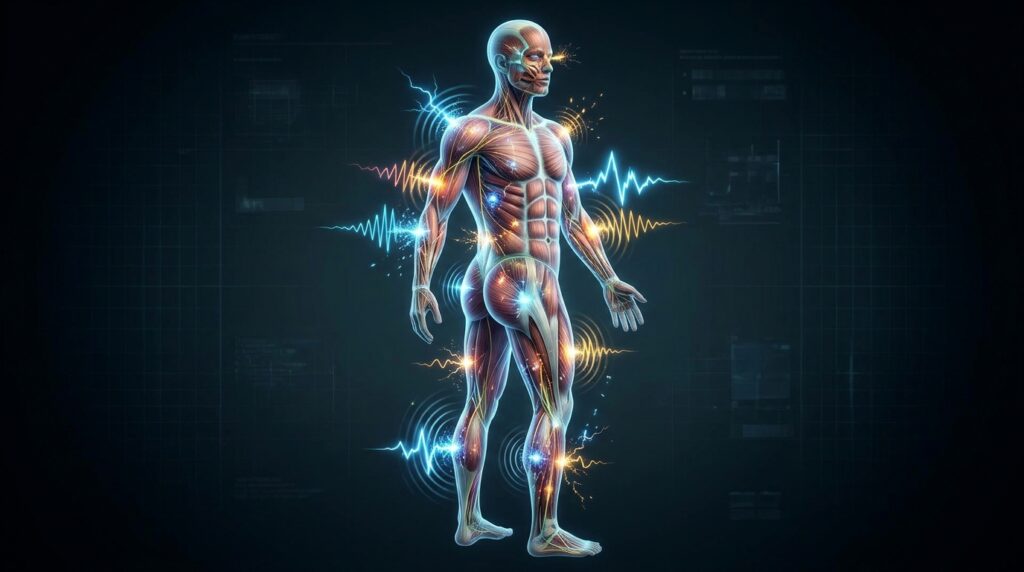
Random Muscle Twitching All Over Body: Causes and When to Worry


Seeing a muscle suddenly jump or twitch can be unsettling, especially when it starts happening in different parts of your body. Random muscle twitching all over body can affect the arms, legs, eyelids, back, abdomen, or other muscles. In many cases, occasional twitching is harmless and can be related to stress, fatigue, caffeine, exercise, or dehydration. Persistent or widespread twitching, however, deserves closer attention when it occurs with weakness, numbness, or other neurological symptoms.
The pattern matters more than a single twitch. If twitching occurs after heavy sweating, vomiting, diarrhea, or another cause of fluid loss, understanding electrolyte imbalance symptoms can provide useful context.
What Is a Muscle Twitch?
A muscle twitch is a small, involuntary movement of a muscle or group of muscle fibers.
You may see or feel the muscle briefly:
- Jump
- Ripple
- Pulse
- Contract
- Move under the skin
Medical professionals may refer to these involuntary movements as fasciculations when they involve individual muscle fibers.
A twitch can last only a few seconds or occur repeatedly over a longer period.
Why Am I Getting Random Muscle Twitching All Over My Body?
There are many possible causes of widespread muscle twitching.
Common possibilities include:
- Stress and anxiety
- Lack of sleep
- Caffeine
- Muscle fatigue
- Intense exercise
- Dehydration
- Electrolyte abnormalities
- Medication effects
- Nerve irritation
- Benign fasciculation syndrome
- Certain neurological conditions
Most occasional muscle twitches are not caused by a serious neurological disease.
1. Stress and Anxiety
Stress can make muscle twitching more noticeable.
When you are stressed, your nervous system becomes more active. This can contribute to muscle tension and involuntary contractions.
You may notice twitching in several locations, such as:
- Eyelids
- Calves
- Thighs
- Arms
- Hands
Anxiety can also make you pay closer attention to normal bodily sensations, making small twitches feel more frequent or concerning.
2. Lack of Sleep
Poor sleep can affect the nervous system and muscles.
You may be more likely to notice twitching after:
- Several nights of poor sleep
- Working long hours
- Frequent nighttime waking
- Jet lag
- Irregular sleep schedules
Improving sleep may reduce symptoms when fatigue is contributing.
If twitching began during a period of significant sleep disruption, track whether it improves after several nights of adequate rest.
3. Too Much Caffeine
Caffeine stimulates the nervous system.
Large amounts may contribute to:
- Muscle twitching
- Restlessness
- Trembling
- Rapid heartbeat
- Anxiety
- Difficulty sleeping
Coffee is not the only source. Energy drinks, tea, pre-workout products, and some medications can also contain caffeine or other stimulants.
If you experience frequent twitching, consider how much caffeine you consume each day.
4. Muscle Fatigue and Exercise
Muscles can twitch after strenuous or unfamiliar physical activity.
This may happen after:
- Weight training
- Running
- Cycling
- Long walks
- Repetitive movements
- Intense workouts
The affected muscles may twitch intermittently while recovering.
Reducing exercise intensity temporarily, getting adequate rest, and maintaining appropriate fluid intake may help.
5. Dehydration
Fluid loss can affect normal muscle and nerve function.
Dehydration may occur after:
- Heavy sweating
- Exercise
- Fever
- Vomiting
- Diarrhea
- Spending time in hot weather
Other symptoms may include:
- Thirst
- Dry mouth
- Dark urine
- Dizziness
- Fatigue
If twitching appears after significant fluid loss, dehydration may be contributing.
6. Electrolyte Imbalances
Electrolytes help nerves communicate with muscles and allow muscles to contract and relax normally.
Abnormal levels of minerals such as:
- Magnesium
- Potassium
- Calcium
- Sodium
can sometimes contribute to muscle cramps, spasms, weakness, or twitching.
However, taking electrolyte or mineral supplements without knowing whether you are deficient is not always appropriate.
A blood test can help determine whether an electrolyte abnormality is present.
7. Magnesium and Muscle Twitching
Magnesium plays an important role in normal nerve and muscle function.
Significant magnesium deficiency can contribute to muscle spasms, tremors, cramps, and other neuromuscular symptoms.
However, muscle twitching does not automatically mean you have low magnesium.
Taking high-dose magnesium without medical guidance can also cause problems, particularly in people with kidney disease.
8. Medications and Stimulants
Certain medications can affect the nervous system or muscle activity.
Twitching may occasionally occur as a medication side effect.
If your symptoms began shortly after starting a medication, changing the dose, or adding a supplement, speak with your healthcare professional.
Do not stop prescription medication on your own.
9. Nerve Irritation
An irritated or compressed nerve can sometimes cause twitching in muscles supplied by that nerve.
This can occur with problems involving the:
- Neck
- Back
- Spine
- Arms
- Legs
Nerve-related twitching may occur alongside tingling, numbness, pain, or weakness.
The location and combination of symptoms can help a healthcare professional determine whether nerve irritation may be involved.
10. Benign Fasciculation Syndrome
Some people experience frequent muscle twitching without having a serious underlying neurological disease.
This may be referred to as benign fasciculation syndrome.
Twitching can occur in many parts of the body and may become more noticeable during periods of:
- Stress
- Fatigue
- Poor sleep
- Caffeine consumption
- Physical exertion
A healthcare professional may need to rule out other causes before describing twitching as benign.
Does Random Muscle Twitching Mean ALS?
Widespread twitching can understandably lead people to worry about amyotrophic lateral sclerosis (ALS).
However, muscle twitching by itself does not mean you have ALS.
ALS is a progressive neurological disease that typically involves clinically significant muscle weakness and other neurological changes. Twitching without progressive weakness is much less specific.
If twitching is persistent and accompanied by worsening weakness, muscle wasting, difficulty speaking, swallowing problems, or changes in walking, seek medical evaluation.
Avoid trying to diagnose a neurological condition based solely on internet symptom lists.
Muscle Twitching With Weakness
Weakness is an important symptom to take seriously.
There is a difference between feeling tired and having true muscle weakness.
For example, true weakness may involve:
- Difficulty lifting an object that was previously easy to lift
- Trouble climbing stairs
- Repeatedly dropping objects
- Difficulty standing from a chair
- Difficulty raising your arms
- Changes in walking
Twitching combined with progressive weakness deserves medical assessment.
Muscle Twitching and Numbness
Twitching accompanied by numbness or tingling may suggest nerve involvement.
Possible causes range from temporary nerve compression to metabolic problems and neurological conditions.
If numbness is sudden or affects one side of your body together with weakness, facial drooping, or difficulty speaking, seek emergency medical attention.
How Is Muscle Twitching Evaluated?
A healthcare professional may ask about:
- Where the twitching occurs
- How long it has been happening
- How often it occurs
- Sleep quality
- Caffeine intake
- Exercise
- Medications
- Other neurological symptoms
- Recent illness
Depending on your symptoms, evaluation may include blood tests for electrolytes, thyroid function, or other abnormalities.
If neurological symptoms are present, additional testing may be considered.
What Can Help Reduce Muscle Twitching?
If no underlying medical condition is identified, several habits may help.
Get Adequate Sleep
Aim for a consistent sleep schedule and enough rest.
Reduce Excess Caffeine
Try cutting back on coffee, energy drinks, and stimulant-containing supplements if you notice a connection.
Stay Hydrated
Drink fluids regularly, particularly after exercise or heavy sweating.
Allow Muscles to Recover
Avoid repeatedly overworking the same muscle groups.
Manage Stress
Relaxation techniques, physical activity, and adequate sleep may help reduce stress-related twitching.
Do not assume that supplements are necessary unless a deficiency has been identified.
When Should You See a Doctor?
Make an appointment if muscle twitching:
- Persists for several weeks
- Is becoming more frequent
- Occurs throughout multiple areas of the body
- Is accompanied by weakness
- Occurs with numbness or tingling
- Is associated with muscle wasting
- Interferes with daily activities
- Started after a medication change
A healthcare professional can determine whether testing is appropriate.
When Is Muscle Twitching an Emergency?
Muscle twitching alone is rarely an emergency.
Seek immediate medical attention if twitching or muscle symptoms occur suddenly with:
- One-sided weakness
- Facial drooping
- Difficulty speaking
- Severe difficulty breathing
- Difficulty swallowing
- Loss of consciousness
- Severe confusion
- Sudden loss of coordination
These symptoms can indicate a serious neurological or medical emergency.
Conclusion
Random muscle twitching all over body can have many explanations, and most occasional twitches are harmless. Stress, poor sleep, caffeine, exercise, dehydration, electrolyte abnormalities, medications, and nerve irritation can all contribute.
The important distinction is between isolated twitching and twitching accompanied by progressive neurological symptoms. Persistent weakness, muscle wasting, numbness, difficulty walking, swallowing problems, or speech changes should be medically evaluated.
If your twitching started after heavy sweating, illness, or fluid loss, understanding electrolyte imbalance symptoms may help identify other symptoms that can occur alongside changes in muscle function.
Do not assume that widespread twitching means you have a serious neurological disease. If symptoms persist or are accompanied by weakness or other neurological changes, a healthcare professional can determine the appropriate evaluation.
Frequently Asked Questions
Is Random Muscle Twitching All Over the Body Normal?
Occasional twitching can be normal and may occur with stress, fatigue, caffeine, exercise, or dehydration. Persistent widespread twitching should be discussed with a healthcare professional.
Can Stress Cause Muscle Twitching?
Yes. Stress and anxiety can increase nervous system activity and may contribute to muscle twitching, particularly during periods of poor sleep or high caffeine intake.
Can Dehydration Cause Muscle Twitching?
Dehydration can affect normal muscle and nerve function and may contribute to twitching, cramps, or weakness, particularly after significant fluid loss.
Can Low Magnesium Cause Muscle Twitching?
Significant magnesium deficiency can cause neuromuscular symptoms, including spasms and twitching. However, twitching alone does not prove that magnesium deficiency is present.
Does Muscle Twitching Mean ALS?
No. Muscle twitching by itself is not enough to diagnose ALS. Progressive muscle weakness and other neurological changes are more important warning signs that require medical evaluation.
Why Are My Muscles Twitching in Different Places?
Twitching in different areas can occur with stress, fatigue, caffeine, exercise, dehydration, electrolyte abnormalities, or benign fasciculation syndrome. Persistent symptoms may require evaluation.
When Should I See a Doctor About Muscle Twitching?
See a healthcare professional if twitching persists for several weeks, becomes increasingly frequent, or occurs with weakness, muscle wasting, numbness, or other neurological symptoms.
What Can I Do to Stop Muscle Twitching?
Getting adequate sleep, reducing excessive caffeine, staying hydrated, managing stress, and allowing muscles to recover after exercise may help. Persistent symptoms should be evaluated rather than treated with supplements without identifying the cause.
