




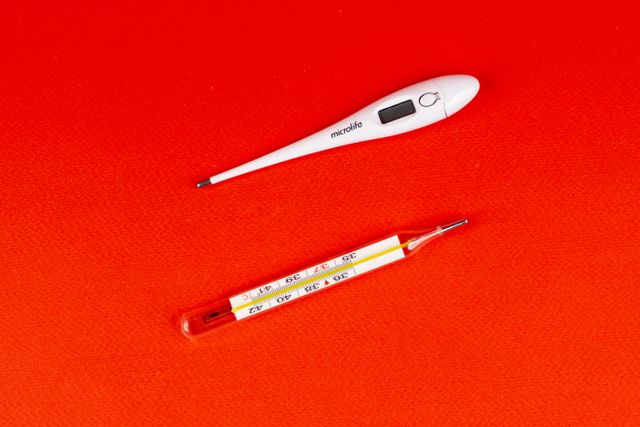
Oral vs. Forehead Thermometers: Which Is More Accurate?


When a fever strikes, getting an accurate temperature reading is crucial for determining whether you need to rest at home or seek medical intervention. With modern health technology, home diagnostic tools have evolved beyond traditional mercury sticks. Today, digital oral models and non-contact infrared forehead scanners are the two most common choices.
Understanding proper thermometer use and how these devices measure body heat is key to choosing the right tool for your household.
Oral vs. Forehead Thermometers: Which Is More Accurate?
While both devices measure body temperature, they target entirely different biological markers.
- Oral Thermometers: Digital oral devices measure sublingual temperature via a heat sensor placed deep under the tongue near blood vessels. Because the sensor sits within an enclosed body cavity near core circulation, proper use of an oral thermometer provides a highly reliable estimate of internal body temperature.
- Forehead (Temporal Artery) Thermometers: Forehead scanners utilize infrared sensors to detect the heat radiated from the temporal artery, which runs across the side of the forehead. Because this artery connects directly to the carotid artery, which supplies blood to the brain, temporal measurements track changes in core temperature rapidly without requiring invasive contact.
Accuracy Comparison: Oral vs. Forehead
When evaluated purely in terms of medical precision, oral thermometers are generally considered more accurate than forehead scanners, though both have distinct advantages.
| Feature | Oral Thermometer | Forehead (Temporal) Thermometer |
| Primary Measurement Site | Sublingual pocket (under tongue) | Temporal artery (skin surface) |
| Accuracy Level | High (Close to core temperature) | Moderate to High (Subject to external interference) |
| Speed | 10–30 seconds | 1–3 seconds |
| Ease of Use | Requires patient cooperation | Extremely easy; non-invasive |
| Susceptibility to Errors | Eating, drinking, breathing through mouth | Sweat, drafty rooms, outdoor cold air |
| Best For | Adults, older children, precise tracking | Infants, squirming toddlers, quick screenings |
Why Forehead Thermometer Variance Occurs
Forehead scanners offer unmatched speed and comfort, but external factors easily influence their readings. Sweating on the forehead cools the skin surface through evaporation, leading to falsely low readings. Similarly, entering a warm room from cold outdoor air can temporarily alter skin temperature.
Why Oral Thermometer Variance Occurs
Oral readings can also skew if proper protocol is ignored. Consuming hot coffee or ice water, or smoking, within 15 to 20 minutes before testing directly alters the temperature in the mouth cavity.
Best Practices for Proper Thermometer Use
To ensure you get clinical-grade reliability at home, follow these guidelines depending on the device you select:
Tips for Correct Oral Measurement
- Wait 20 Minutes: Avoid eating, drinking hot or cold liquids, or smoking for at least 20 minutes before taking a reading.
- Correct Placement: Place the tip of the probe deep under the tongue in one of the pockets on either side of the center, rather than against the front teeth.
- Seal the Mouth: Keep lips firmly closed around the probe throughout the scan to prevent cool air from entering.
Tips for Correct Forehead Measurement
- Wipe Away Sweat: Ensure the patient’s forehead is completely dry before scanning.
- Acclimate to Room Temp: Allow the person being tested (and the device) to stay in a temperature-controlled room for 10–15 minutes after coming indoors.
- Follow Distance Guidelines: Hold non-contact sensors at the exact distance specified in the manufacturer's instructions (usually 1 to 2 inches from the center of the forehead).
The Bottom Line
For most adults and cooperative older children, proper use of an oral thermometer yields superior precision in tracking fever progression. However, for squirming toddlers, sleeping children, or high-volume household screenings, forehead scanners offer a hygienic, rapid, and sufficiently reliable alternative.
By following proper technique and accounting for environmental factors when using thermometers, you can make informed healthcare decisions with both tools.