




Suflave Powder: How to Mix It, Take It, and What to Expect


Suflave powder is a prescription bowel preparation used to clean the colon before a colonoscopy in adults. In addition, it is a low-volume prep, which means you drink much less laxative liquid than with older preparations such as GoLYTELY. For example, each Suflave dose is one bottle of powder mixed with water, drunk in 8-ounce portions every 15 minutes, followed by 16 ounces of plain water.
Suflave was approved by the FDA in June 2023, so it is newer than many other preps. However, the prep still works only if you mix both bottles correctly, take both doses, and follow your endoscopy team's instructions. In fact, an incomplete prep can mean the colon is not clean enough, and the colonoscopy may need to be repeated.
This guide explains what Suflave powder is, how to mix it step by step, how the split dose works, what you can eat and drink, what side effects to expect, and when to call your doctor. Your gastroenterologist's instructions should always take priority over a general online schedule.
This article is for general information only. It cannot replace your doctor's instructions. If your instructions differ from this guide, follow your doctor's instructions.
Key Takeaways
- Suflave powder is a bowel prep for colonoscopy in adults. It contains polyethylene glycol 3350, sodium sulfate, potassium chloride, magnesium sulfate, and sodium chloride.
- One dose is one bottle of powder plus one flavor-enhancing packet, mixed with lukewarm water to the fill line. You need two doses in total.
- Drink 8 ounces of the mixed solution every 15 minutes until the bottle is empty. After that, drink an additional 16 ounces of water after each dose.
- Dose 1 is taken the evening before the colonoscopy. Dose 2 is taken the morning of the colonoscopy, 5 to 8 hours before the procedure, and no sooner than 4 hours after Dose 1.
- Eat a low-residue breakfast on the day before the colonoscopy. After breakfast, drink only clear liquids until 2 hours before the procedure.
- Do not eat solid food or dairy, and do not drink anything red or purple, or alcohol, during the prep.
- Watery diarrhea is expected. In addition, nausea, bloating, vomiting, stomach pain, and headache are the most common side effects.
- Call your endoscopy team if you vomit repeatedly, cannot finish the prep, have severe stomach pain, or pass very little urine.
What Is Suflave Powder?
Suflave is the brand name for a powder for oral solution containing polyethylene glycol 3350, sodium sulfate, potassium chloride, magnesium sulfate, and sodium chloride. Each bottle contains 178.7 g of polyethylene glycol 3350, 7.3 g of sodium sulfate, 1.12 g of potassium chloride, 0.9 g of magnesium sulfate, and 0.5 g of sodium chloride. In addition, the powder is white, lemon-lime flavored, and comes with a separate flavor-enhancing packet for each bottle.
Suflave is supplied as two bottles and two flavor-enhancing packets. One bottle plus one packet is one dose, and two doses are required for a complete preparation. In contrast to ready-to-drink preps, you must mix Suflave yourself before each dose. Do not swallow the powder dry, and do not mix it with anything other than water.
Suflave is indicated for cleansing of the colon as a preparation for colonoscopy in adults. It is not the same as Suflave for children, because the FDA approval is for adults. In addition, do not use Suflave for any other purpose, and do not share it with another person.
How Does Suflave Work?
Suflave is an osmotic laxative. It works by drawing water into the bowel, which increases the volume inside the colon and makes stool loose and watery. As a result, the colon is gradually emptied, so your doctor can see the intestinal lining clearly during the colonoscopy.
Polyethylene glycol 3350 is the main ingredient. It is a large molecule that is not absorbed by your body, so it stays in the bowel and pulls water in with it. In addition, the sulfate and other salts help draw water into the bowel.
Bowel movements usually begin within 1 to 2 hours after the first dose, although timing varies. In addition, the second dose often works faster, because there is less stool left to clear. You will have frequent, watery bowel movements for several hours after each dose.
How to Mix Suflave Powder
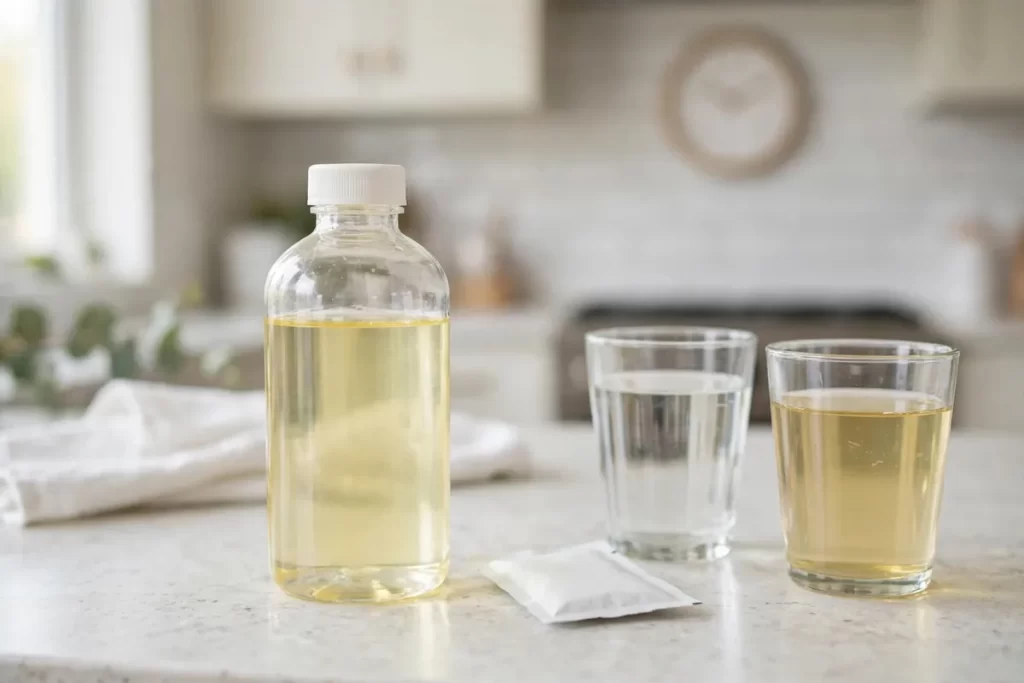
Mixing Suflave correctly matters, because the powder must be fully dissolved before you drink it. Follow these steps for each dose, and mix a fresh bottle for Dose 2. Do not mix both bottles at the same time.
First, open one flavor-enhancing packet and pour the contents into one of the provided bottles. After that, fill the bottle with lukewarm water up to the fill line. Do not use hot water, juice, soda, or any other liquid. In addition, do not add starch-based thickeners to the mixing bottle.
Second, cap the bottle and gently shake it until all the powder has dissolved. For the best taste, refrigerate the solution for an hour before drinking. However, do not freeze it, and drink it within 24 hours of mixing.
Third, drink 8 ounces of the solution every 15 minutes until the bottle is empty. In addition, drink an additional 16 ounces of water after the bottle is empty. If nausea, bloating, or stomach cramping occurs, pause or slow the rate of drinking until the symptoms diminish. After that, resume more slowly when you feel better.
Finally, do not take other laxatives while taking Suflave. In addition, do not take oral medicines within 1 hour of starting each dose. If you take certain antibiotics, iron, digoxin, chlorpromazine, or penicillamine, take them at least 2 hours before Suflave, and not less than 6 hours after each dose.
How to Take Suflave: The Split-Dose Schedule
Suflave is taken as a split-dose regimen over two days. Your own center may give you slightly different times, especially if your colonoscopy is early in the morning or later in the day. However, the general schedule below follows the FDA prescribing information.
Dose 1 — the evening before the colonoscopy
On the day before the colonoscopy, eat a low-residue breakfast in the morning. After breakfast, drink only clear liquids. Early in the evening, mix one bottle as described above and drink it in 8-ounce portions every 15 minutes until it is empty. After that, drink an additional 16 ounces of water during the evening. Stay close to a bathroom, because bowel movements can begin quickly.
Dose 2 — the morning of the colonoscopy
Take the second dose 5 to 8 hours before the colonoscopy, and no sooner than 4 hours after starting Dose 1. Mix a fresh bottle, drink it in 8-ounce portions every 15 minutes until it is empty, and drink an additional 16 ounces of water. After that, continue to drink only clear liquids until 2 hours before the colonoscopy. Finally, stop all liquids at least 2 hours before the procedure. Some centers use a stricter cutoff, so follow the time on your own instruction sheet.
If nausea, bloating, or stomach cramping occurs after the first dose, wait to take the second dose until your stomach feels better. In addition, contact your endoscopy team if the pain is severe or does not improve. Do not take both doses at the same time, and do not skip the second dose.
What Can You Eat Before Suflave?
Diet instructions can vary by center, so use your own instruction sheet as the final authority. Suflave is different from some other preps in one helpful way: you are allowed a low-residue breakfast on the day before the colonoscopy. After breakfast, you switch to clear liquids only.
Low-residue breakfast foods often include white bread, biscuits, muffins without wheat, cornflakes, eggs, cream of wheat, grits, yogurt, cottage cheese, coffee, tea, juice without pulp, and fruit without skin or seeds. In contrast, foods that are often restricted in the days before include nuts, seeds, popcorn, corn, whole grains, raw vegetables, beans, and high-fiber foods. If you need a longer preparation, our guide to a 2 day prep for colonoscopy explains how the diet and timing work over two days.
After breakfast on the day before the colonoscopy, eat no solid food. In addition, do not eat dairy, and do not drink milk. If your instructions allow a different breakfast, follow that list, and switch to clear liquids at the time your center tells you to.
What Can You Drink During Suflave Prep?
Clear liquids are the only drinks allowed once the prep begins, after your low-residue breakfast. In fact, drinking enough clear liquids is just as important as taking the Suflave itself. The extra water after each dose helps replace the fluid you lose through diarrhea, and it helps the prep work properly.
Clear liquids that are usually allowed include water, fruit juice without pulp, lemonade, plain coffee, tea without cream or non-dairy creamer, chicken broth, and gelatin dessert without fruit or topping. In addition, include an electrolyte drink, such as a clear sports drink, because plain water alone does not replace the salts you lose.
Do not drink anything red or purple. For example, avoid red gelatin, red sports drinks, red juice, and red popsicles. The color can stain the colon and look like blood during the colonoscopy. Some centers also restrict orange liquids, so check your own list. In addition, do not drink alcohol at any time during the prep, and do not drink milk or any drink you cannot see through.
How Long Does Suflave Take to Work?
For most people, bowel movements begin about 1 to 2 hours after the first dose. After that, the most intense bathroom trips usually last 4 to 6 hours. In addition, you may still have occasional watery bowel movements for several hours afterward. Because Suflave is taken in two doses, this pattern repeats, in a milder form, after the second dose.
At first, you may pass normal or loose stool. As the prep works, your bowel movements should become more watery and lighter in color. By the end, a successful prep usually results in clear or yellow liquid with little or no solid material. In fact, stool that looks like urine or white grape juice is a good sign that your colon is clean.
If you are still passing thick brown liquid or formed stool near the procedure time, contact your endoscopy team. In addition, do not take extra laxatives on your own. Your team may have a specific rescue plan, or they may need to reschedule the colonoscopy.
What Are the Side Effects of Suflave?
Watery diarrhea is expected, because that is how Suflave cleans the colon. In addition, the most common side effects are nausea, abdominal distension, vomiting, abdominal pain, and headache. These symptoms often improve as the bowel empties.
Other common effects include bloating, cramping, and feeling cold or shivery. In addition, frequent wiping can irritate the skin around the anus. Gentle cleaning with water or wipes, and a protective barrier cream if your team allows it, can help.
Serious side effects are uncommon, but they can happen. Suflave can cause severe dehydration and changes in blood salts, called electrolytes. These changes can lead to abnormal heartbeats, seizures, and kidney problems. Therefore, call your doctor right away if you have dizziness, headache, severe stomach pain, rectal bleeding, vomiting, or urinating less often than normal.
Get emergency help right away if you have signs of an allergic reaction, such as hives, difficult breathing, or swelling of your face, lips, tongue, or throat. In addition, seek urgent care for fainting, confusion, severe weakness, severe abdominal pain, or difficulty breathing. These symptoms may not be a normal effect of the prep.
Who Should Not Take Suflave?
Suflave is not appropriate for everyone. The prescribing information lists contraindications including gastrointestinal obstruction, ileus, bowel perforation, gastric retention, toxic colitis, and toxic megacolon. In addition, do not take Suflave if you are allergic to polyethylene glycol or any other ingredient in it.
Tell your doctor before taking Suflave if you have kidney problems, heart problems, electrolyte problems, a history of seizures, cardiac arrhythmias, difficulty swallowing, a history of regurgitation or aspiration, or inflammatory bowel disease. In addition, people at risk for aspiration should be observed during administration.
Your doctor should also know if you are pregnant, breastfeeding, or planning to become pregnant. Do not start Suflave without telling your team about your full medical history and all medicines you take.
Medicines to Tell Your Doctor About
Bowel preparation can affect how medicines are absorbed, and some medicines can increase the risk of problems during the prep. Therefore, tell your gastroenterologist about all prescription medicines, over-the-counter medicines, vitamins, and supplements you take.
Do not take oral medicines within 1 hour of starting each dose of Suflave. In addition, if you take tetracycline or fluoroquinolone antibiotics, iron, digoxin, chlorpromazine, or penicillamine, take these medicines at least 2 hours before Suflave, and not less than 6 hours after each dose. This is because the ingredients in Suflave can reduce how much of these medicines your body absorbs.
Blood thinners and diabetes medicines need individual instructions. For example, stopping a blood thinner can increase the risk of blood clots, while continuing it can increase bleeding risk during the colonoscopy. Similarly, diabetes medicines or insulin may need to be adjusted, because you will eat very little while the medicine continues to lower blood sugar. Never stop a prescription medicine on your own. Instead, ask your prescribing doctor and your endoscopy team what to do.
Suflave vs. Other Bowel Preps
Suflave is one of several bowel preparations used in the United States. Each prep cleans the colon, but they differ in volume, taste, form, and side effects. Your doctor chooses a prep based on your health, your procedure time, and what you are likely to finish.
Suflave vs. Suprep. Suprep was the comparator in Suflave's pivotal trials. In those trials, Suflave achieved 93 to 94% successful cleansing, compared with 89 to 94% for Suprep. In addition, 79% of Suflave patients rated the taste as neutral to very pleasant, compared with 54% for Suprep. Suprep is a sulfate-based liquid prep with a berry flavor, while Suflave is a PEG-based powder with a lemon-lime flavor.
Suflave vs. Clenpiq. Clenpiq is a ready-to-drink liquid, with each dose only 5.4 ounces, plus clear liquids. In contrast, Suflave is a powder you mix yourself, with each dose about 16 ounces of solution plus 16 ounces of water. Clenpiq is approved for adults and children 9 years and older, while Suflave is approved for adults only.
Suflave vs. GoLYTELY, NuLYTELY and Sutab
Suflave vs. GoLYTELY and NuLYTELY. GoLYTELY and NuLYTELY are polyethylene glycol preparations that require drinking about 4 liters of solution, which is the main drawback. In contrast, Suflave requires only two bottles of mixed solution plus water. Our guide to NuLYTELY colonoscopy prep explains the 4-liter schedule in detail. In addition, GoLYTELY and NuLYTELY are generic and much cheaper, while Suflave is a brand-only prep.
Suflave vs. Sutab. Sutab is a tablet prep, with 24 tablets in two doses of 12, plus water. In contrast, Suflave is a powder mixed with water, with no tablets to swallow. Our guide to SUTAB colonoscopy prep explains the tablet schedule and water requirements.
There is no single best prep for everyone. In fact, the best prep is the one you can finish completely, safely, and on schedule.
Tips to Make Suflave Easier
A little planning can make the prep more manageable. First, buy your supplies early. Have your Suflave bottles, flavor packets, and approved clear liquids ready before you start. In addition, pick up soft toilet paper, gentle wipes, and a skin barrier product if your team allows it.
Second, chill the mixed solution. Refrigerate the solution for an hour before drinking, because cold solution often tastes better. However, do not freeze it, and drink it within 24 hours of mixing.
Third, use a straw and a timer. Drinking through a straw can help direct the liquid farther back in your mouth and reduce the taste. After that, set a timer for every 15 minutes, so you drink 8 ounces at a steady pace, rather than rushing the whole bottle at once.
Finally, stay near a bathroom, set alarms for each dose, and arrange your ride. If sedation is used, you will need transportation home according to your facility's requirements. In addition, plan to rest after the procedure, and do not drive until the sedation has fully worn off.
What If Suflave Is Not Working?
Some people begin having bowel movements quickly, while others take longer. If you have taken the first dose correctly but are not having bowel movements after a few hours, contact your endoscopy team. In addition, call if you complete the prep but continue passing significant amounts of solid stool. Do not add another laxative without professional guidance, because your team may have a specific rescue plan.
If you vomit after taking Suflave, contact your endoscopy team for instructions rather than automatically repeating the dose. For example, you may have absorbed some of the medicine already, and repeating the full dose could increase the risk of dehydration or electrolyte problems. If nausea is a problem, slow down if your instructions allow, pause briefly, and resume more slowly when your stomach settles.
Dehydration is the most important risk to watch for. Signs include excessive thirst, dry mouth, dark urine, reduced urination, dizziness, weakness, and feeling faint. If you are very thirsty even after drinking clear liquids, our guide to why am I thirsty all the time explains when persistent thirst needs medical attention. In addition, confusion, muscle weakness, leg cramps, or a fluttering heartbeat can be signs of an electrolyte imbalance. Our guide to low sodium symptoms explains when low sodium needs urgent care, although Suflave can affect several electrolytes, not only sodium.
When to Call Your Doctor
Contact your endoscopy team if you cannot complete the preparation, continue vomiting, have severe abdominal pain, develop significant dizziness, produce very little urine, feel faint, continue passing solid or thick brown stool, or are unsure about your medication instructions. In addition, call if you accidentally ate something that was restricted, or if you took the doses at the wrong time. Calling early is better than arriving for a colonoscopy with an inadequate bowel preparation.
Seek urgent medical care if you develop fainting, severe weakness, confusion, severe or persistent abdominal pain, difficulty breathing, signs of a serious allergic reaction, seizures, or signs of severe dehydration. In addition, seek emergency care if you have chest pain, rectal bleeding, or cannot keep any fluids down. Do not assume severe symptoms are simply a normal effect of the laxative.
Frequently Asked Questions
How do you mix Suflave powder?
Pour one flavor-enhancing packet into one bottle, fill the bottle with lukewarm water to the fill line, cap it, and gently shake until all the powder has dissolved. After that, refrigerate it for an hour if you prefer it cold. Do not freeze it, and do not mix it with juice, soda, or any liquid other than water.
How much Suflave do you drink?
You drink two bottles in total, one bottle per dose. Drink 8 ounces of the mixed solution every 15 minutes until the bottle is empty. In addition, drink an additional 16 ounces of water after each dose. Your center may give you slightly different amounts, so follow your own instructions.
How long does Suflave take to work?
Bowel movements usually begin within 1 to 2 hours after the first dose. After that, the most intense bathroom trips usually last 4 to 6 hours. The second dose often works faster, because there is less stool left to clear.
What should my stool look like before a colonoscopy?
By the end of the prep, your stool should be clear or yellow liquid with little or no solid material. In fact, stool that looks like urine or white grape juice is a good sign. Thick brown liquid or formed stool may mean the bowel is not adequately clean.
More Questions About Suflave
Can I eat breakfast the day before a colonoscopy with Suflave?
Yes, in general. Suflave instructions allow a low-residue breakfast on the day before the colonoscopy, followed by clear liquids only. However, follow the diet plan on your own instruction sheet, because centers differ.
Is Suflave better than Suprep?
In clinical trials, Suflave and Suprep had similar cleansing success, at 93 to 94% for Suflave and 89 to 94% for Suprep. In addition, more Suflave patients rated the taste as neutral to very pleasant, at 79% compared with 54% for Suprep. However, your doctor will choose the prep that is safest for your health and procedure time.
What if I vomit after taking Suflave?
Contact your endoscopy team. Do not automatically repeat the dose, because you may have absorbed some of the medicine already. In addition, if vomiting continues or you cannot keep fluids down, get medical advice promptly.
The Bottom Line
Suflave powder is a low-volume, PEG-based bowel prep for colonoscopy in adults. It is mixed with lukewarm water, one bottle plus one flavor packet per dose, and taken in two doses: one bottle the evening before the colonoscopy, and one bottle 5 to 8 hours before the procedure, no sooner than 4 hours after the first dose. In addition, you must drink 8 ounces every 15 minutes until each bottle is empty, plus an additional 16 ounces of water after each dose.
The prep works only if you mix it correctly, follow the low-residue breakfast and clear-liquid diet, drink the required water, and take both doses on time. Watery diarrhea is expected, and nausea, bloating, vomiting, stomach pain, and headache are common. However, severe vomiting, severe abdominal pain, fainting, confusion, or very little urination need medical care. Most importantly, follow your own doctor's instructions over any general schedule you find online.
Medical disclaimer: This article is for educational purposes only and is not medical advice. It does not replace evaluation by a qualified healthcare professional.
Sources: DailyMed / FDA prescribing information for Suflave, Drugs.com, RxList, GoodRx, Suflave.com, UConn Health Suflave instructions, MedFinder, ASGE Suflave efficacy summary.
