




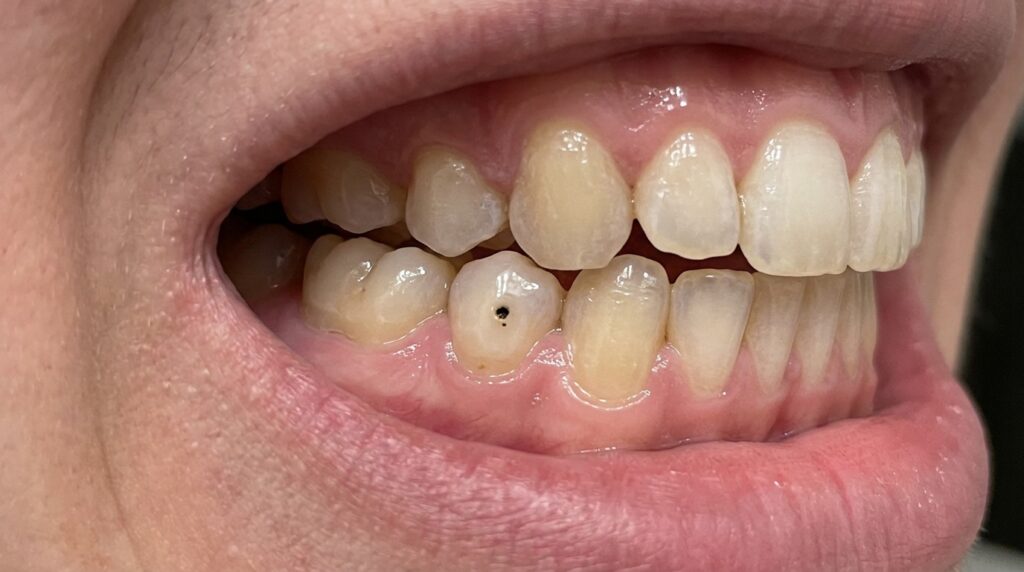
Black Dot on Tooth: Causes, Treatment, and When to See a Dentist


A black dot on tooth can be alarming, but it does not automatically mean you have a cavity. Dark marks can come from surface staining, tartar, a naturally darkened groove, an old filling, or tooth decay. The location and texture of the mark can provide clues, but you cannot always tell the cause by looking in a mirror.
If you notice a new or changing dark spot, especially with sensitivity or pain, a dental examination can determine what is happening. Good oral hygiene also matters because plaque and tartar can contribute to both staining and tooth problems. If you also have swollen or bleeding gums, our guide on how to reduce gum inflammation may be useful.
Is a Black Dot on a Tooth Always a Cavity?
No.
A dark mark can have several explanations. Some are cosmetic, while others require dental treatment.
Common causes include:
- Surface stains
- Tartar buildup
- Tooth decay
- Stained grooves or fissures
- An old filling
- Tooth injury
- Certain medications
- Fluorosis or enamel defects
- Pigment-producing bacteria
The important point is that color alone cannot reliably diagnose a cavity. Some cavities become brown or black, while early tooth decay can appear white or chalky instead.
What Causes a Black Dot on Tooth?
1. Surface Staining
Coffee, tea, dark berries, cola, red wine, curry, and tobacco can leave pigments on the tooth surface.
These stains may appear as:
- Small black dots
- Brown marks
- Dark lines
- Patches near the gumline
Surface stains are usually not painful. They may also affect several teeth rather than one isolated tooth.
Professional dental cleaning can often remove surface staining. Whitening products may help with some types of discoloration, although they will not treat decay.
2. Tartar Buildup
Plaque is a sticky film containing bacteria and food particles. When it is not adequately removed, it can harden into tartar, also called calculus.
Tartar can appear:
- Yellow
- Brown
- Dark brown
- Black
It commonly develops near the gumline and between teeth. Once hardened, it cannot be completely removed with ordinary brushing.
A dentist or dental hygienist can remove it professionally.
3. Tooth Decay
A black dot on tooth can sometimes be a sign of dental decay.
Cavities develop when acids produced by bacteria damage the tooth structure. As decay progresses, the affected area may become darker.
Possible warning signs include:
- Sensitivity to cold
- Sensitivity to hot foods or drinks
- Sensitivity to sweets
- Pain when chewing
- A rough or sticky area
- A visible pit or hole
- A dark spot that gradually becomes larger
However, a painless black dot can still be decay. Tooth decay does not always cause symptoms during its early stages.
4. A Stained Tooth Groove
Back teeth have natural grooves called pits and fissures.
Food particles and pigments can collect inside these narrow areas, creating a dark line or dot.
A stained groove is not necessarily a cavity. However, decay can also begin inside these grooves.
That is why a dentist may need to examine the surface carefully rather than assuming that every dark groove is harmless.
5. An Old Filling
Older dental fillings can sometimes create dark areas around or underneath a tooth.
Amalgam, sometimes called silver filling material, can produce gray or dark discoloration over time. An old filling can also develop staining around its edges.
A dark mark around a filling does not automatically mean the filling has failed. However, a dentist should check it if the area is changing, painful, or trapping food.
6. Tooth Injury
A tooth that has been injured can sometimes change color.
For example, a previous blow to the tooth may damage the pulp inside it. The tooth can gradually become gray, brown, or darker.
This is different from a small surface stain because the discoloration may involve much of the tooth rather than appearing as one tiny mark.
A tooth that becomes dark after an injury should be evaluated by a dentist.
7. Certain Medications
Some medications can cause tooth discoloration, particularly when exposure occurs while teeth are developing.
Tetracycline antibiotics are a well-known example and can cause permanent discoloration when used during tooth development.
Medication-related discoloration usually affects the overall appearance of teeth rather than creating one isolated new black dot.
8. Fluorosis and Enamel Defects
Dental fluorosis develops when excessive fluoride exposure occurs while teeth are forming.
It commonly causes white or brown changes in the enamel. More severe cases can involve pitting or darker discoloration.
Because fluorosis develops during tooth formation, it does not suddenly appear on a fully developed adult tooth.
Other enamel defects can also create unusual lines, pits, or areas of discoloration.
How Can You Tell if a Black Dot Is a Cavity?
You cannot reliably diagnose a cavity at home, but certain features make decay more concerning.
A stain is more likely when:
- The mark is flat
- The surface feels hard
- Several teeth have similar staining
- You regularly drink coffee or tea
- You smoke or use tobacco
- The mark improves after professional cleaning
A cavity is more concerning when:
- The spot is getting larger
- The surface feels rough or soft
- There is a visible hole or pit
- The tooth is sensitive
- You have pain when chewing
- Food repeatedly gets stuck there
- The discoloration is between teeth
These signs are clues, not a diagnosis. A dentist may need to clean the area, examine the enamel, and sometimes take an X-ray to identify decay that cannot be seen directly.
Can a Black Dot on Tooth Go Away?
It depends on the cause.
A surface stain may improve with brushing, professional cleaning, or appropriate whitening treatment.
Tartar usually requires professional removal.
A cavity will not disappear simply because you brush the tooth more often. Early tooth decay may sometimes be managed or reversed before a cavity forms, but established structural damage requires dental treatment.
Do not try to scrape a dark mark away with a sharp object. This can damage the enamel or gums and make the problem worse.
How Is a Black Dot on a Tooth Diagnosed?
A dentist may examine:
- The color of the mark
- Its size and location
- The texture of the tooth
- The surrounding gums
- Existing fillings or restorations
- Your symptoms and dental history
They may gently assess the tooth surface and use dental X-rays when decay between teeth or beneath the surface is suspected.
This matters because staining and early decay can look surprisingly similar without proper examination.
How Is a Black Spot Treated?
Treatment depends entirely on the cause.
Surface Stain
Professional cleaning can remove many external stains. Whitening may help with appropriate discoloration.
Tartar
A dentist or hygienist can remove hardened tartar through professional cleaning.
Cavity
Treatment depends on how advanced the decay is. A dentist may recommend monitoring, fluoride-based treatment for very early lesions, a filling, or more extensive treatment when decay has reached deeper parts of the tooth.
Damaged Filling
An old or defective filling may need repair or replacement.
Internal Tooth Discoloration
A tooth that has darkened after trauma may require further testing and, in some cases, root canal treatment.
The treatment should be based on the diagnosis rather than the color alone.
Can You Remove a Black Dot at Home?
Do not scrape, scratch, or pick at a dark spot.
Instead:
- Brush twice daily with fluoride toothpaste
- Clean between your teeth every day
- Limit frequent sugary foods and drinks
- Rinse your mouth with water after strongly staining foods or drinks
- Avoid smoking and tobacco
- Attend regular dental checkups
If the mark remains after good oral care, professional assessment is the safer option.
If the dark area is close to the gumline and you also have redness or bleeding, addressing your gum health is important. You can learn more in our guide to reducing gum inflammation.
When Should You See a Dentist?
Make a dental appointment if you notice:
- A new black dot
- A spot that is getting larger
- Tooth sensitivity
- Toothache
- Pain when biting
- A rough or soft area
- A visible hole
- Food repeatedly getting trapped
- A dark mark around an old filling
- A tooth becoming darker after an injury
Do not wait for pain before getting a suspicious dark mark checked. Cavities can develop without obvious symptoms.
When Is a Black Spot an Urgent Dental Problem?
A small painless dark spot is usually not an emergency.
However, seek urgent dental care if the discoloration occurs with:
- Severe tooth pain
- Facial swelling
- Swelling around the jaw
- Fever
- Pus or drainage
- Difficulty swallowing
- Difficulty breathing
These symptoms can indicate a significant dental infection.
How Can You Prevent Black Spots on Teeth?
You cannot prevent every type of tooth discoloration, but good oral care can reduce your risk.
Try to:
- Brush twice a day with fluoride toothpaste
- Clean between teeth daily
- Limit frequent sugary snacks and drinks
- Avoid tobacco
- Drink water regularly
- Have professional dental cleanings when recommended
- Attend routine dental examinations
Good gum health also supports overall oral health. Persistent gum bleeding or swelling should not be ignored.
Conclusion
A black dot on tooth does not automatically mean you have a cavity. Surface stains from coffee, tea, tobacco, or other foods can create dark marks. Tartar, stained grooves, old fillings, previous tooth injuries, enamel defects, and tooth decay can also produce similar appearances.
The most useful clues are the location, texture, symptoms, and whether the mark changes over time. Still, these clues cannot replace a dental examination. A dentist can determine whether the area is simply stained or needs treatment.
Do not scrape the spot yourself. Maintain good brushing and interdental cleaning, and arrange a dental examination if the mark is new, enlarging, rough, sensitive, painful, or persistent.
If you also notice gum redness or bleeding, our guide on how to reduce gum inflammation provides additional information about protecting your gums.
Frequently Asked Questions
Is a Black Dot on a Tooth Always a Cavity?
No. It can be caused by surface staining, tartar, a stained groove, an old filling, trauma, enamel changes, or decay. A dentist may need to examine the area to determine the cause.
Can a Black Dot on Tooth Be Removed by Brushing?
Surface stains may improve with regular brushing, but tartar and tooth decay cannot simply be brushed away. Avoid aggressive brushing because it can damage the gums and enamel.
Why Is There a Black Dot on My Tooth but No Pain?
Some stains are painless, and early tooth decay may also cause no pain. Lack of pain does not prove that the spot is harmless.
Can Coffee Cause Black Spots on Teeth?
Yes. Coffee contains pigments that can contribute to external tooth staining. Tea, red wine, tobacco, and other dark-colored foods and drinks can also stain teeth.
Can Tartar Look Black?
Yes. Tartar can become darker when it accumulates pigments from foods, drinks, or tobacco. It is often found around the gumline and requires professional removal.
Can a Cavity Look Like a Black Dot?
Yes. Tooth decay can become brown or black as it progresses. A cavity may also cause sensitivity, pain, roughness, a pit, or food getting stuck.
Should I Scrape a Black Spot Off My Tooth?
No. Scraping with a sharp object can damage enamel and gums. If the mark is tartar, professional dental cleaning is safer. If it is decay, scraping will not solve the problem.
When Should I See a Dentist About a Black Dot?
See a dentist if the spot is new, growing, rough, painful, sensitive, associated with an old filling, or does not disappear with normal oral hygiene. Seek urgent care if it occurs with severe pain, facial swelling, fever, or difficulty swallowing or breathing.
