




Ear Pressure Without Infection: Causes, Relief, and When to Worry


A feeling of fullness, pressure, or blockage in the ear can be uncomfortable, especially when there is no obvious infection. If you are experiencing ear pressure without infection, the cause may be related to Eustachian tube problems, allergies, sinus congestion, changes in altitude, earwax, jaw tension, or other conditions.
The sensation can affect one or both ears. You may also notice muffled hearing, popping, clicking, or a feeling that your ear needs to “pop.” If you also have significant nasal congestion, understanding why you may feel dizzy when you stand up can help distinguish ear-related sensations from other causes of dizziness.
What Does Ear Pressure Without Infection Mean?
Ear pressure without infection usually means you feel fullness or pressure in the ear without signs of an active middle-ear infection.
You may experience:
- A blocked feeling
- Muffled hearing
- Popping or clicking
- Pressure during swallowing
- A sensation of fluid in the ear
- Mild discomfort
- Difficulty equalizing pressure
An ear examination can help determine whether infection, fluid, wax, or another problem is responsible.
What Causes Ear Pressure Without Infection?
Several conditions can produce pressure or fullness without an infection.
Common causes include:
- Eustachian tube dysfunction
- Colds and nasal congestion
- Allergies
- Sinus problems
- Changes in altitude
- Earwax buildup
- Temporomandibular joint problems
- Inner-ear conditions
- Water trapped in the ear
- Muscle tension around the jaw and neck
1. Eustachian Tube Dysfunction
The Eustachian tubes connect the middle ears with the back of the nose and help equalize pressure.
When these tubes do not open properly, pressure can build up.
You may notice:
- Ear fullness
- Muffled hearing
- Popping
- Clicking
- Pressure that changes when you swallow
Eustachian tube dysfunction can occur after a cold, during allergies, or when nasal passages are congested.
2. A Recent Cold
A cold can cause inflammation and congestion around the nose and throat.
That swelling can interfere with the Eustachian tubes and create a blocked or pressurized feeling in the ears.
You may experience ear pressure along with:
- Stuffy nose
- Runny nose
- Postnasal drainage
- Sore throat
- Cough
The pressure can sometimes remain after the other cold symptoms have improved because the surrounding tissues may take longer to return to normal.
3. Allergies
Allergies can cause swelling inside the nasal passages.
This may interfere with normal Eustachian tube function and lead to ear pressure.
Other allergy symptoms may include:
- Sneezing
- Itchy eyes
- Runny nose
- Nasal congestion
- Throat irritation
If ear fullness appears during particular seasons or after exposure to dust, pets, or other allergens, allergies may be contributing.
4. Sinus Congestion
Sinus inflammation can create pressure around the nose, face, and ears.
You may notice:
- Facial pressure
- Nasal congestion
- Headache
- Thick nasal drainage
- Ear fullness
Sinus congestion does not always mean you have a bacterial sinus infection. Viral infections and allergies can also produce similar symptoms.
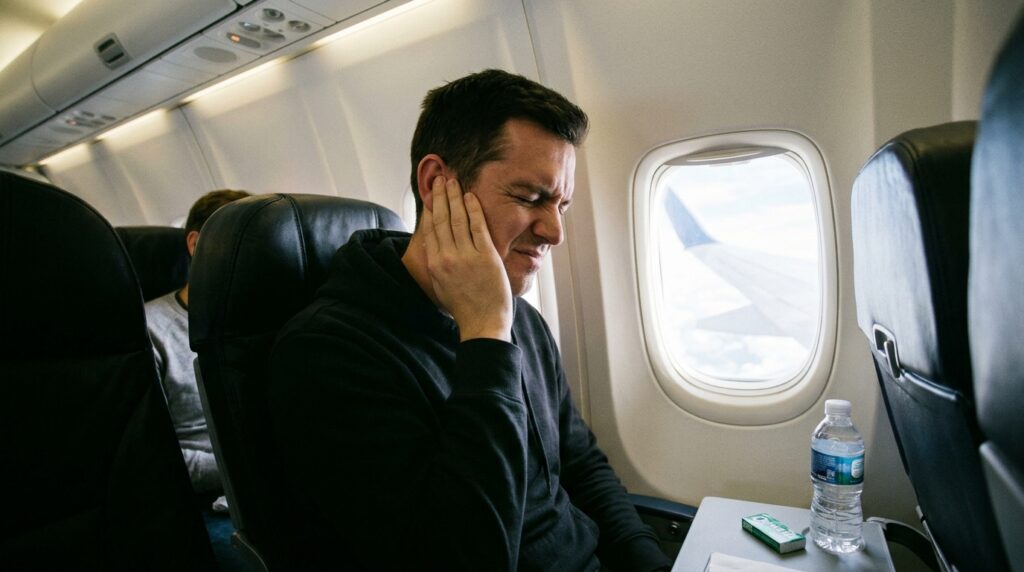
5. Air Travel and Altitude Changes
Rapid changes in air pressure can make the ears feel blocked.
This commonly happens during:
- Airplane takeoff
- Airplane landing
- Mountain travel
- Scuba diving
- Rapid changes in elevation
Normally, the Eustachian tubes open to equalize pressure.
If they cannot open quickly enough, you may experience ear popping, fullness, discomfort, or muffled hearing.
Swallowing, yawning, or chewing during altitude changes may help the ears equalize.
6. Earwax Buildup
Excessive earwax can block the ear canal.
This may create:
- Fullness
- Muffled hearing
- A blocked sensation
- Ringing in the ear
- Mild discomfort
Earwax can sometimes look similar to an ear infection because both may cause hearing changes or discomfort.
Avoid putting cotton swabs or other objects deep into the ear canal. They can push wax farther inside or injure the ear.
7. Temporomandibular Joint Problems
The temporomandibular joints, or TMJs, connect the jaw to the skull close to the ears.
Jaw problems can sometimes create sensations that feel like ear pressure even though the ear itself is healthy.
You may also notice:
- Jaw pain
- Clicking or popping
- Teeth grinding
- Headaches
- Facial muscle tension
- Pain while chewing
If ear pressure occurs alongside jaw symptoms, the TMJ may be contributing.
8. Inner-Ear Conditions
Some inner-ear disorders can cause a sensation of fullness or pressure.
These conditions may also cause:
- Dizziness
- Vertigo
- Ringing in the ears
- Hearing changes
For example, Ménière's disease can cause episodes of ear fullness together with vertigo, tinnitus, and fluctuating hearing.
Persistent or recurring ear pressure accompanied by these symptoms should be evaluated.
9. Water Trapped in the Ear
Swimming or bathing can leave water inside the outer ear canal.
This may create a temporary sensation of fullness or muffled hearing.
Tilting your head and allowing the ear to drain naturally may help.
Avoid inserting objects into the ear to remove the water.
If pain, drainage, or significant swelling develops, medical assessment may be necessary.
10. Jaw and Neck Muscle Tension
Muscles around the jaw, face, and neck can become tense because of stress, poor posture, or teeth grinding.
That tension can sometimes create sensations around the ear.
You may notice the pressure more strongly during stressful periods or after waking if you grind your teeth during sleep.
Relaxing the jaw and avoiding excessive chewing may help when muscle tension is involved.
Why Does One Ear Feel Blocked?
Pressure affecting only one ear can have several possible causes.
These include:
- Earwax
- Eustachian tube dysfunction
- Recent congestion
- Water in the ear
- Jaw problems
- Changes in the ear canal
One-sided pressure that persists, especially when accompanied by hearing loss, ringing, dizziness, or pain, should be assessed by a healthcare professional.
Can Ear Pressure Cause Dizziness?
Ear pressure can sometimes occur alongside dizziness, particularly when the inner ear is involved.
However, dizziness has many possible causes.
If dizziness is severe, recurrent, or associated with hearing changes, ringing, or a feeling of spinning, an ear examination may be appropriate.
How Can I Relieve Ear Pressure Without an Infection?
The best approach depends on the cause.
Swallow or Yawn
These actions can help the Eustachian tubes open and equalize pressure.
Chew Gum
Chewing encourages swallowing and may help during altitude changes.
Treat Nasal Congestion
If allergies or a cold are contributing, addressing nasal congestion may help.
Stay Hydrated
Adequate fluid intake can help keep mucus thinner when congestion is involved.
Avoid Putting Objects in the Ear
Cotton swabs and other objects can worsen wax blockage or injure the ear.
Address Jaw Tension
If jaw problems are contributing, reducing teeth grinding and excessive chewing may help.
When Should You See a Doctor?
Make an appointment if ear pressure:
- Lasts for more than a few days without improving
- Keeps returning
- Affects only one ear persistently
- Causes noticeable hearing loss
- Occurs with ringing
- Is accompanied by dizziness
- Causes significant pain
- Produces drainage
An examination can determine whether wax, fluid, Eustachian tube dysfunction, or another condition is responsible.
When Is Ear Pressure an Emergency?
Sudden hearing loss in one ear requires urgent medical evaluation, particularly if it develops over hours or a few days.
Seek urgent care if ear pressure occurs with:
- Sudden significant hearing loss
- Severe vertigo
- Severe headache
- Facial weakness
- Neurological symptoms
- Significant trauma to the ear or head
Do not assume sudden hearing changes are simply caused by blocked ears or wax.
Conclusion
There are several causes of ear pressure without infection, including Eustachian tube dysfunction, allergies, sinus congestion, altitude changes, earwax, jaw problems, and some inner-ear conditions. The sensation may include fullness, popping, muffled hearing, or a feeling that the ear needs to “pop.”
If the pressure follows a cold or allergy flare, it may improve as the congestion settles. However, persistent one-sided pressure, hearing changes, ringing, dizziness, or significant pain should be evaluated rather than assumed to be harmless.
If you also experience dizziness, consider whether it occurs specifically with changes in position or alongside other symptoms. Our guide to why you may feel dizzy when you stand up covers another common pattern of dizziness.
Most importantly, sudden hearing loss should receive urgent medical attention because early assessment can be important.
Frequently Asked Questions
Can You Have Ear Pressure Without an Ear Infection?
Yes. Eustachian tube dysfunction, allergies, sinus congestion, altitude changes, earwax, jaw problems, and inner-ear conditions can all cause ear pressure without an infection.
Why Does My Ear Feel Blocked but Not Hurt?
A blocked feeling without pain can occur with Eustachian tube dysfunction, earwax, congestion, or changes in air pressure.
Can Allergies Cause Ear Pressure?
Yes. Nasal inflammation from allergies can interfere with Eustachian tube function and create fullness or pressure in the ears.
How Do I Relieve Ear Pressure at Home?
Swallowing, yawning, chewing gum, managing nasal congestion, and staying hydrated may help depending on the cause. Avoid inserting objects into the ear.
Can Earwax Cause Pressure?
Yes. A buildup of earwax can block the ear canal and cause fullness, muffled hearing, ringing, or discomfort.
Why Does My Ear Feel Full After a Cold?
Congestion and inflammation around the Eustachian tube can prevent the middle ear from equalizing pressure normally. The sensation may continue for a while after the cold improves.
When Should I Worry About Ear Pressure?
Seek medical advice if pressure persists, keeps returning, causes hearing loss, or occurs with dizziness, ringing, pain, or drainage.
Is Sudden Hearing Loss an Emergency?
Yes. Sudden significant hearing loss, particularly in one ear, requires urgent medical evaluation. It should not simply be assumed to be earwax or congestion.
