




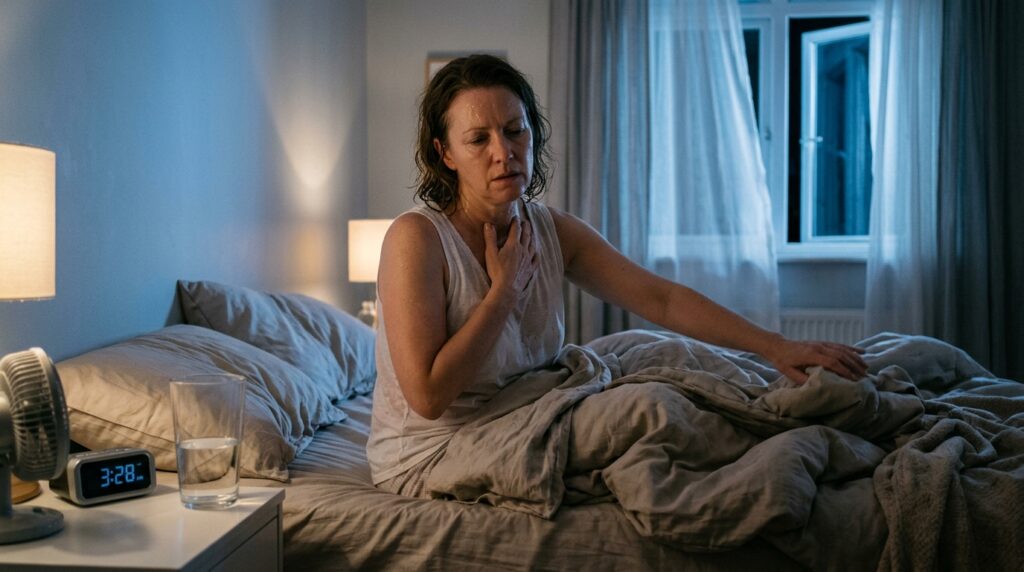
Night Sweats Causes in Women: What Your Body May Be Telling You


Waking up with soaked pajamas or damp bedding can be frustrating, especially when the bedroom is cool. There are many night sweats causes in women, and menopause is only one possibility. Hormonal changes, medications, infections, blood sugar changes, thyroid disorders, sleep problems, alcohol, and some chronic conditions can all contribute to excessive sweating during sleep. Cleveland Clinic
The key is to look at the pattern and accompanying symptoms, rather than assuming every episode is a hot flash.
What Counts as Night Sweats?
Night sweats are episodes of heavy sweating that happen during sleep and are significant enough to soak clothing or bedding. They are different from simply feeling warm because you have too many blankets or the bedroom is hot. Cleveland Clinic
You might wake up with:
- Soaked pajamas
- Damp sheets
- Sweaty skin
- Chills after sweating
- A faster heartbeat
- Interrupted sleep
Occasional sweating may not be concerning. Repeated episodes without an obvious explanation deserve more attention.
What Are the Most Common Night Sweats Causes in Women?
The possible causes range from normal hormonal changes to medication side effects and medical conditions.
1. Menopause and Perimenopause
Hormonal changes are one of the most common explanations for night sweats in women.
During perimenopause and menopause, fluctuations and reductions in reproductive hormones can affect the body's temperature-regulation system. This can lead to episodes of sweating during sleep. Cleveland Clinic
You may also notice:
- Irregular periods
- Hot flashes
- Sleep problems
- Mood changes
- Vaginal dryness
- Difficulty concentrating
If you're experiencing these symptoms in your 40s, perimenopause symptoms around age 40 may be relevant.
However, persistent night sweats should not automatically be blamed on menopause, particularly when other unusual symptoms are present.
2. Pregnancy and the Postpartum Period
Pregnancy causes substantial hormonal changes that can influence body temperature and sweating.
Nighttime sweating can also continue for a period after giving birth while hormone levels adjust.
If you are pregnant or recently gave birth, hormonal changes may therefore be a reasonable explanation for increased sweating. Persistent or severe symptoms should still be discussed with your healthcare professional.
3. Medications
Certain medications can cause increased sweating as a side effect.
Examples include some:
- Antidepressants
- Pain relievers
- Steroids
- Blood pressure medications
- Diabetes medications
- Hormonal treatments
- Some cancer treatments
If your night sweats began after starting a new medicine or changing a dose, check with your healthcare professional.
Do not stop a prescribed medication on your own.
4. Infections
Infections can cause sweating when your body temperature rises and falls.
Respiratory infections such as influenza and COVID-19 may cause fever and nighttime sweating. Other infections can do the same.
You may also experience:
- Chills
- Fever
- Cough
- Body aches
- Sore throat
- Fatigue
- Swollen lymph nodes
A pattern of persistent night sweats accompanied by fever deserves medical evaluation rather than assuming it is simply hormonal. Cleveland Clinic
5. Low Blood Sugar
Low blood glucose can trigger sweating, particularly in people with diabetes who use insulin or certain glucose-lowering medications.
Nighttime low blood sugar may be accompanied by:
- Shaking
- Sweating
- Fast heartbeat
- Hunger
- Weakness
- Confusion
- Headache
If you repeatedly wake up sweaty and shaky, especially if you have diabetes, discuss the episodes with your healthcare professional.
6. An Overactive Thyroid
Hyperthyroidism occurs when the thyroid produces too much thyroid hormone.
Because thyroid hormones influence metabolism, an overactive thyroid can make you feel unusually warm and sweaty.
Other symptoms may include:
- Racing heartbeat
- Trembling
- Anxiety
- Difficulty sleeping
- Unexplained weight loss
- Increased appetite
- Frequent bowel movements
Blood tests can help determine whether thyroid dysfunction is contributing to excessive sweating. Cleveland Clinic
7. Stress and Anxiety
Stress does not only affect you while you're awake.
When the nervous system remains activated, stress hormones can increase heart rate and stimulate sweating. Anxiety and panic disorders are recognized causes of nighttime sweating. Cleveland Clinic
You may also notice:
- Racing thoughts
- Restlessness
- Rapid heartbeat
- Muscle tension
- Trouble falling asleep
- Frequent waking
If you have several stress-related symptoms, understanding high cortisol symptoms in females can help you look at the broader pattern rather than focusing on sweating alone.
8. Alcohol
Alcohol can contribute to nighttime sweating by affecting the nervous system, sleep, hydration, and body temperature.
Some people notice sweating several hours after drinking rather than immediately.
Alcohol withdrawal can also cause sweating in people who regularly consume large amounts of alcohol. Cleveland Clinic
If your symptoms consistently follow alcohol consumption, keeping track of the pattern may help identify a connection.
9. Sleep Apnea
Sleep disorders can also contribute to nighttime sweating.
Obstructive sleep apnea causes repeated interruptions in breathing during sleep. These episodes can activate the body's stress response and may be associated with sweating.
Other possible signs include:
- Loud snoring
- Gasping during sleep
- Morning headaches
- Daytime sleepiness
- Difficulty concentrating
If sweating occurs alongside these symptoms, discuss the possibility of sleep apnea with a healthcare professional.
10. Obesity and Other Chronic Conditions
Excess body weight can be associated with increased sweating and may also increase the likelihood of conditions such as sleep apnea.
Other chronic or endocrine conditions can contribute to excessive sweating as well. Diabetes, certain neurological disorders, and some endocrine tumors are among the recognized possibilities. Cleveland Clinic
This does not mean that night sweats automatically indicate an underlying disease. Most people with persistent night sweats in primary care do not turn out to have a serious underlying disorder. AAFP
Night Sweats vs. Sleeping Too Warm
Before looking for a medical explanation, consider your sleep environment.
You may sweat because of:
- Heavy blankets
- Warm pajamas
- Poor ventilation
- A hot bedroom
- Thick bedding
True night sweats are more significant than simply feeling warm. If you regularly wake up drenched despite sleeping in a comfortably cool environment, the symptom deserves more attention. Cleveland Clinic
Night Sweats vs. Hot Flashes
These terms are closely related but can describe slightly different experiences.
A hot flash is usually a sudden wave of warmth, often affecting the face, neck, chest, or upper body, followed by sweating. When these episodes occur during sleep, they may be described as night sweats. Mayo Clinic
However, not every episode of nighttime sweating is caused by a hot flash.
That distinction matters when looking for the underlying cause.
Can Dehydration Cause Night Sweats?
Dehydration is not one of the leading causes of persistent night sweats, but heavy sweating can contribute to fluid loss.
You may develop:
- Thirst
- Dry mouth
- Dark urine
- Reduced urination
- Dizziness
- Fatigue
If you're sweating heavily and experiencing these symptoms, knowing the signs of dehydration can help you recognize when fluid loss may be becoming significant.
How Are Persistent Night Sweats Evaluated?
Your healthcare professional may ask about:
- When the sweating started
- How often it occurs
- Whether your clothes or bedding become soaked
- Menstrual and reproductive history
- Medications
- Alcohol use
- Recent infections
- Weight changes
- Other symptoms
Depending on your symptoms and medical history, testing might include blood work or other investigations.
The evaluation should be guided by the overall clinical picture rather than by night sweats alone.
How Can You Reduce Night Sweats?
Try identifying and removing potential triggers.
Helpful steps include:
Keep Your Bedroom Comfortable
Use lightweight bedding and breathable sleepwear. A fan or air conditioning may also help.
Track Possible Triggers
Record when sweating happens and whether it follows:
- Alcohol
- Caffeine
- Spicy foods
- Stress
- Medication changes
- Illness
Manage Stress
Relaxation techniques, regular physical activity, meditation, and slow breathing may help when stress contributes to symptoms.
Address Underlying Conditions
If diabetes, thyroid disease, sleep apnea, or another condition is contributing, treating the underlying problem is more useful than simply trying to control sweating.
When Should You See a Doctor?
Make an appointment if night sweats:
- Are persistent or recurring
- Regularly wake you
- Soak your clothes or bedding
- Have no obvious environmental explanation
- Started unexpectedly
- Occur with unexplained weight loss
- Occur with persistent fever
- Occur with swollen lymph nodes
- Occur with significant fatigue
Medical evaluation is especially appropriate when several of these symptoms occur together.
When Are Night Sweats an Emergency?
Night sweats alone are usually not an emergency.
However, seek immediate medical attention if heavy sweating occurs with:
- Chest pain or pressure
- Severe shortness of breath
- Fainting
- Severe dizziness
- Confusion
- Severe weakness
- Other symptoms suggesting a heart or medical emergency
Sudden excessive sweating can sometimes accompany serious cardiovascular problems, particularly when other warning symptoms are present. Cleveland Clinic
Conclusion
The night sweats causes in women are varied. Menopause and perimenopause are common explanations, but medications, infections, low blood sugar, thyroid problems, stress, alcohol, sleep apnea, and other medical conditions can also cause excessive sweating during sleep.
The most useful clues are the frequency, severity, timing, and symptoms that occur alongside the sweating. Keeping a record can help your healthcare professional identify patterns and decide whether testing is appropriate.
If your night sweats are accompanied by unexplained weight loss, persistent fever, swollen lymph nodes, or significant fatigue, don't simply assume they're part of menopause. And if heavy sweating occurs with chest pain, severe shortness of breath, fainting, or severe dizziness, seek urgent medical care.
Frequently Asked Questions
What Are the Most Common Night Sweats Causes in Women?
Menopause and perimenopause are common causes, but medications, infections, stress, alcohol, low blood sugar, thyroid disorders, and sleep apnea can also contribute.
Can Hormonal Changes Cause Night Sweats?
Yes. Changes in estrogen and other reproductive hormones can affect temperature regulation and trigger nighttime sweating, particularly during perimenopause and menopause. Cleveland Clinic
Can Stress Cause Night Sweats in Women?
Yes. Stress and anxiety can activate the nervous system and increase sweating, including during sleep.
Can Thyroid Problems Cause Night Sweats?
Yes. An overactive thyroid can cause increased sweating, heat intolerance, a fast heartbeat, trembling, and unexplained weight loss.
Can Medications Cause Night Sweats?
Yes. Several medications can cause sweating as a side effect, including some antidepressants, pain medications, steroids, blood pressure medicines, and diabetes treatments.
Are Night Sweats Always a Sign of Menopause?
No. Menopause is a common cause, but infections, medications, thyroid problems, low blood sugar, sleep disorders, alcohol, and other conditions can also cause night sweats.
When Should Night Sweats Be Concerning?
Persistent or unexplained night sweats deserve medical evaluation, particularly when accompanied by unexplained weight loss, persistent fever, swollen lymph nodes, or significant fatigue.
How Can I Reduce Night Sweats at Night?
Keep your bedroom comfortably cool, use lightweight bedding, wear breathable sleepwear, identify personal triggers, manage stress, and address any underlying medical condition with professional guidance.
