




Does Blue Light Before Bed Really Affect Your Sleep?


Evening screen time is one of the most widespread yet preventable sleep-sabotaging practices in modern life. The blue light emitted from smartphones, tablets, and computers fundamentally disrupts your circadian rhythm, your body's internal sleep-wake cycle, when accessed during evening hours.
Understanding how screen time compromises sleep quality enables deliberate behavioral changes supporting deeper, more restorative rest. This comprehensive guide explores the mechanisms linking screen time to poor sleep and reveals practical strategies for managing evening screen time to optimize nighttime rest.
How Blue Light From Screen Time Affects Sleep
Blue light wavelengths, particularly abundant in smartphone, computer, and tablet displays, suppress melatonin production more powerfully than other light wavelengths. Melatonin is the hormone that drives sleepiness, and evening screen time directly inhibits its production. This melatonin suppression from evening screen time essentially tricks your brain into believing daytime continues, preventing your body's natural descent toward sleep.
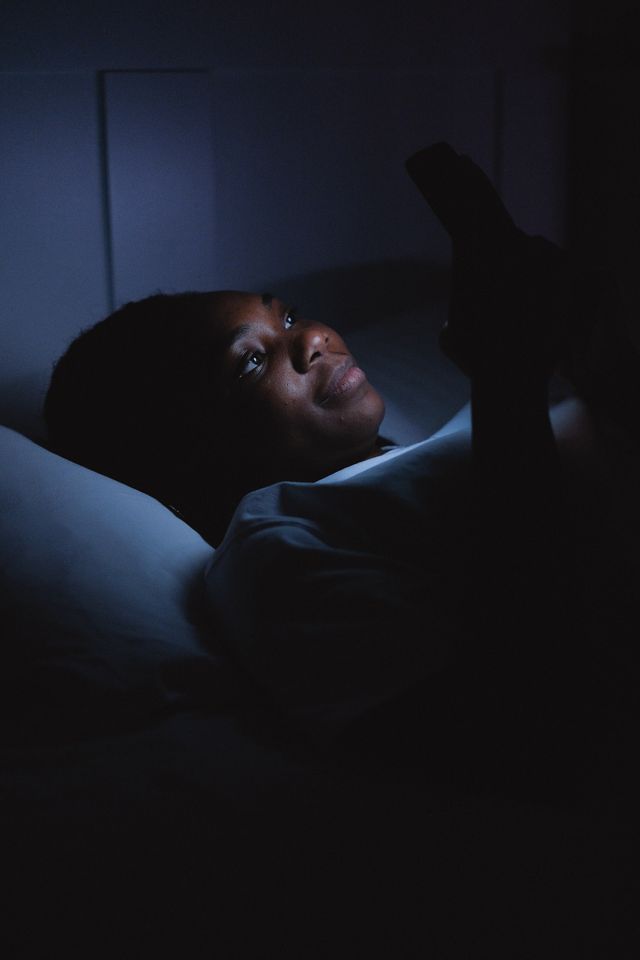
Research demonstrates that 30-60 minutes of evening screen time suppresses melatonin production by 25-55%, with effects persisting 30-60 minutes after you stop viewing screens. This melatonin suppression means that screen time at 9 PM continues to disrupt sleep initiation even at 10 PM or later. The impact intensifies when screen time occurs in dark rooms with bright displays, as the contrast amplifies the biological effects of blue light exposure.
The Problem With Evening Screen Time Duration
Most people underestimate how much evening screen time they engage in daily. The average person spends 4-6 hours daily on screens, with a substantial amount of that time in the evening, when sleep is imminent. This cumulative evening screen time creates powerful circadian disruption, affecting not only sleep onset but also sleep architecture, the balance between light sleep, deep sleep, and REM sleep.
Screen time in the hours before bed doesn't simply delay sleep initiation; it reduces deep sleep duration and impairs sleep quality even when total sleep duration remains unchanged. People who sleep after heavy evening screen time report feeling less rested despite sleeping similar hours, reflecting reduced sleep quality due to screen time's circadian disruption.
Why Screen Time Before Bed Matters More Than Daytime Screen Time
Daytime screen time poses minimal circadian risk because natural bright light exposure overwhelms blue light wavelengths from screens. However, evening screen time occurs when ambient light is minimal, making blue light dominant in your visual environment. This evening-specific vulnerability explains why the timing of screen time matters more than total screen time.
Screen time at 7 PM affects sleep far more than equivalent screen time at 1 PM, despite identical blue-light exposure. This timing difference reflects your body's increasing melatonin production as evening progresses; screen time directly interferes with this natural progression. Essentially, evening screen time works against your body's built-in sleep-preparation mechanisms.
How Screen Time Affects Different Sleep Stages
Screen time disruption severely affects REM sleep, the stage that drives emotional regulation, memory consolidation, and cognitive restoration. Individuals with significant evening screen time experience reduced REM duration and more fragmented REM episodes, which directly impair cognitive function and emotional health the next day. Additionally, screen time delays sleep onset, reducing total sleep duration when wake times remain fixed, a reality for most working adults.
Deep sleep, the restorative sleep stage, also suffers from evening exposure to screens. The circadian disruption from screen time prevents your brain from achieving the physiological state enabling deep sleep, replacing restorative stages with lighter, less beneficial sleep.
Practical Strategies for Reducing Evening Screen Time
The Screen Time Cutoff
Establish a strict screen time cutoff 60-90 minutes before bed, creating a wind-down period that allows melatonin to recover. Screen time cessation 60-90 minutes pre-bedtime enables sufficient melatonin restoration for natural sleep initiation. For most people, establishing screen time cessation by 9-10 PM supports healthy sleep onset.
Blue Light Filtering
When eliminating evening screen time proves difficult, blue-light filtering glasses reduce blue light exposure, decreasing, though not eliminating, screen time's circadian impact. Many devices offer evening screen time settings that reduce blue light emission, though these technological solutions are less effective than eliminating screen time.
Gradual Screen Time Reduction
Abruptly eliminating evening screen time proves challenging for many individuals. Instead, progressively reduce screen time over 2-3 weeks, first eliminating 15 minutes of daily evening screen time, then adding weekly reductions. Gradual screen time reduction allows habit formation, behavioral replacement, and circadian adjustment.
Replacing Screen Time With Alternatives
Reading physical books, journaling, meditation, gentle stretching, and social conversation are screen-time alternatives that support sleep preparation. These activities trigger relaxation responses that counter the arousal effects of evening screen time. Choosing calming screen-time alternatives and avoiding stimulating replacement activities helps improve sleep quality.
The Connection Between Screen Time and Sleep Disorders
Chronic evening screen time contributes to the development and perpetuation of insomnia. People experiencing insomnia often increase evening screen time as nighttime anxiety escalates, inadvertently worsening their condition. Breaking this screen time-insomnia cycle requires deliberate evening screen time elimination, often the most impactful intervention beyond formal insomnia treatment.
Taking Action on Evening Screen Time
Assess your current evening screen time honestly, including time spent on phones, tablets, computers, and televisions. Document the time you typically begin and end evening screen time. Calculate the total evening screen time, then establish a realistic screen-time reduction plan.
Start by eliminating screen time 30 minutes before bed, gradually extending this screen-time-free period to 60-90 minutes as the behavioral change solidifies. Track sleep quality alongside screen time modifications, noting how reduced evening screen time improves sleep onset speed, sleep depth perception, and next-day cognitive function. Most individuals experience measurable sleep improvements within one week of a meaningful reduction in evening screen time, demonstrating the profound impact of this change on sleep quality.