




Prozac (Fluoxetine): How It Works, Uses, and Side Effects


Starting a medication for your mental health can feel overwhelming. You may wonder how it works, how it will affect you, or whether it will truly help.
Prozac, also known as fluoxetine, is one of the most commonly prescribed medications for depression and anxiety, and it has helped millions of people regain balance in their daily lives.
If your healthcare provider has mentioned Prozac, you are likely seeking clear, honest answers. Will it affect your personality? How long does it take to work? What should you watch out for?
This guide explains what Prozac does, why it is prescribed, and what you can realistically expect so that you can feel informed, confident, and prepared as you take the next step in your mental health journey.
What is Prozac?
Prozac is the brand name for a drug called fluoxetine. It is a type of antidepressant. It was one of the first of its kind and has been used by millions of people since the 1980s.
It belongs to a family of medicines called SSRIs (Selective Serotonin Reuptake Inhibitors). While that sounds complicated, the process is actually quite simple.
How Does It Work?
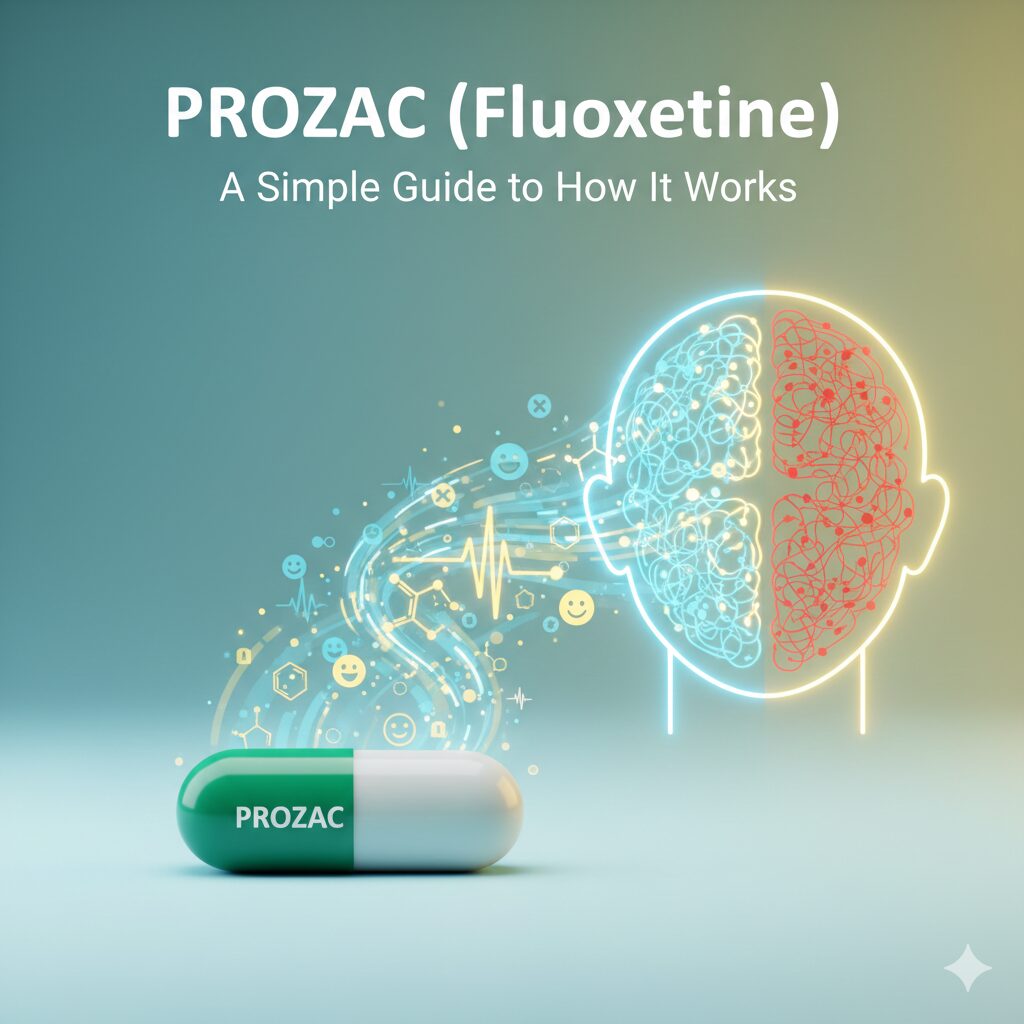
To understand Prozac, you must look inside the brain. Your brain sends messages using chemicals called neurotransmitters. One of the most important neurotransmitters for mood is serotonin. You can think of serotonin as the body’s natural “feel-good” chemical. It helps you feel happy, calm, and focused.
When you have depression or anxiety, your brain might recycle this chemical too quickly. This means there is not enough left over to maintain your mood.
According to the Mayo Clinic, SSRIs like Prozac work by blocking this recycling process. This keeps more serotonin available in your brain to send happy messages. Over time, this helps balance your mood and makes you feel more like yourself again.
What Does Prozac Treat?
Most people know Prozac treats depression, but it helps with other conditions, too. The National Institutes of Health confirms that fluoxetine is FDA-approved to treat several mental health issues:
- Major Depressive Disorder: This is when you feel sad, hopeless, or empty for a long time.
- Obsessive-Compulsive Disorder (OCD): This is when you have unwanted thoughts and feel the urge to repeat actions, like washing your hands or checking locks.
- Panic Disorder: This causes sudden attacks of extreme fear and physical symptoms like a racing heart.
- Bulimia Nervosa: This is an eating disorder where people binge eat and then purge (vomit).
How Long Does It Take to Work?
This is the hardest part for new patients. Prozac is not like a headache pill that works in 30 minutes. It is a slow-acting medicine.
According to Johns Hopkins Medicine, antidepressants take time to build up in your system. You might notice small changes in your sleep or energy after one or two weeks.
However, it usually takes 4 to 6 weeks to feel the full benefit. It is very important to be patient. Many people stop taking it too soon because they think it is not working, but their brain needs more time to adjust.
Common Side Effects
Like all medicines, Prozac can cause side effects. The good news is that for most people, these are mild. According to Healthline, common side effects include:
- Nausea (feeling sick to your stomach)
- Trouble sleeping (insomnia)
- Feeling tired or drowsy
- Dry mouth
- Loss of appetite
- Sweating
If these problems do not go away, talk to your doctor. They might adjust your dose or suggest taking the pill at a different time of day.
Important Safety Warnings
There are some serious risks you should know about.
- The “Black Box” Warning The FDA requires a strict warning on all antidepressants. In some cases, children and young adults (under 25) may have an increase in suicidal thoughts when they first start the medicine. This is rare, but families should watch closely for any sudden mood changes.
- Serotonin Syndrome This is a rare but dangerous condition where you have too much serotonin in your body. This can happen if you mix Prozac with other drugs. Cleveland Clinic experts warn that symptoms include high fever, stiff muscles, and confusion. If this happens, you need emergency help.
- Stopping the Medication You should never stop taking Prozac suddenly. Harvard Health explains that quitting “cold turkey” can cause withdrawal symptoms like dizziness, nausea, and “brain zaps” (electric shock feelings). Your doctor will help you lower your dose slowly over time.
The Bottom Line
Prozac is a powerful tool that has helped millions of people live happier lives. It is not a sign of weakness to take it; it is a way to correct a chemical imbalance in your body.
If you think this medication might help you, make an appointment with a doctor. Be open about your feelings and your history. With the right treatment plan, you can start to feel like yourself again.
Frequently Asked Questions (FAQ)
Q: Will Prozac make me gain weight? A: It is possible. While some people lose weight at first because of nausea, others may gain weight over time as their appetite returns. If you are worried about this, talk to your doctor about diet and exercise.
Q: Is Prozac addictive? A: No, Mayo Clinic states that antidepressants are not addictive in the way that alcohol or drugs are. You will not get “high” from them, and you will not crave them. However, your body does get used to them, which is why you must stop slowly.
Q: Can I drink alcohol while taking it? A: It is best to avoid it. Alcohol is a depressant, which means it does the opposite of what Prozac is trying to do. It can make your depression worse and make side effects like drowsiness much stronger.
Disclaimer: This blog is for information only. It is not medical advice. Always talk to a healthcare professional before starting or stopping any medication.
Sources
Cleveland Clinic. Fluoxetine capsules or tablets (Depression/Mood Disorders). Cleveland Clinic. Published 2025. https://my.clevelandclinic.org/health/drugs/20119-fluoxetine-capsules-or-tablets-depressionmood-disorders
Mayo Clinic. Selective serotonin reuptake inhibitors (SSRIs). Mayo Clinic. Published September 11, 2024. https://www.mayoclinic.org/diseases-conditions/depression/in-depth/ssris/art-20044825
Sohel AJ, Shutter MC, Molla M. Fluoxetine. National Library of Medicine. Published 2024. https://www.ncbi.nlm.nih.gov/books/NBK459223/
Nestadt P. Why Aren’t My Antidepressants Working? www.hopkinsmedicine.org. Published 2023. https://www.hopkinsmedicine.org/health/wellness-and-prevention/why-arent-my-antidepressants-working
Caporuscio J. Prozac Side Effects: What They Are and How to Manage Them. Healthline. Published March 20, 2023. https://www.healthline.com/health/drugs/prozac-side-effects
Cleveland Clinic. Serotonin Syndrome | Cleveland Clinic. Cleveland Clinic. Published March 24, 2022. https://my.clevelandclinic.org/health/diseases/17687-serotonin-syndrome
Salamon M. Tapering off antidepressants sensibly. Harvard Health. Published August 1, 2022. https://www.health.harvard.edu/mind-and-mood/tapering-off-antidepressants-sensibly




Comments are closed.