




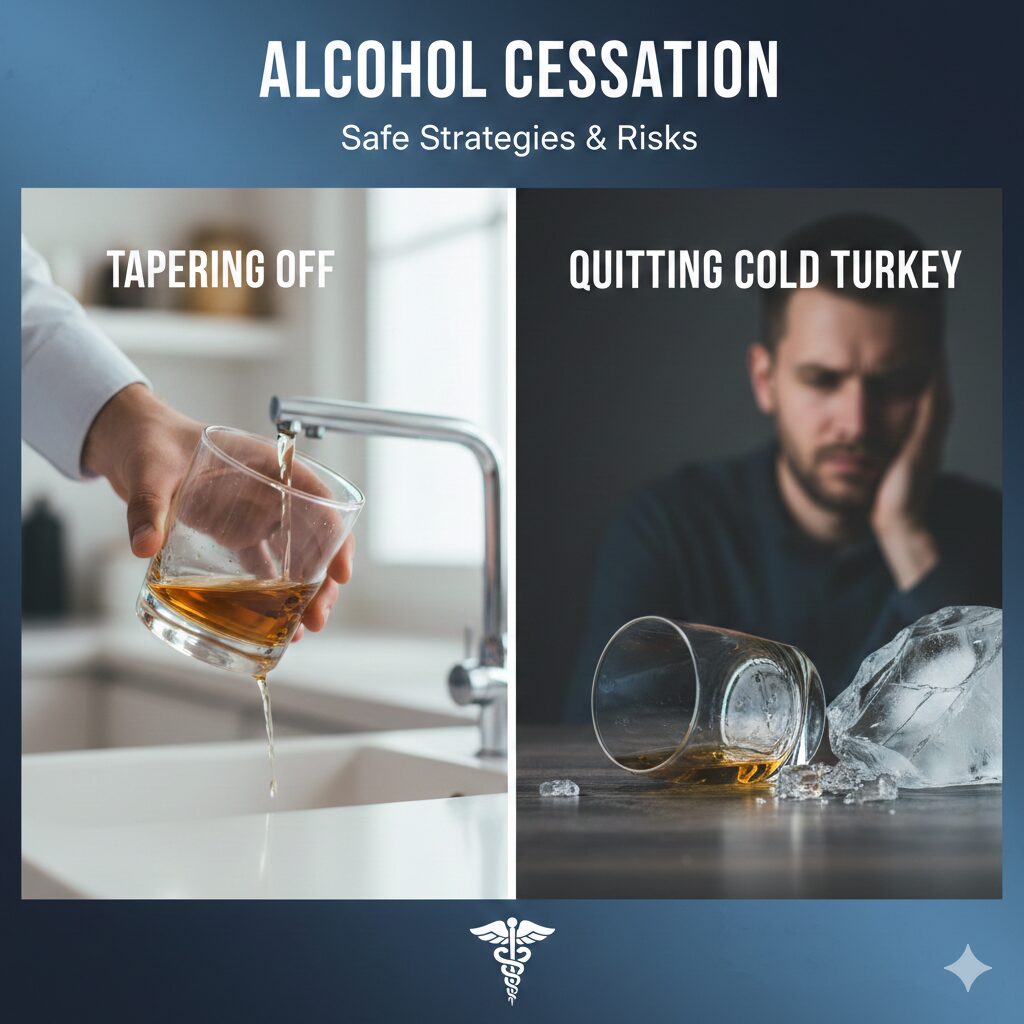
Tapering Off Alcohol vs. Quitting Cold Turkey: Safe Strategies, Risks, and What to Expect


Quitting alcohol is a big step toward a healthy life. However, stopping suddenly can be very hard on your body. There are two main ways people try to quit: tapering off or quitting “cold turkey.” This guide will help you understand both ways so you can stay safe.
What Does It Mean to Taper Off Alcohol?
Tapering means you slowly drink less alcohol over several days or weeks, according to American Addiction Centers. Instead of stopping all at once, you reduce the amount you drink gradually. This gives your brain and body time to get used to having less alcohol.
Many people choose to taper because they are afraid of getting very sick. When someone drinks a lot for a long time, their body gets used to the alcohol. If they stop too fast, their heart might race, or they might feel very shaky. Tapering helps make these feelings less scary.
Tapering may benefit people who have been drinking every day for a long time. According to Harvard Health Publishing, people who drink heavily are at a higher risk of dangerous withdrawal symptoms. If you drink a lot, your body might need a slow change rather than a sudden shock to stay out of the hospital.
Tapering vs. Cold Turkey: What’s the Difference?
Quitting “cold turkey” means stopping drinking right away, explains the University of Utah Health. You go from drinking your usual amount to drinking zero in a single day. While this sounds simple, it can be very hard on your internal organs and your mind.
The key difference is the speed at which the change happens. Tapering is like walking down a long set of stairs one at a time. Cold turkey is like jumping off the top of the stairs all the way to the bottom. One is slow and steady, while the other is a very fast shock to the system.
Safety is the most important consideration here. As the Mayo Clinic explains, quitting cold turkey can be dangerous for heavy drinkers because it can cause seizures or a problem called delirium tremens (DTs). Tapering is generally considered a safer way to lower the amount of alcohol in your system if you cannot get to a hospital right away.
Medical supervision is necessary if you have ever had a seizure or if you see things that are not there when you stop drinking. You should always talk to a doctor before trying to quit on your own. Doctors can give you medicine to keep you safe while your body cleans itself out.
Pros of Tapering Off Alcohol
The biggest plus of tapering is that it lowers the risk of severe withdrawal. Because the alcohol leaves your body slowly, your brain doesn’t panic as much. This can help prevent the most dangerous side effects, such as high blood pressure or heart problems.
Your body also gets a chance to adjust physically. Your liver and your stomach have time to start healing without being overwhelmed. A gradual change helps your body find its balance again without making it feel like it is under attack.
Tapering significantly reduces the shock to the body. When you quit cold turkey, your nervous system becomes very excited and “revved up,” which feels terrible. By lowering the dose slowly, you keep your nervous system calmer and more stable.
It is also an easier mental transition for many people. It is hard to change a habit in one day, so tapering lets you practice living with less alcohol. This can help you feel more confident as you get closer to your goal of zero drinks.
Cons of Tapering Off Alcohol
One big problem with tapering is that it requires very strong self-control. It is very hard to take just one or two drinks when you are used to having many more, explains Healthline. Many people find that once they have one drink, they want to keep going and forget their plan.
There is also a high risk of relapse during this time. Because you still have alcohol in your house, it is easy to give up and go back to your old habits. If you feel stressed or sad, you might drink more than your schedule allows, which restarts the whole process.
Tapering is a much slower process than quitting all at once. It can take weeks to reach zero, and some people get tired of waiting. They might feel like they aren’t making progress fast enough and get frustrated with the slow pace.
Tapering may not work for everyone. Some people have a medical history that makes any amount of alcohol dangerous. According to the Cleveland Clinic, people with certain liver diseases or heart conditions should follow a doctor’s specific plan rather than trying to taper on their own.
Safe Strategies for Tapering Off Alcohol
If you decide to taper, you must create a reduction schedule. This written plan shows exactly how many drinks you are allowed each day. You should aim to reduce your intake by just one or two drinks every couple of days until you reach zero.
Tracking your drinking is also very helpful. Keep a notebook or use an app to write down every single drink you have. This keeps you honest and shows you exactly how well you are sticking to your safety plan.
You must stay hydrated and eat healthy meals during this time. Alcohol often makes people lose vitamins and water, which makes them feel even sicker. Drinking lots of water and eating soup or fruit can help your body stay strong while it heals.
Seeking medical advice is the smartest thing you can do. A doctor can check your heart and blood to see if tapering is safe for you. They might even suggest a “medical detox” where you stay at a clinic to be watched by nurses.
Building a support system is vital for success. Tell a trusted friend or family member about your plan so they can check on you. Having someone to talk to when you feel shaky or sad can make a huge difference in staying on track.
Alcohol Withdrawal Symptoms to Watch For
Mild symptoms usually start a few hours after your last drink. You might feel a little shaky, have a headache, or feel like you are going to throw up. These feelings are uncomfortable, but they are common when the body starts to miss alcohol.
Moderate symptoms are more serious and can include a very rapid heartbeat or excessive sweating. You might feel very anxious or find it hard to sit still. According to Johns Hopkins Medicine, these symptoms usually peak within 24 to 72 hours after you stop or slow down your drinking.
Severe symptoms mean you need to seek emergency help right away. If you have a seizure, see things that are not there, or feel very confused, call 911. These are signs of DTs, which can be life-threatening if a doctor does not treat them immediately.
Challenges You May Face During Tapering
Cravings are one of the hardest parts of quitting. Your brain will “beg” for a drink because it thinks it needs alcohol to survive. These urges can be very strong, but they usually pass if you can distract yourself for ten or twenty minutes.
You will likely experience emotional changes, such as feeling cranky or sad. Alcohol changes the chemicals in your brain that make you feel happy. As you drink less, your brain has to learn how to make those “happy chemicals” on its own again, which takes time.
Social pressure can also make tapering hard. Friends might ask you to go out to a bar or offer you a drink at a party. It is okay to say “no” or to stay home for a few weeks until you feel stronger in your recovery.
Sleep problems are very common when you stop drinking. Many people use alcohol to fall asleep, so without it, they might lie awake for a long time, according to the Sleep Foundation. While this is annoying, your sleep will eventually get much better and deeper once the alcohol is gone.
When to Consider Professional Help
There are clear signs that you should not taper alone. If you have tried to quit before and had a seizure, you must be in a hospital. Also, if you drink a very large amount every day, your body is too dependent to change safely without medical help.
Detox programs are special places where you can safely quit. Nurses and doctors are there 24 hours a day to give you medicine and make sure you are okay. This is often the safest and most comfortable way to get through the first few days of being sober.
Counseling and therapy can help you understand why you drank in the first place. Talking to a professional helps you learn new ways to handle stress or sadness without reaching for a bottle. According to the American Psychological Association, therapy is a key part of staying sober for a long time.
Medication-assisted treatment is another tool your doctor can use. Some medicines can stop cravings or make you feel sick if you drink alcohol. These can be very helpful for people who find it hard to stay away from alcohol on their own.
Long-Term Recovery After Tapering
Preventing relapse is an ongoing job that starts after you reach zero drinks. You should identify your “triggers,” which are things that make you want to drink, like certain people or places. Avoiding these triggers early on helps keep you safe.
Lifestyle changes support your sobriety by giving you new things to focus on. Starting a hobby, exercising, or spending more time with family can fill the time you used to spend drinking. A healthy body makes it much easier to have a healthy mind.
Support groups and community resources are great for meeting people who are going through the same thing. Groups like Alcoholics Anonymous (AA) provide a safe place to share your story. Having a community makes you feel less alone and gives you people to call when things get tough.
Frequently Asked Questions
Is tapering safer than quitting cold turkey?
For many people, yes, it is safer because it prevents a sudden shock. However, according to the National Institute on Alcohol Abuse and Alcoholism (NIAAA), the safest way is always to talk to a doctor first. They can tell you which method best fits your health needs.
How long does it take to taper off alcohol?
It usually takes about one to two weeks, but it depends on how much you were drinking. If you try to go too fast, you might get sick, so it is better to take your time. Your doctor can help you decide on the right speed for your body.
Can I taper off alcohol without a doctor?
While some people do it, it is risky. If you start to feel very sick or confused, you need help immediately. As the American Academy of Family Physicians suggests, having a medical professional guide you is the best way to avoid dangerous complications.
What happens if I slip during tapering?
If you have an extra drink, do not give up on yourself. Just go back to your schedule the next day and keep trying. One mistake does not mean you have failed; it just means you need to stay focused on your goal.
Sources
Sharp A. Alcohol Withdrawal Symptoms, Timeline & Detox Treatment. American Addiction Centers. Published April 8, 2024. https://americanaddictioncenters.org/alcohol/withdrawal-detox
Harvard Health Publishing. Alcohol Withdrawal – Harvard Health. Harvard Health. Published April 22, 2019. https://www.health.harvard.edu/diseases-and-conditions/alcohol-withdrawal-a-to-z
Mayo Clinic. Alcohol Use Disorder. Mayo Clinic. Published May 18, 2022. https://www.mayoclinic.org/diseases-conditions/alcohol-use-disorder/symptoms-causes/syc-20369243
Healthline. How Does Tapering Off Alcohol Work? Healthline. Published September 27, 2023. https://www.healthline.com/health/alcoholism/tapering-off-alcohol
Cleveland Clinic. Alcohol withdrawal. Cleveland Clinic. Published 2024. https://my.clevelandclinic.org/health/diseases/alcohol-withdrawal
Johns Hopkins Medicine. When to Evaluate Heart Palpitations. www.hopkinsmedicine.org. https://www.hopkinsmedicine.org/health/conditions-and-diseases/when-to-evaluate-heart-palpitations
Bryan L, Singh A. Alcohol and sleep. Sleep Foundation. Published September 4, 2020. https://www.sleepfoundation.org/nutrition/alcohol-and-sleep
American Psychological Association. Understanding psychotherapy and how it works. American Psychological Association. Published December 12, 2023. https://www.apa.org/topics/psychotherapy/understanding
National Institute on Alcohol Abuse and Alcoholism. Understanding alcohol use disorder. National Institute on Alcohol Abuse and Alcoholism. Published 2025. https://www.niaaa.nih.gov/publications/brochures-and-fact-sheets/understanding-alcohol-use-disorder