



Liver Failure


A clear guide to liver failure, including acute and chronic types, major causes, warning signs, and prevention strategies.
The liver plays a vital role in the human body. This body organ acts as the leading chemical factory to detoxify harmful substances and metabolize nutrients from food to usable forms. Therefore, liver failure occurs when the liver cannot perform these essential functions.
Liver failure is a serious, potentially life-threatening condition that requires immediate medical attention. It’s always advisable to be aware of this condition and go for screenings for early detection.
What is Liver Failure?
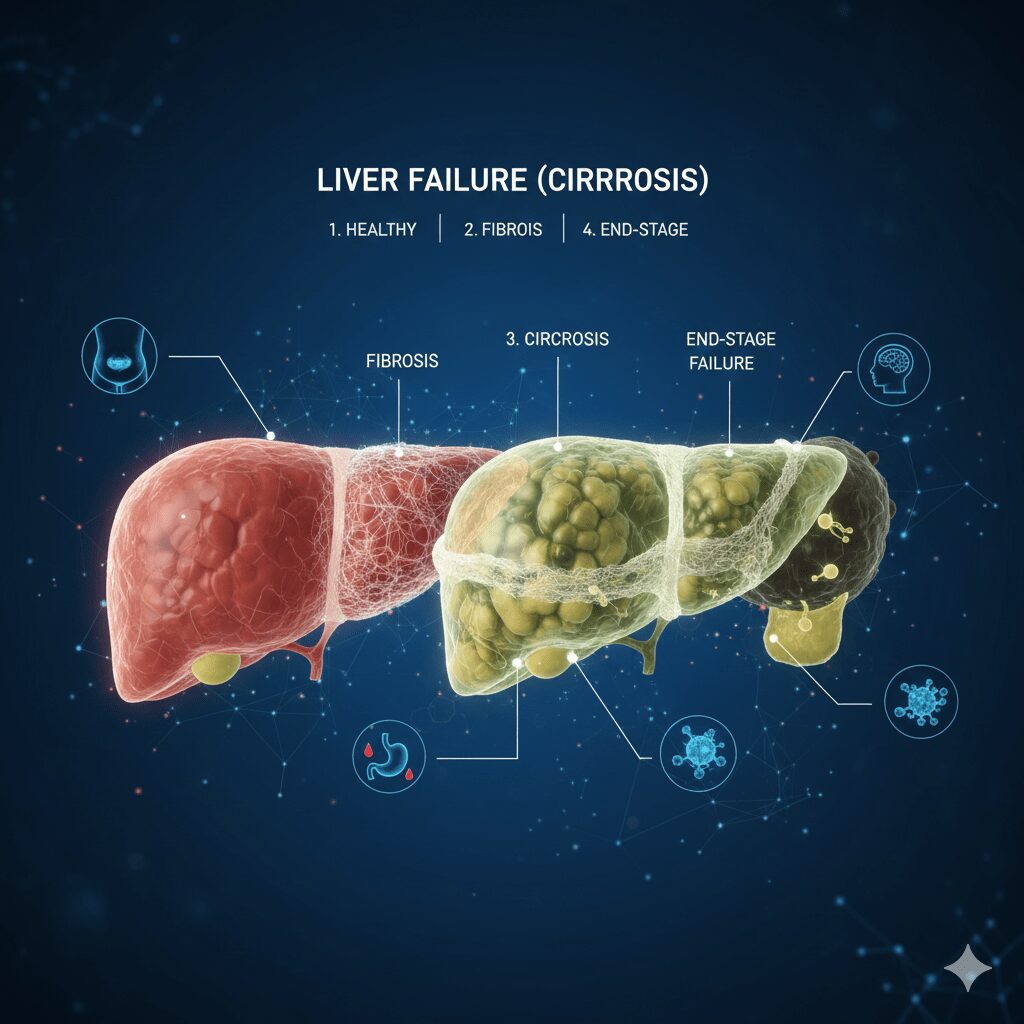
Liver failure is a potentially life-threatening condition that happens when the liver is unable to perform its function normally. [1] This condition can either be acute or chronic.
Acute liver failure, often in individuals with pre-existing liver disease, can be caused by a hepatitis virus or an overdose of acetaminophen. This condition makes the liver rapidly lose its ability to function. [2]
Chronic liver failure, according to a publication at the National Institutes of Health, is the final state of long-term liver damage. [3] This condition is also known as cirrhosis, which is an advanced scarring of the liver caused by many diseases and conditions, such as alcohol use disorder. [4]
Common Causes of Liver Failure
Several factors lead to liver failure—these range from lifestyle, environmental, and medical conditions.
- Viral Hepatitis: Chronic infections with hepatitis B, C, and D can lead to inflammation and cirrhosis over time. Hepatitis A can also cause acute liver failure in some cases. [5]
- Alcohol abuse. If you are a heavy alcohol user, you know you are constantly straining your liver. Heavy and long-term alcohol use can lead to liver damage and eventual cirrhosis
- Nonalcoholic fatty liver disease. Nonalcoholic substances can lead to obesity, high blood sugar, and high cholesterol. This can lead to liver inflammation and scarring.
- Drug overdose: Taking too many drugs like acetaminophen can lead to acute liver failure.
- Autoimmune or genetic conditions. Liver failure can also be caused by autoimmune hepatitis. This is a disease in which the immune system attacks liver cells, causing inflammation and injury. [6]
Symptoms of Liver Failure
Symptoms of liver failure include jaundice and edema. Other severe symptoms require immediate medical attention.
To confirm if you have the condition, medical tests can help you understand your condition more accurately and provide medical experts with guidance regarding medication.
General symptoms of liver failure include:
- Nausea and vomiting
- Fatigue
- Loss of appetite and weight loss
- Itchy skin
More serious symptoms include:
- Jaundice, which is the yellowing of the skin
- Ascites, which is swelling or fluid buildup in the abdomen
- Edema, swelling of the legs
Diagnosis and Treatment Options
Identifying the cause of liver damage and its severity helps guide healthcare professionals in recommending suitable treatment.
To diagnose the condition, your healthcare professional may suggest several tests, including:
- Blood tests. This can help diagnose liver disease.
- Image tests. An ultrasound, CT scan, or MRI scan can show liver damage.
- Tissue sample tests. A tissue sample, biopsy, from the liver can help diagnose liver disease.
Effective treatment of liver disease largely depends on accurate diagnosis. Some liver problems can be effectively managed through lifestyle changes. These might include losing weight or quitting heavy alcohol intake.
Other liver problems might require medicines or surgery. In extreme cases, liver disease that causes liver failure may need a liver transplant.
Prevention and Lifestyle Tips
You are in total control of your health. The environment you live in and lifestyle factors significantly impact your health.
To prevent liver failure, do the following: [7]
- Eat a balanced diet.
- Limit unhealthy fats
- Maintain a healthy weight
- Limit alcohol intake
- Avoid toxins from medications and chemicals
- Practice safe sex to prevent contracting viral hepatitis infections.
Bottom Line
The liver plays an important role in the body. It helps regulate most chemical levels in the blood and removes toxins from the body. However, several factors, including environmental, lifestyle, and pre-existing medical conditions, can lead to liver failure.
Maintaining a proper lifestyle, avoiding exposure to toxins, and managing weight can help manage the problem. Early diagnosis and detection can help guide appropriate treatment methods.
Sources
- Cleveland Clinic. Liver Failure | Cleveland Clinic. Cleveland Clinic. Published June 14, 2024. https://my.clevelandclinic.org/health/diseases/17819-liver-failure
- Mayo Clinic. Acute liver failure – Symptoms and causes. Mayo Clinic. Published October 15, 2024. https://www.mayoclinic.org/diseases-conditions/acute-liver-failure/symptoms-causes/syc-20352863
- Sharma A, Nagalli S. Chronic Liver Disease. PubMed. Published July 3, 2023. https://www.ncbi.nlm.nih.gov/books/NBK554597/
- Mayo Clinic Staff. Cirrhosis – Symptoms and Causes. Mayo Clinic. Published February 11, 2023. https://www.mayoclinic.org/diseases-conditions/cirrhosis/symptoms-causes/syc-20351487
- Shammout R, Alhassoun T, Rayya F. Acute Liver Failure due to Hepatitis A Virus. Case Reports in Gastroenterology. 2021;15(3):927-932. doi:https://doi.org/10.1159/000514393
- Mayo Clinic. Autoimmune hepatitis – Symptoms and causes. Mayo Clinic. Published 2018. https://www.mayoclinic.org/diseases-conditions/autoimmune-hepatitis/symptoms-causes/syc-20352153
- Johns Hopkins Medicine. 5 Ways to Be Kind to Your Liver. www.hopkinsmedicine.org. Published 2024. https://www.hopkinsmedicine.org/health/wellness-and-prevention/5-ways-to-be-kind-to-your-liver