



Fibroids


Common but often misunderstood, fibroids affect millions of women worldwide. In fact, in the U.S, the condition affects about 70% to 80% of women who reach age 50. [1]
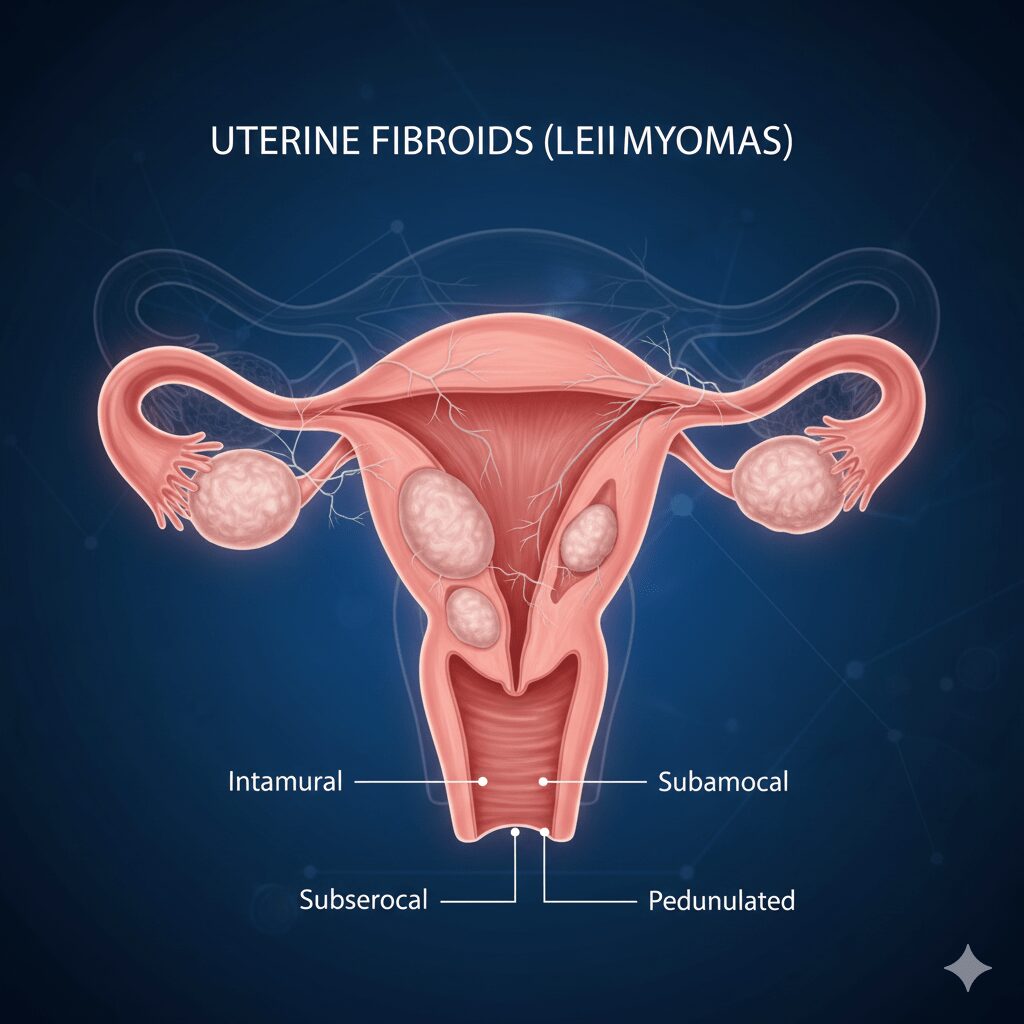
Fibroids are non-cancerous growths that develop in the uterine wall. They are made of muscle and connective tissue that can vary in size. [2] Many women tend to have this condition without any symptoms. However, some may experience pain during periods.
Understanding fibroids matters for women’s health. Knowing about this condition empowers women to recognize symptoms, seek specialized care, and make informed treatment decisions, which can range from monitoring to surgical intervention.
Early diagnosis and management are important, especially since some fibroids can cause potential complications during pregnancy.
Causes of Fibroids
The exact cause of uterine fibroids is not clear. However, several factors play a key role:
- Gene changes
- Hormones
- Extracellular matrix (ECM)
Healthcare professionals believe that the condition may develop from a stem cell in the soft muscular tissue of the uterus. Over time, the single cell divides into many cells. This, in time, turns into a rigid, rubbery mass different from surrounding tissues.
The growth patterns of uterine fibroids vary. The growth can be fast or slow or might even stay the same.
Fibroids that develop during pregnancy can reduce in size or disappear after pregnancy as the uterus goes back to its normal size.
Common Symptoms
Generally, fibroid symptoms are asymptomatic – this means you do not show any signs of the condition. However, when symptoms occur, it is characterized by pelvic pain or painful menstrual bleeding.
Common symptoms include:
- Prolonged menstrual bleeding. This can include passing blood clots and can lead to anemia. The condition prevents the uterus from contracting normally, hence interfering with the endometrium’s ability to shed and create a new blood supply that can lead to bleeding. A study showed that 30% of the examined patients had uterine fibroids that caused menorrhagia. [3]
- Painful periods. Fibroids can make you experience severe menstrual cramps.
- Pelvic pain. You may experience a general feeling of pressure, especially in the lower abdomen.
- Pain during sex. During sexual intercourse, fibroids can cause pain due to pressure on the uterus, cervix, or surrounding nerves from the fibroid’s size and location. [4]
You should see your medical expert if you notice these symptoms, mostly if they are interfering with your daily life.
In cases of severe symptoms like sharp or severe vaginal bleeding with signs of anemia, seek emergency care.
Risk Factors
Other than the age factor, there are other known risk factors for uterine fibroids. These include:
- Generally, all women at their reproductive age are at risk of developing fibroids. However, the chances are higher in Black people than in other racial groups, with studies estimating up to 80%.
- Family history. If you are from a family with a history of fibroids, you are at a higher risk of getting them.
- Other factors. Factors such as obesity, low vitamin D, and drinking alcohol increase your risk of getting fibroids.
Diagnosis and Treatment Options
Diagnosis of fibroids involves a pelvic examination and ultrasounds. Through a pelvic exam, your medical expert will check for any abnormalities in the uterus and ovaries.
Ultrasound turns out to be the most common diagnostic tool. This procedure uses sound waves to generate images of the uterus and show the presence and size of fibroids.
Treatment options for fibroids range from watchful waiting to several medical, surgical, and less invasive procedures. However, these tend to depend on the severity of symptoms, size, and location of the fibroids, and your health goals.
Bottom Line
Fibroids tend to affect women in their reproductive years. While most symptoms are asymptomatic, meaning they show no symptoms, some can be severe, leading to complications like prolonged menstrual bleeding.
This condition is managed, and many treatment options are available. Do not ignore the symptoms, your health matters.
Sources
- Borah BJ, Nicholson WK, Bradley L, Stewart EA. The impact of uterine leiomyomas: a national survey of affected women. American Journal of Obstetrics and Gynecology. 2013;209(4):319.e1-319.e20. doi:https://doi.org/10.1016/j.ajog.2013.07.017
- Mayo Clinic. Uterine Fibroids. Mayoclinic.org. Published September 15, 2023. https://www.mayoclinic.org/diseases-conditions/uterine-fibroids/symptoms-causes/syc-20354288
- Uimari O, Subramaniam KS, Vollenhoven B, Tapmeier TT. Uterine Fibroids (Leiomyomata) and Heavy Menstrual Bleeding. Frontiers in Reproductive Health. 2022;4(818243). doi:https://doi.org/10.3389/frph.2022.818243
- Cleveland Clinic. Uterine Fibroids: Causes, Symptoms & Treatment. Cleveland Clinic. Published 2020. https://my.clevelandclinic.org/health/diseases/9130-uterine-fibroids
- Goosby BJ, Winkle-Wagner R, Zhang A. The Uterus Keeps the Score: Black Women Academics’ Insights and Coping with Uterine Fibroids. Journal of Health and Social Behavior. Published online September 5, 2024. doi:https://doi.org/10.1177/00221465241268434