




Colorectal Cancer


Imagine a disease often shows no warning signs until it’s already advanced. Now imagine that same disease being one of the most preventable and treatable cancers when detected early.
Colorectal cancer is the second leading cause of cancer-related deaths globally, according to the World Health Organization. [1] This disease led to the death of more than 930,000 individuals in 2020 alone.
Since this type of cancer develops silently and claims innocent lives, increasing awareness and encouraging early screening are essential.
To fight it, we first need to understand what it is and why early detection matters.
What is Colorectal Cancer?
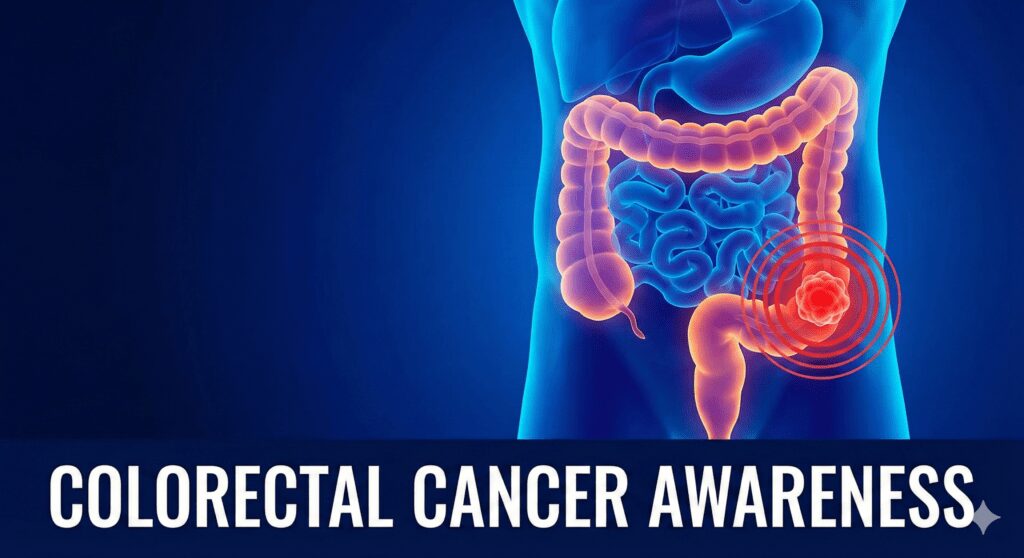
Colorectal cancer is a type of cancer that originates in the colon, the large intestine. It can also originate in the rectum. [2]
This type of cancer develops slowly over the years. It typically begins as a noncancerous (benign) clump of cells called a polyp.
The polyps form on the inner lining of the colon or rectum. Polyps generally remain benign. However, particular adenomas can be cancerous over time if left untreated. Cancer develops when abnormal cell growth within a polyp invades nearby tissues and other parts.
Early detection of this condition can guide effective treatment procedures. This can also lead to high survival rates.
But what causes these changes in the colon and rectum in the first place?
Common Risk Factors
Several factors put you at risk of this type of cancer. Lifestyle choices and environmental factors mainly influence these factors.
Age is a significant risk factor. If you are over 45, you should seek regular screening to understand your condition better. This helps with early detection and prevention.
However, there is a growing concern about the rising incidence of colorectal cancer among young adults (those aged 50 and below) in several high-income Western countries. [3]
A family history of colon cancer also increases your risk. This is because predisposition can be passed down. This is common when a close relative was diagnosed with the condition at a young age.
It is essential to share with your healthcare professional of your family’s medical history to determine if you are at an increased risk.
Lifestyle factors that play a role include:
- Physical inactivity
- Smoking
- Heavy drinking
- Highly processed foods
Knowing the risk factors is essential. But recognizing the symptoms may be lifesaving.
Signs and Symptoms to Watch For
Colon cancer does not present warning signs in its early stages. However, in its advanced stages, you might notice changes in your overall health.
Warning signs to look for include: [4]
- Fatigue
- Unexplained weight loss
- Blood in stool
- Changes in bowel habits
- Persistent abdominal discomfort
If you or your loved one experiences these symptoms, seek immediate medical attention. Share with your doctor when the signs first began so screening can be done to determine whether you are at risk and to recommend appropriate preventive strategies.
Because symptoms can be easy to miss, screening becomes the most powerful tool in prevention.
Importance of Screening
Screening is essential for colon cancer, as it begins as a noncancerous polyp. It its early stages, it does not present symptoms. Therefore, regular tests can detect abnormalities in the polyps and allow for their removal before they turn into cancer.
Standard screening methods include:
- In this procedure, a healthcare expert uses a flexible tube with a camera to view the entire colon and rectum. Polyps can be found and removed during the procedure. [5]
- Stool-based tests. This test screens for hidden blood or abnormal DNA that may be shed by polyps or cancer. Stool-based tests are mostly recommended for individuals at average risk of colorectal cancer beginning at age 45. [6]
While screening is crucial, lifestyle habits play a significant role in long-term prevention.
Prevention and Healthy Lifestyle Strategies
There are helpful strategies you can incorporate into your daily routine to support colon cancer prevention. These strategies include:
- Having a healthy diet
- Maintaining a healthy body weight
- Engage in regular physical activity
- Limit alcohol intake
- Avoid tobacco
So, what can you do today to protect your long-term health?
Protect your future. Schedule and talk to your doctor today. Share information with your loved ones to help reduce others’ risk. Awareness saves lives. Do not wait. Take control of your health now.
Sources
- World Health Organization. Colorectal Cancer. World Health Organization. Published 2023. https://www.who.int/news-room/fact-sheets/detail/colorectal-cancer
- Mayo Clinic. Colon Cancer – Symptoms and Causes. Mayo Clinic. Published July 27, 2023. https://www.mayoclinic.org/diseases-conditions/colon-cancer/symptoms-causes/syc-20353669
- Sung H, Siegel RL, Laversanne M, et al. Colorectal cancer incidence trends in younger versus older adults: an analysis of population-based cancer registry data. The Lancet Oncology. 2024;26(1). doi:https://doi.org/10.1016/s1470-2045(24)00600-4
- Cleveland Clinic. Colorectal (colon) cancer. Cleveland Clinic. Published November 14, 2022. https://my.clevelandclinic.org/health/diseases/14501-colorectal-colon-cancer
- Cleveland Clinic. Colonoscopy. Cleveland Clinic. Published November 30, 2022. https://my.clevelandclinic.org/health/diagnostics/4949-colonoscopy
- Carethers JM. Stool-Based Screening Tests for Colorectal Cancer. JAMA. Published online February 17, 2023. doi:https://doi.org/10.1001/jama.2023.0547



One thought on “Colorectal Cancer”
Comments are closed.