




Childhood Obesity: Why It’s a Big Problem and How We Can Fix It


We often hear that children are our future. But right now, a growing health problem is putting that future at risk. That problem is childhood obesity. It is not just about a child carrying a little “baby fat.” It is a serious medical condition that is spreading all over the world.
The World Health Organization (WHO) calls this one of the most serious public health challenges of the 21st century. The numbers are alarming. According to their data, the number of children and teens with obesity has risen dramatically, from just 31 million in 1990 to over 160 million in 2022.
This blog post explains what is happening, why it matters, and what parents can do, using simple facts from top health experts.
What Is Childhood Obesity?
In simple terms, obesity means having too much body fat. It is different from just being a little overweight. Doctors use a tool called Body Mass Index (BMI) to measure this. It compares a child’s weight to their height.
The Mayo Clinic explains that childhood obesity is a complex disease. It happens when a child’s weight is well above what is considered healthy for their age and height.
Why Is This Happening?
It is easy to blame candy and video games, but the reasons are often more complicated.
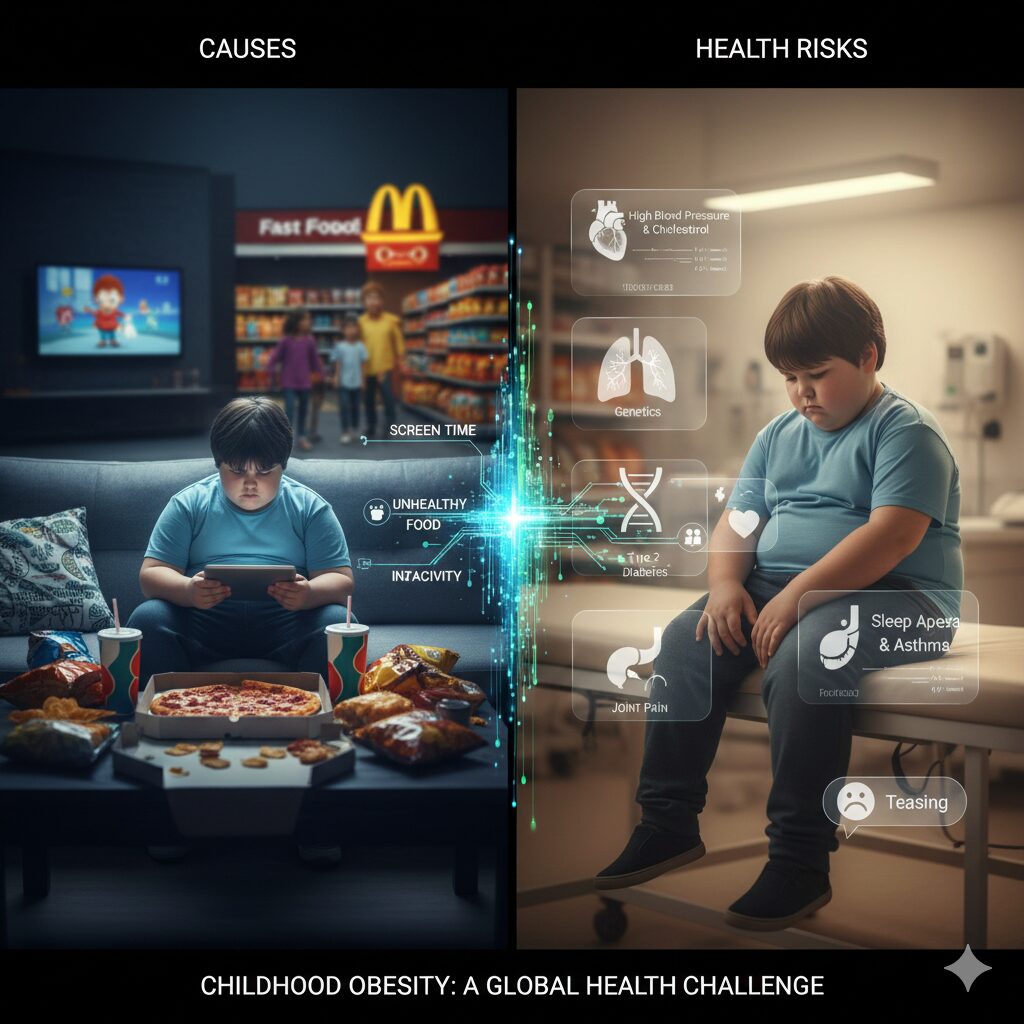
- Too Many Calories, Not Enough Movement: The most common cause is simple: kids are eating more energy (calories) than they use up. The Centers for Disease Control and Prevention (CDC) notes that sugary drinks and fast food are major culprits. At the same time, kids are moving less.
- Screen Time: Instead of playing outside, many children spend hours in front of TVs, phones, and tablets. The Cleveland Clinic notes that this lack of activity is a huge factor. When kids sit for hours, they burn fewer calories and are more likely to snack on unhealthy foods.
- Family and Genes: Sometimes, it runs in the family. If parents are obese, their children are more likely to be obese too. This is partly due to genes and partly because families often share the same eating and activity habits.
- Environment: Some families live in areas where fresh fruits and vegetables are expensive or hard to find. Or, they may not have safe parks for children to play in.
Why Should We Worry? (The Health Risks)
Obesity is not just about how a child looks. It can cause serious health problems that used to be seen only in adults.
The Mayo Clinic lists several dangerous complications:
- Type 2 Diabetes: This is a condition where the body cannot control sugar levels properly. It is becoming much more common in children.
- High Blood Pressure and Cholesterol: These can damage the heart and lead to heart disease later in life.
- Joint Pain: Extra weight puts stress on hips and knees, which can cause pain and injuries.
- Breathing Problems: Conditions like asthma and sleep apnea (where breathing stops for short moments during sleep) are more common in children with obesity.
A publication in PubMed Central also points out the emotional cost. Children with obesity are often teased or bullied. This can lead to low self-esteem, sadness, and even depression.
What Can Parents Do?
The good news is that small changes can make a big difference. You do not need to be perfect. You need to be consistent.
Here are some simple steps recommended by the CDC and Mayo Clinic:
- Make Healthy Eating a Family Habit: Do not just put the child on a “diet.” Change the whole family’s habits. Buy more fruits and vegetables. Cut down on soda and juice. Cook at home more often instead of buying fast food.
- Get Moving Together: Children need at least 60 minutes of physical activity every day. It does not have to be a boring exercise. Go for a bike ride, play tag, or dance in the living room.
- Limit Screen Time: Try to keep TV and phone use to less than two hours a day. Keep screens out of the child’s bedroom to help them sleep better.
- Do not Use Food as a Reward: When your child does something good, do not promise them candy or ice cream. Instead, promise a trip to the park or a fun game.
- Be Supportive: The Cleveland Clinic advises parents to focus on health, not weight. Avoid making your child feel ashamed. Tell them you love them and want them to be strong and healthy.
The Bottom Line
Childhood obesity is a global problem, but the solution starts at home. By making simple, healthy choices today, you can protect your child’s health for decades to come.
As the WHO states, every child deserves the chance to grow up healthy. With the proper support and small daily changes, we can help them achieve that.
Sources
World Health Organization. Obesity and Overweight. World Health Organization. Published May 7, 2025. https://www.who.int/news-room/fact-sheets/detail/obesity-and-overweight
CDC. About Body Mass Index (BMI). CDC.gov. Published July 1, 2024. https://www.cdc.gov/bmi/about/index.html
Mayo Clinic. Childhood obesity – symptoms and causes. Mayo Clinic. Published November 16, 2022. https://www.mayoclinic.org/diseases-conditions/childhood-obesity/symptoms-causes/syc-20354827
Fryar CD, Carroll MD, Ahluwalia N, Ogden CL. Fast Food Intake Among Children and Adolescents in the United States, 2015–2018. www.cdc.gov. Published September 9, 2020. https://www.cdc.gov/nchs/products/databriefs/db375.htm
Cleveland Clinic. How Screen Time Can Slow Your Child’s Development. Health Essentials from Cleveland Clinic. Published April 23, 2018. https://health.clevelandclinic.org/how-screen-time-can-slow-your-childs-development
Mayo Clinic. Obesity. Mayo clinic. Published July 22, 2023. https://www.mayoclinic.org/diseases-conditions/obesity/symptoms-causes/syc-20375742
Kanellopoulou A, Antonogeorgos G, Douros K, Panagiotakos DB. The Association between Obesity and Depression among Children and the Role of Family: A Systematic Review. Children. 2022;9(8):1244. doi:https://doi.org/10.3390/children9081244
WHO. Nurturing care. www.who.int. Published 2018. https://www.who.int/teams/maternal-newborn-child-adolescent-health-and-ageing/child-health/nurturing-care




One thought on “Childhood Obesity: Why It’s a Big Problem and How We Can Fix It”
Comments are closed.