




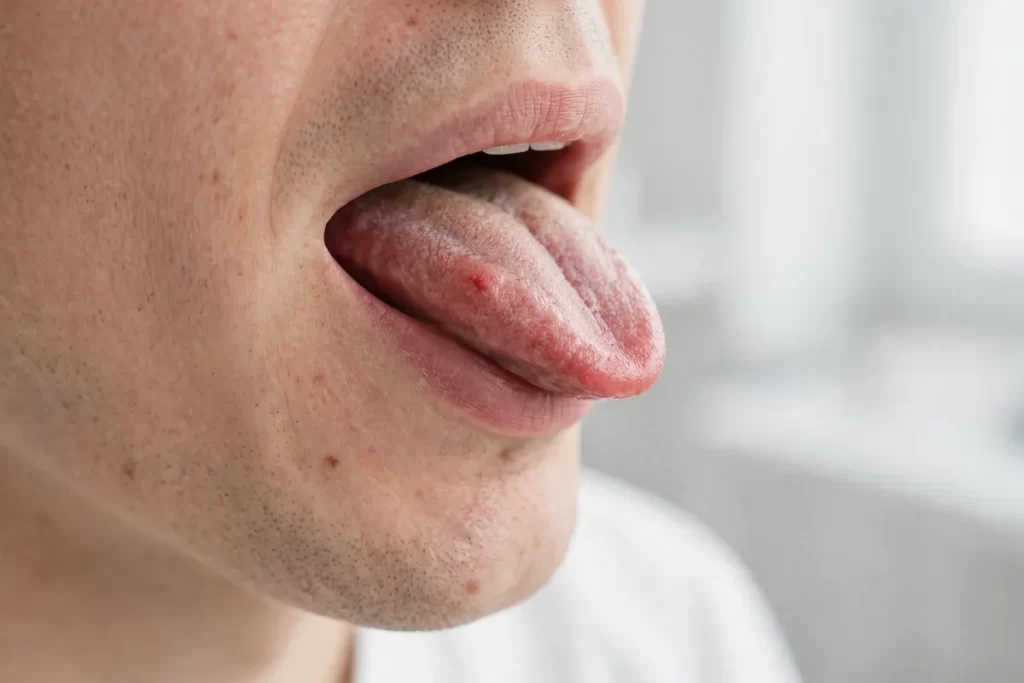
Tongue Pain: Why Your Tongue Hurts and What Helps It Heal


Your tongue helps you chew, swallow, taste, and talk, so even a small sore spot can feel much bigger than it looks.
Tongue pain is common, and most of the time it is not serious. A bite, hot coffee, or a canker sore can hurt for a few days, then heal on its own. But it can also be a sign of an infection, a vitamin deficiency, dry mouth, a dental problem, or burning mouth syndrome.
This guide explains the most common causes in plain language, what helps at home, and when to see a doctor or dentist.
This article is for general information only. It cannot diagnose your tongue pain. If you are worried, or your pain does not get better, please get checked in person.
Key Takeaways
- Most tongue pain comes from a minor injury, a burn, a canker sore, or irritation, and improves within 7 to 14 days.
- Pain that lasts longer than 2 weeks, keeps coming back, or comes with a sore that does not heal needs medical care.
- Salt-water rinses, cool foods, and soft foods can help. Avoid spicy, acidic, and very hot foods for a few days.
What Does Tongue Pain Feel Like?
It may be sharp in one spot, dull and sore across the tongue, or a burning feeling, as if you drank something too hot. It can sting with spicy, salty, or acidic foods, and hurt when you talk, chew, or swallow. You might also notice small bumps, white or red patches, a smooth and shiny tongue, a sore with a white center and a red edge, swelling, or a change in taste.
Where Exactly Does It Hurt?
Tip: Often a bite, burn, or canker sore. Side: Often a bite, a sharp tooth, braces, or a denture that does not fit. A sore in one spot on the side for more than 2 weeks should be checked. Back: Often a sore throat, tonsillitis, or acid reflux. Under the tongue: Often a canker sore. All over: More often inflammation, dry mouth, a vitamin deficiency, thrush, or burning mouth syndrome.
Common Causes of Tongue Pain
1. Biting or burning your tongue
This is the most common cause. You can bite your tongue while eating or talking, or cut it on a sharp chip or crusty bread. Hot coffee, tea, soup, or pizza cheese can also burn it. A bite or a minor burn usually hurts in one spot for a few days, then heals within a week. A deep cut, a bite that goes all the way through, or bleeding that will not stop needs urgent care.
2. Canker sores and swollen taste buds
A canker sore is a small, round sore with a white or yellow center and a red border. It can appear on the tongue, under the tongue, or inside the cheeks and lips. It hurts when you eat or talk, but it is not contagious. Stress, minor injury, spicy or acidic foods, and hormonal changes may trigger canker sores. Most heal in 7 to 14 days. See a doctor or dentist if you get them more than 3 times a year, if they are very large, or if they last longer than 2 weeks. Swollen taste buds are different. The tiny bumps on your tongue can become red, swollen, and sore for a few days, often after stress, spicy food, or minor irritation. They usually go away on their own.
3. Oral thrush and cold sores
Oral thrush is a fungal infection caused by an overgrowth of Candida, a yeast that normally lives in your mouth in small amounts. It can cause creamy white patches on the tongue and inside the cheeks. The patches may be painful, and scraping them off can leave a red, sore area underneath. Thrush is more likely after antibiotics, with a weakened immune system, with diabetes, or with dry mouth. It usually needs antifungal medicine from a doctor or dentist. Home rinses alone will not clear it. Cold sores are caused by the herpes simplex virus. They most often appear on the lips, but they can also affect the tongue and cause pain, tingling, and burning. Unlike canker sores, cold sores are contagious. Antiviral medicine may help if it is started early.
4. Geographic tongue
Geographic tongue causes smooth, red patches with white or gray borders on the tongue. The patches look a bit like a map, and they can move or change shape over days or weeks. It affects about 1% to 3% of people. It is not cancer, it is not contagious, and it often causes no pain at all. Some people feel burning or stinging, especially with spicy, hot, or acidic foods. Doctors do not know the exact cause. It may be more common in people with psoriasis, eczema, type 1 diabetes, or vitamin deficiencies. There is no cure, but avoiding foods that sting during a flare can help. If a patch stays in one place or becomes hard, get it checked.
5. Glossitis and vitamin deficiencies
Glossitis means inflammation of the tongue. The tongue may look red, smooth, swollen, and sore, and the small bumps on its surface may become less visible. Low levels of iron, vitamin B12, folate, or zinc can cause this, because the cells on your tongue renew quickly and need those nutrients to stay healthy. Iron deficiency, in particular, can make the tongue sore, swollen, tender, or unusually smooth. Read more in our guide to the 5 weird signs of iron deficiency. Vitamin B12 deficiency can also cause a sore, smooth tongue, along with tingling, numbness, and fatigue. Our guide to paresthesia explains how B12 deficiency can affect nerves. Do not start high-dose supplements on your own. A doctor can check your blood levels and find the real cause.
6. Burning mouth syndrome and dry mouth
Burning mouth syndrome causes a burning or tingling feeling on the tongue, lips, gums, or roof of the mouth. The mouth often looks normal, with no sores or patches. It is most common in adults over 60, and in women after menopause. The burning may come and go, or last for months. Doctors do not fully understand the cause. It may be linked to nerve problems, hormonal changes, dry mouth, acid reflux, diabetes, thyroid problems, nutritional deficiencies, or certain medicines. Because other causes must be ruled out first, it often needs a careful check by a doctor or dentist. Dry mouth alone can also make your tongue sore, sticky, cracked, or burning. It can be caused by medicines, dehydration, mouth breathing, smoking, alcohol, or diabetes. Drinking water through the day may help.
7. Dental problems and irritation
A sharp tooth, a broken filling, braces, or dentures that do not fit well can rub the tongue every time you chew or talk. That constant rubbing can cause a sore spot that does not heal until the cause is fixed. If you wear dentures, take them out at night and see your dentist if they slip, pinch, or leave a sore spot. Some people also react to ingredients in toothpaste or mouthwash, or to spicy, acidic, or salty foods. Alcohol and tobacco can irritate a sore tongue and slow healing. If your tongue swells, or you have trouble breathing after eating, get emergency help right away.
8. Less common causes
Glossopharyngeal neuralgia is a rare nerve condition. It causes sudden, sharp, stabbing pain at the back of the tongue, throat, or ear. It needs medical care. Oral cancer does not usually cause pain in its early stages, but it can cause tongue pain later. Warning signs include a sore, lump, or rough spot that does not heal within 2 weeks, a sore that bleeds, or difficulty swallowing. Smoking and heavy alcohol use raise the risk. Most tongue pain is not cancer, but a sore that does not heal should always be checked.
Tongue Pain Relief: What Helps at Home
Salt-water rinse: Mix 1/2 to 1 teaspoon of salt in 1 cup (8 ounces) of warm water. Swish gently for about 30 seconds, then spit it out. Do this 2 to 3 times a day, especially after eating. Do not swallow the rinse.
Cold: Ice chips, a cold drink, or a popsicle can numb a sore tongue and reduce swelling. This helps most after a bite or a burn. Avoid very hot drinks and foods until the pain eases.
Gentle cleaning: Brush twice a day with a soft toothbrush and fluoride toothpaste. Avoid alcohol-based mouthwash while your tongue is sore, because it can sting and dry the mouth.
Over-the-counter options: Gels or rinses made for mouth sores can ease pain for a short time. Pain relievers such as acetaminophen or ibuprofen may help if you can safely take them. Follow the label. These products ease pain. They do not treat thrush, a vitamin deficiency, or other underlying causes.
Avoid what makes it worse: While your tongue heals, avoid spicy foods, citrus, tomatoes, soda, coffee, very salty foods, crunchy foods, alcohol, and tobacco. Smoking slows healing and raises the risk of mouth sores and oral cancer.
What to eat: Soft, cool foods are easiest: yogurt, eggs, oatmeal, mashed potatoes, smoothies, bananas, and warm (not hot) soup. Drink water through the day. If eating is very painful, try small, frequent meals.
What a Doctor or Dentist May Do
A doctor or dentist will look at your tongue, ask when the pain started, and ask what medicines you take. They may prescribe antifungal medicine for thrush, antiviral medicine for cold sores if started early, or a mouthwash for sores or infection. They may order blood tests to check iron, vitamin B12, folate, zinc, blood sugar, or thyroid levels. They may also adjust a denture, brace, or sharp tooth, or do a biopsy if a sore does not heal or looks unusual.
When to See a Doctor
Most tongue pain improves within 7 to 14 days. If it is not clearly getting better after 2 weeks, get checked. See a doctor or dentist promptly if you have pain that lasts longer than 2 weeks, a sore, lump, or patch that does not heal or keeps growing, severe pain, trouble eating or swallowing, white or red patches that do not go away, bleeding, swelling, fever, or numbness or tingling that does not go away. Get emergency care right away if you have trouble breathing or swallowing, heavy bleeding that will not stop, or rapid swelling of the tongue or throat. If you are not sure whether you need a doctor or a dentist, start with your dentist for a sore spot, a rubbing tooth or denture, or a mouth sore. Start with your primary care doctor for burning pain with no visible sore, a smooth red tongue, or pain along with fatigue or numbness.
How to Prevent Tongue Pain
Brush and floss every day with a soft toothbrush and fluoride toothpaste. Drink enough water, and eat a balanced diet with foods rich in iron, B12, folate, and zinc, such as lean meat, fish, eggs, dairy, beans, leafy greens, and fortified cereals. Let hot food and drinks cool for a minute first. Avoid tobacco and limit alcohol. Fix dental problems early, and choose gentle oral care products if a toothpaste or mouthwash stings. If you use an inhaler for asthma, rinse your mouth with water after each use.
Frequently Asked Questions
How long does tongue pain last?
Most minor pain from a bite, burn, or canker sore improves in 7 to 14 days. Burning mouth syndrome, thrush, or a vitamin deficiency can last much longer until the cause is treated.
What vitamin deficiency causes tongue pain?
Iron, vitamin B12, folate, and zinc deficiency can all cause a sore, smooth, red tongue. B12 deficiency can also cause tingling, numbness, and fatigue. Blood tests can check these levels. Do not take high-dose supplements without medical advice.
Is tongue pain a sign of cancer?
Most tongue pain is not cancer. But a sore, lump, or rough spot that does not heal within 2 weeks, bleeds, or keeps growing should be checked promptly.
The Bottom Line
A bite, a burn, or a canker sore usually heals within 1 to 2 weeks with gentle care. Pay attention to how long it lasts and what your tongue looks like. A sore that does not heal, white patches, or a smooth red tongue are all reasons to get checked. If the pain does not improve in 2 weeks, see a doctor or dentist.
Medical disclaimer: This article is for educational purposes only and is not medical advice. It does not replace evaluation by a qualified healthcare professional.
Sources: Cleveland Clinic, Medical News Today, Healthline, Verywell Health, Penn Medicine, Tua Saúde, MedlinePlus.
