




2 Day Prep for Colonoscopy: Diet, Instructions, and Tips


A 2 day prep for colonoscopy is a longer bowel-cleaning process used when your doctor believes a standard one-day preparation may not provide an adequate view of your colon. It usually starts two days before the procedure with dietary changes and additional laxatives, followed by a stronger bowel-cleansing regimen the day before the colonoscopy. The exact medications and timing vary between medical centers, so your gastroenterologist's instructions should always take priority.
The purpose is simple: your colon needs to be as clean as possible so your doctor can see the intestinal lining and identify polyps, inflammation, bleeding, or other abnormalities. An inadequate preparation can make the examination difficult and may require the colonoscopy to be repeated.
Why Would You Need a 2 Day Colonoscopy Prep?
Not everyone needs a two-day bowel preparation.
Your doctor may recommend an extended preparation when there is a higher risk that stool will remain in the colon with a standard regimen. This can include people who previously had an inadequate bowel preparation or whose bowel tends to move more slowly.
Other medical factors may also require an individualized preparation plan. Cleveland Clinic specifically recommends discussing special instructions with your doctor if you have had a poor bowel prep in the past or have medical conditions requiring special accommodations.
A two-day prep does not mean every patient should follow the same schedule.
Different centers use different combinations, including polyethylene glycol solutions, MiraLAX, Dulcolax, magnesium citrate, NuLYTELY, GoLYTELY, or other prescription preparations.
What Happens During a 2 Day Prep for Colonoscopy?
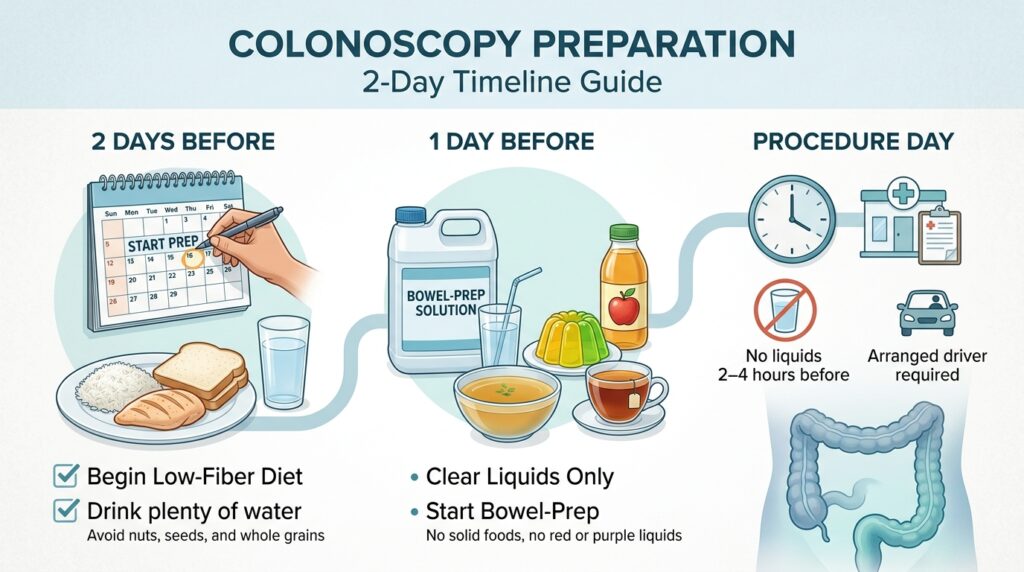
Although schedules differ, the process generally has three stages:
- Two days before: Reduce fiber or begin the prescribed diet and start the first part of the bowel preparation if instructed.
- One day before: Follow a clear-liquid diet and complete the main bowel-cleansing preparation.
- Day of the colonoscopy: Complete any remaining split dose at the prescribed time and follow your fasting instructions.
For example, Cleveland Clinic's two-day regimen begins with clear liquids and magnesium citrate two days before the procedure, followed by a polyethylene glycol solution in split doses the day before and on the morning of the colonoscopy.
Your own schedule may be different.
2 Days Before the Colonoscopy
The first day of preparation is designed to reduce the amount of stool and undigested food remaining in your colon.
Some protocols recommend a low-fiber or low-residue diet. Others may require clear liquids only from a particular point in the day.
Foods commonly restricted during this stage can include:
- Nuts
- Seeds
- Popcorn
- Whole grains
- Raw vegetables
- Beans
- Fruit skins
- High-fiber foods
The exact dietary restriction can range from avoiding high-fiber foods to consuming only clear liquids, depending on the preparation prescribed.
This is one reason you should follow your own preparation sheet rather than combining instructions from different websites.
One Day Before the Colonoscopy
For many two-day protocols, the day before the procedure is the strictest part of the preparation.
You may be instructed to consume clear liquids only and avoid all solid food.
Clear liquids may include:
- Water
- Clear broth
- Apple juice without pulp
- White grape juice
- Clear sports drinks
- Black coffee
- Tea without milk or cream
- Clear soda
- Gelatin
- Popsicles without prohibited colors
Many centers recommend avoiding red or purple liquids because they can interfere with the appearance of the colon during the examination. Some centers also restrict orange-colored liquids. Follow the color restrictions provided by your endoscopy center.
Avoid:
- Milk
- Cream
- Smoothies
- Juice with pulp
- Alcohol
- Solid food
- Thick liquids that you cannot see through
When Do You Take the Bowel Prep?
There is no universal two-day schedule.
One common approach begins the first bowel-cleansing medication two days before the colonoscopy. The main polyethylene glycol solution is then taken in split doses, with one portion the evening before and another portion several hours before the procedure.
Other centers use different combinations or timings. For example, some protocols use a two-day NuLYTELY regimen, while others use MiraLAX with bisacodyl or magnesium citrate.
Therefore, do not copy the exact medication dose or timing from another person's two-day preparation.
Use the instructions given by your gastroenterologist or endoscopy center.
Why Is the Prep Split Into Two Doses?
Splitting the bowel preparation can help keep the colon cleaner closer to the time of the examination.
Instead of completing the entire bowel preparation many hours before the procedure, the second portion is taken closer to the colonoscopy according to the prescribed schedule.
This approach is commonly used in modern bowel-preparation protocols.
Your instructions will tell you exactly when to start and finish the second portion.
How Much Should You Drink During the Prep?
Hydration is important because bowel preparations cause frequent watery bowel movements.
Drink the clear liquids allowed by your preparation instructions throughout the process.
Signs that you may be becoming dehydrated include:
- Excessive thirst
- Dry mouth
- Dark urine
- Reduced urination
- Dizziness
- Weakness
- Feeling faint
You can also read our guide to signs of dehydration for more information.
People with kidney disease, heart conditions, electrolyte problems, or other medical issues may need individualized fluid instructions. Ask your healthcare professional rather than assuming that drinking very large amounts is safe for you.
What Should Your Stool Look Like?
The bowel movements usually change as the preparation works.
At first, you may pass normal or loose stool. Eventually, the stool should become increasingly watery and lighter.
By the end of the preparation, many patients pass:
- Yellow liquid
- Clear liquid
- Watery fluid with very little debris
The stool does not necessarily need to look completely colorless. Digestive fluids can give it a yellow tint. What matters is that it is watery and free of substantial solid material.
If you are still passing thick, muddy stool or formed stool close to the procedure, contact your endoscopy team.
What If the Colonoscopy Prep Is Not Working?
Some people begin having bowel movements quickly, while others take longer.
If you have taken the preparation according to your instructions but are not having bowel movements, contact your healthcare provider.
You should also call if you complete the preparation but continue passing significant amounts of solid stool.
Do not automatically take additional laxatives.
Your medical team may have a specific rescue plan based on your preparation and medical history.
What If You Feel Nauseous?
Large-volume bowel preparations can cause nausea, bloating, cramping, and abdominal discomfort.
If you become nauseated, your instructions may allow you to slow down or briefly pause the preparation before restarting at a slower pace. Some patient instructions specifically recommend this approach when severe bloating or nausea occurs.
Practical measures may include:
- Chilling the preparation
- Drinking through a straw
- Taking the solution at the prescribed pace
- Taking a short break if your instructions permit
- Staying near a bathroom
If you repeatedly vomit or cannot keep the preparation down, contact your medical team.
You can also read about why you may feel nauseous in the morning for information about other causes of nausea.
What Medications Should You Stop?
Medication instructions are one of the most important parts of colonoscopy preparation.
Tell your healthcare team if you take:
- Blood thinners
- Diabetes medications
- Iron supplements
- Fiber supplements
- Blood pressure medications
- Heart medications
- Weight-loss medications
- Other prescription or over-the-counter medicines
Some medications may need to be adjusted before the colonoscopy, while others should continue.
Never stop a prescription medication on your own.
Blood thinners and diabetes medications require individualized instructions because changing them incorrectly can create serious risks. Cleveland Clinic also recommends contacting the prescribing provider about medication adjustments before a two-day preparation.
What About Iron Supplements?
Iron can make the colon harder to examine because it can darken stool and leave residue.
Many colonoscopy protocols ask patients to stop iron supplements several days before the procedure. The exact timing varies, so follow your doctor's instructions.
Do not stop iron prescribed for a medical condition without discussing it with your healthcare provider.
What About Diabetes?
Diabetes requires special planning because you may consume very little food while continuing to take medication that lowers blood glucose.
Your doctor may need to adjust your diabetes medicines or insulin.
Check your blood glucose according to the instructions given by your healthcare team.
Do not guess how much insulin or diabetes medication to take.
What About Blood Thinners?
Blood-thinning medication can affect bleeding risk during certain colonoscopy procedures.
However, stopping these medicines can also increase the risk of blood clots.
Your prescribing clinician and gastroenterologist should decide whether the medication needs to be changed and when.
Never stop warfarin, apixaban, rivaroxaban, clopidogrel, or another blood thinner without medical instructions.
Tips to Make a 2 Day Colonoscopy Prep Easier
A little preparation can make the process more manageable.
Buy Your Supplies Early
Have your prescribed bowel-prep products and approved clear liquids ready before starting.
Chill the Solution
Some people find cold bowel-prep solutions easier to drink.
Protect Your Skin
Frequent bowel movements can irritate the skin around the anus. Gentle cleaning and a protective barrier product may help.
Stay Near a Bathroom
Do not plan activities that require you to be away from a toilet once the laxative starts working.
Set Alarms
A split-dose preparation depends on timing. Alarms can help you remember when to start each portion.
Arrange Your Ride
If sedation is used, you will need transportation home according to your facility's requirements. Some centers require a responsible adult to stay with you during discharge.
When Should You Call Your Doctor?
Contact your endoscopy team if:
- You cannot complete the bowel preparation
- You repeatedly vomit
- You develop severe abdominal pain
- You become very dizzy or faint
- You are barely urinating
- Your stool remains solid or very thick
- You are unsure about medication instructions
- You accidentally ate something that was restricted
Calling early is better than arriving for a colonoscopy with an inadequate bowel preparation.
When Is Colonoscopy Prep an Emergency?
Seek urgent medical attention if you develop severe or persistent abdominal pain, fainting, confusion, severe weakness, difficulty breathing, or signs of significant dehydration.
Do not assume severe symptoms are simply normal effects of the laxative.
People with significant kidney, heart, or electrolyte problems may have additional risks and should follow individualized instructions.
Conclusion
A 2 day prep for colonoscopy is an extended bowel-cleaning process designed to provide a clearer view of the colon. It may involve dietary changes, clear liquids, laxatives, and split doses of a bowel-cleansing solution over two days.
The most important point is that two-day preparations are not identical. Some use MiraLAX and bisacodyl, while others use magnesium citrate, NuLYTELY, GoLYTELY, or another preparation. The timing can also differ between medical centers.
Follow the exact instructions provided by your gastroenterologist. Do not combine different online preparation schedules or change medication doses without medical advice.
Stay hydrated with approved clear liquids, remain close to a bathroom, and contact your medical team if you cannot complete the preparation or your stool does not become adequately watery.
For additional information about dehydration during bowel preparation, see our guide to signs of dehydration.
Frequently Asked Questions
Why Do Some People Need a 2 Day Colonoscopy Prep?
A doctor may recommend an extended preparation when there is a higher risk that a standard preparation will not adequately clean the colon. A previous poor bowel preparation or slower bowel movements can be factors.
What Can I Eat Two Days Before a Colonoscopy?
It depends on your specific instructions. Some protocols allow a low-fiber or low-residue diet, while others begin clear liquids earlier. Follow the diet plan supplied by your endoscopy center.
Can I Eat Solid Food Two Days Before a Colonoscopy?
Some two-day protocols allow selected low-fiber foods early in the preparation, while others require clear liquids only. There is no universal rule, so follow your doctor's instructions.
What Can I Drink During a Two-Day Colonoscopy Prep?
Common clear liquids include water, clear broth, pulp-free apple or white grape juice, black coffee, tea without milk, clear sports drinks, and clear soda. Avoid prohibited colors and alcohol according to your preparation instructions.
How Do I Know if My Colon Is Clean?
Your bowel movements should become watery and light in color, often yellow or nearly clear, with little or no solid material. Thick or muddy stool may indicate that more cleansing is needed.
What If I Vomit During a Two-Day Colonoscopy Prep?
Follow your endoscopy center's instructions. You may be told to pause or slow the preparation temporarily. If vomiting continues or prevents you from completing the prep, contact your healthcare team.
Can I Take My Regular Medications During Colonoscopy Prep?
Some medications can be continued, while others may need to be adjusted. Blood thinners, diabetes medications, iron, and certain other medicines require specific instructions. Never stop prescription medication without medical advice.
What Happens If My Colonoscopy Prep Does Not Work?
Contact your endoscopy team if you are not having bowel movements or your stool remains thick or contains substantial solid material. Do not take additional laxatives unless your healthcare professional specifically tells you to.
