




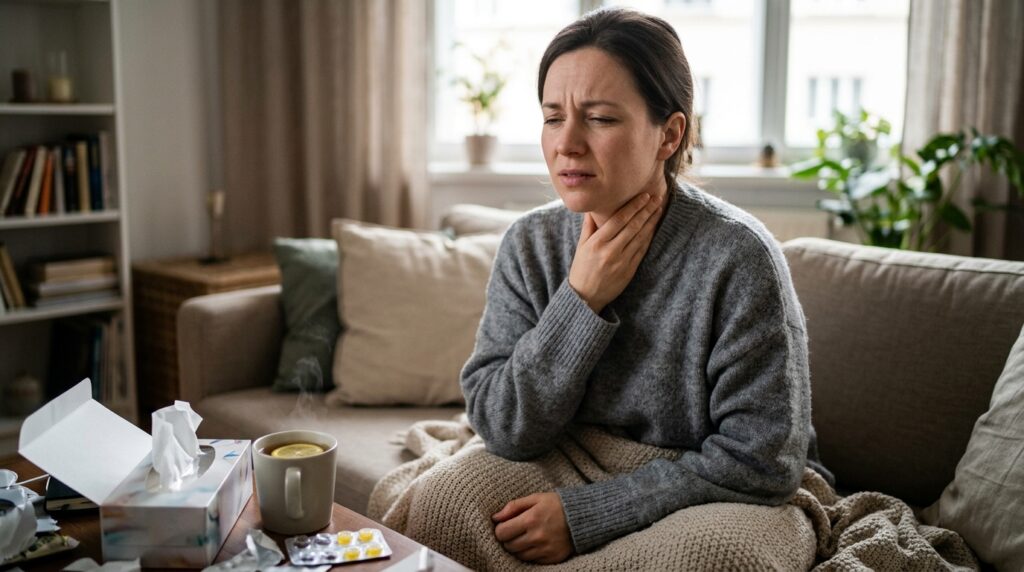
How Long Is Strep Throat Contagious? What to Know


Strep throat is a bacterial infection that can spread easily through close contact, especially among people living in the same household. If you or someone in your family has been diagnosed, you may wonder how long is strep throat contagious and when it is safe to return to work, school, or normal activities. The answer depends largely on whether appropriate antibiotic treatment has been started.
Strep throat is caused by group A Streptococcus bacteria and commonly produces a sudden sore throat, painful swallowing, fever, and swollen tonsils. Knowing the strep throat symptoms in adults can help you recognize when testing and treatment may be appropriate.
How Long Is Strep Throat Contagious?
Without antibiotic treatment, people with strep throat can remain contagious for weeks, although contagiousness is generally greatest while symptoms are active.
Once appropriate antibiotic treatment is started, the ability to spread the bacteria drops significantly.
In general, people with confirmed strep throat should remain home until they:
- Have been taking an appropriate antibiotic for at least 12–24 hours
- Are fever-free
- Are feeling well enough to resume normal activities
Follow your healthcare professional's specific instructions, particularly if symptoms are severe or complications are suspected.
When Does Strep Throat Stop Being Contagious After Antibiotics?
Appropriate antibiotics can substantially reduce the ability to spread group A strep.
Many public-health recommendations consider a person much less contagious after approximately 12–24 hours of appropriate antibiotic therapy, provided their fever has resolved and they are otherwise improving.
This does not mean you should stop taking the medication once you feel better.
Complete the antibiotic course exactly as prescribed unless your healthcare professional tells you otherwise.
How Long Is Strep Contagious Without Antibiotics?
Without treatment, people can remain capable of spreading strep for a considerably longer period.
Although symptoms may improve naturally, the bacteria can continue to be present and transmissible.
Untreated strep can also increase the risk of complications, which is why suspected infection should be evaluated rather than simply waiting for it to disappear.
Can You Spread Strep Before Symptoms Appear?
Yes, transmission can occur around the time symptoms begin, and people may spread the bacteria before realizing they are infected.
This is one reason strep can move quickly through households, schools, and other close-contact environments.
If someone develops symptoms after close contact with a person who has confirmed strep, they should contact a healthcare professional for advice about testing.
How Does Strep Throat Spread?
Group A strep can spread through respiratory droplets and direct contact with infected secretions.
Transmission may occur when an infected person:
- Coughs
- Sneezes
- Talks closely with someone
- Shares utensils or cups
- Shares food
- Has close physical contact with another person
Touching contaminated objects may also contribute to transmission, although direct respiratory and close-contact spread are important routes.
Can You Get Strep From Someone Who Doesn't Have Symptoms?
It is possible for people to carry group A strep bacteria without obvious illness.
However, not everyone who carries the bacteria will develop symptomatic strep throat or transmit it in the same way as someone with an active infection.
If several people in a household repeatedly develop strep infections, medical advice can help determine whether additional evaluation is needed.
When Can You Return to Work or School?
People with strep throat are generally advised to stay home until they have:
- Been on appropriate antibiotics for at least 12–24 hours
- Been free of fever
- Felt well enough to participate normally
Returning too soon can increase the chance of spreading the infection to others.
Schools, workplaces, and healthcare facilities may have their own policies, so follow the relevant guidance.
Can You Be Around Family After Starting Antibiotics?
After approximately 12–24 hours of appropriate antibiotic treatment, the risk of transmission is substantially reduced.
Even so, good hygiene remains important.
You can reduce the chance of spreading infection by:
- Washing your hands regularly
- Covering coughs and sneezes
- Avoiding sharing cups and utensils
- Washing frequently used dishes
- Avoiding close contact while you are still unwell
If you have children at home, encourage them to wash their hands regularly and avoid sharing food or drinks.
Does Strep Throat Remain Contagious After the Fever Goes Away?
Fever disappearing is a positive sign, but it does not by itself determine whether someone is still contagious.
The timing of appropriate antibiotic treatment is an important factor.
Someone who feels better but has not received appropriate treatment may still be capable of spreading the bacteria.
What Happens If You Stop Antibiotics Early?
Stopping antibiotics early because your throat feels better can be a problem.
Symptoms may improve before the infection has been fully treated.
Stopping treatment prematurely may increase the risk of complications or treatment failure.
Take the medication exactly as prescribed and contact your healthcare professional if you experience side effects or have difficulty completing the course.
How Quickly Do Strep Throat Symptoms Improve?
Many people begin feeling better within a day or two after starting appropriate antibiotics.
However, the recovery timeline varies.
Sore throat, swollen tonsils, fatigue, and other symptoms may take longer to completely resolve.
If symptoms are not improving or become worse after treatment begins, contact your healthcare professional.
Can Strep Throat Come Back?
Yes. A person can develop strep throat again after recovering from a previous infection.
Repeated infections may occur because of exposure to another infected person or other factors.
If you experience repeated episodes, your healthcare professional may want to confirm that each episode is actually caused by group A strep rather than another type of throat infection.
Strep Throat vs. Cold and Flu
Strep throat primarily affects the throat and tonsils.
A cold or flu can produce overlapping symptoms, but they are caused by viruses rather than group A strep bacteria.
Cold symptoms commonly include:
- Runny nose
- Sneezing
- Nasal congestion
- Cough
Influenza more often causes:
- Sudden fever
- Chills
- Significant body aches
- Headache
- Pronounced fatigue
Comparing flu symptoms vs cold symptoms can help explain why these illnesses can sometimes be difficult to distinguish based on symptoms alone.
A strep test may be needed when bacterial infection is suspected.
Can Strep Throat Cause Dehydration?
A painful throat can make swallowing uncomfortable, which may cause some people to drink less.
Fever can also increase fluid loss.
Signs of dehydration can include:
- Dark urine
- Reduced urination
- Dry mouth
- Dizziness
- Significant thirst
- Weakness
If swallowing becomes so painful that you cannot drink enough, seek medical advice. You can also review the signs of dehydration to recognize symptoms that may require attention.
When Should You See a Doctor?
Contact a healthcare professional if you have:
- A severe sore throat
- Fever with significant throat pain
- Difficulty swallowing
- White patches on your tonsils
- Swollen neck lymph nodes
- Symptoms that are getting worse
- Symptoms that do not improve after treatment
Testing can determine whether group A strep is responsible.
When Is Strep Throat an Emergency?
Seek urgent medical attention if you develop:
- Difficulty breathing
- Inability to swallow liquids
- Drooling because you cannot swallow
- Severe throat or neck swelling
- Significant dehydration
- Severe weakness
- Rapidly worsening symptoms
These symptoms may indicate a complication requiring immediate treatment.
Conclusion
So, how long is strep throat contagious? Without appropriate treatment, a person can remain contagious for a much longer period. After starting appropriate antibiotics, the ability to spread group A strep decreases substantially, and people are generally considered much less contagious after about 12–24 hours, provided they are fever-free and improving.
Continue taking antibiotics exactly as prescribed and maintain good hygiene even after you begin feeling better. If you are unsure whether your illness is actually strep, understanding strep throat symptoms in adults can help you recognize when professional evaluation and testing may be appropriate.
If symptoms become severe, you cannot swallow fluids, or you develop breathing difficulties, seek urgent medical care.
Frequently Asked Questions
How Long Is Strep Throat Contagious Without Antibiotics?
Without appropriate antibiotic treatment, contagiousness can persist for a much longer period, potentially weeks. Medical evaluation is recommended when strep is suspected.
How Long After Antibiotics Is Strep Throat Contagious?
The ability to spread strep is generally substantially reduced after about 12–24 hours of appropriate antibiotic treatment, assuming the person is improving and fever-free.
Can I Go to Work 24 Hours After Starting Antibiotics for Strep?
Generally, people can return when they have been taking appropriate antibiotics for at least 12–24 hours and are fever-free and well enough for normal activities. Follow your workplace or healthcare provider's guidance.
Can I Kiss Someone After Starting Strep Antibiotics?
It is safest to avoid close contact until you have completed at least the recommended initial period of antibiotic treatment and are feeling better. Avoid sharing drinks, utensils, or food while you are recovering.
Can You Spread Strep Before Symptoms Start?
Transmission can occur around the time symptoms develop, and some people may carry the bacteria without obvious symptoms.
How Long Does It Take for Strep Throat to Improve With Antibiotics?
Many people begin feeling better within a day or two, although complete recovery may take longer.
Can Strep Throat Come Back After Antibiotics?
Yes. A new infection can occur after recovery, particularly after another exposure. Repeated symptoms should be evaluated to confirm the cause.
What Happens If Strep Throat Is Not Treated?
Untreated strep may persist and can increase the risk of complications. If you suspect strep, seek appropriate testing and medical advice rather than relying on symptoms alone.
