




Ebola Outbreak in DRC: Symptoms, Risks and Prevention


Public health surveillance networks and humanitarian organizations across Central and Eastern Africa are responding to one of the most critical infectious disease emergencies of the decade. In August 2026, the World Health Organization (WHO) and the Congolese Ministry of Public Health reported that the ongoing Ebola outbreak centered in eastern Democratic Republic of the Congo (DRC) has escalated to over 5,790 confirmed cases and more than 2,780 deaths, affecting 60 health zones across six provinces.
The quick answer to what is driving global concern is that this resurgence is caused by the Bundibugyo ebolavirus (BDBV) species. Unlike the more familiar Zaire ebolavirus strain, the Bundibugyo species currently lacks widely deployed approved vaccines and monoclonal antibody therapeutics.
Compounded by regional insecurity, displacement, and dense mining settlements in Ituri and North Kivu provinces, the epidemic has become the fastest-growing Ebola event on record in the DRC. Understanding the transmission dynamics of the Ebola virus, its clinical progression, and international containment measures is crucial for tracking this public health emergency of international concern.
What It Is / Background
Ebola virus disease (EVD) is a rare, severe, and frequently fatal zoonotic infection caused by filoviruses of the genus Orthoebolavirus. First identified in 1976 near the Ebola River in northern Zaire (now the DRC), the virus has historically triggered sporadic, devastating outbreaks across equatorial Africa.
According to data compiled by the WHO, there are six recognized species of ebolavirus, four of which cause disease in humans: Zaire, Sudan, Bundibugyo, and Taï Forest. The 2026 outbreak marks the 17th Ebola epidemic recorded in the DRC and represents the largest and most widespread outbreak caused by the Bundibugyo species in medical history.
Outbreak epicenters include Ituri, North Kivu, South Kivu, Haut-Uélé, Bas-Uélé, and Tshopo provinces. Containing the virus in these areas is extremely difficult. People frequently move across open, porous borders. Ongoing regional conflict also makes health work dangerous and complex.
What’s Happening in Your Body
When an individual is exposed to the virus, the pathogen targets the human vascular and immune systems with aggressive cellular destruction.
According to research published by the National Institutes of Health (NIH), the virus first infects dendritic cells, monocytes, and macrophages, the primary sentinel cells of the innate immune system. Instead of sounding the alarm to produce protective antibodies, the infected cells are hijacked, turning off the body’s early interferon defenses.
As the virus multiplies, it floods the bloodstream and attacks blood vessel cells. This damage triggers massive inflammatory responses.
The blood vessels become leaky, letting fluid spill into nearby tissues. At the same time, the virus attacks liver cells. This stops the body from making essential blood-clotting proteins.
This combination causes severe fluid loss, organ failure, and heavy bleeding. Without treatment, the patient quickly goes into fatal shock.
Causes and Transmission of Ebola
Human outbreaks typically begin with a single zoonotic spillover event, where a person comes into direct contact with the blood, body fluids, or organs of an infected wild animal, such as fruit bats, chimpanzees, gorillas, or forest duikers.
According to the CDC, once a human is infected, the virus spreads rapidly through secondary human-to-human transmission pathways:
- Direct Contact With Body Fluids: Exposure to the blood, vomit, diarrhea, sweat, urine, semen, or saliva of an actively symptomatic or deceased person.
- Contaminated Objects and Fomites: Handling needles, medical instruments, bedding, or clothing contaminated with infectious fluids.
- Unsafe Burial Practices: Touching, washing, or preparing the body of someone who died of the infection, where the viral load remains exceptionally high.
- Healthcare Transmission: Providing clinical care without adequate personal protective equipment (PPE) or strict infection prevention and control (IPC) protocols.
The virus is not airborne and cannot be transmitted through casual air contact, coughing, or sneezing like influenza or COVID-19. Furthermore, individuals do not transmit the virus until they begin exhibiting active symptoms.
Health Risks and Complications
Ebola virus disease carries one of the highest case-fatality rates among infectious diseases, with significant risks of rapid decompensation and long-term sequelae.
Severe clinical risks include:
- High Fatality Rates: Historical outbreaks demonstrate average case-fatality rates ranging between 40% and 90%, with the ongoing 2026 Bundibugyo outbreak exhibiting a crude case fatality ratio of approximately 48% overall, and up to 68% in high-transmission zones like North Kivu.
- Severe Hypovolemic Shock: Profuse vomiting and watery diarrhea (often up to 10 liters per day) lead to catastrophic dehydration, electrolyte collapse, and cardiac arrest within days of onset.
- Post-Ebola Syndrome: Survivors frequently experience long-lasting complications, including debilitating joint and muscle pain (arthralgia), severe chronic headaches, uveitis and vision loss, profound fatigue, and mental health trauma.
- Viral Persistence: The virus can stay hidden for months or years in special body areas. These areas include the eyes, brain, and semen. Because the virus survives in semen, patients can accidentally spread it through sex much later.
What to Do About Potential Exposure and Infection Control
Containing the spread of the virus requires rapid isolation, contact tracing, and specialized supportive medical care.
People living in or visiting affected areas must take immediate safety measures. Avoid physical contact with sick individuals. Never touch wild animals or bushmeat. Always follow safe burial protocols led by trained teams.
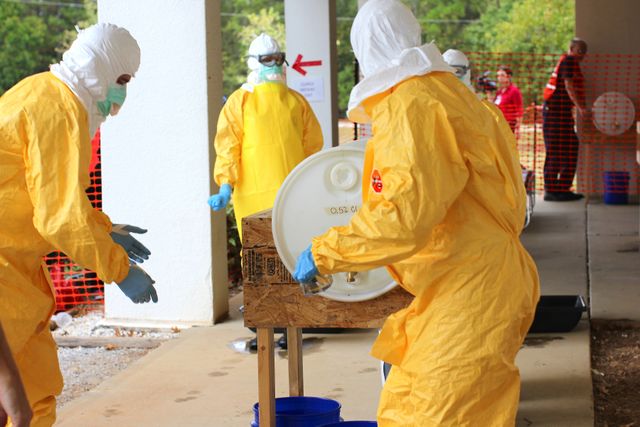
Healthcare settings also require strict protection rules. Frontline workers must wear full personal protective equipment. This includes waterproof coveralls, double gloves, respirators, and face shields. Clinics must use rapid isolation units and chlorine disinfection stations.
The Early Rehydration Rule: Early, aggressive supportive care saves lives. Oral rehydration solutions and intravenous fluids greatly reduce deaths from viral hemorrhagic fevers. Patients need quick care in specialized treatment units. Admitting patients within 48 to 72 hours of first symptoms significantly improves their chance of survival.
When to See a Doctor
Immediate medical evaluation at a designated viral isolation or transit center is mandatory if an individual develops sudden fever, extreme fatigue, muscle aches, or gastrointestinal distress after potential exposure in an active transmission zone.
Initial symptoms typically begin 2 to 21 days (average 8 to 10 days) after exposure and progress through distinct phases:
- Early Phase (Days 1–3): Sudden high fever, chills, profound fatigue, severe headache, sore throat, and muscle pain.
- Gastrointestinal Phase (Days 4–7): Severe abdominal pain, persistent nausea, profuse watery diarrhea, and constant vomiting.
- Late / Severe Phase (Days 7+): Confusion, chest pain, difficulty breathing, spontaneous bruising, bloody stool, vomiting blood, and signs of septic or hypovolemic shock.
To confirm an active infection, reference laboratories perform reverse transcription-polymerase chain reaction (RT-PCR) and enzyme-linked immunosorbent assay (ELISA) on patient blood samples.
Bottom Line
The massive Ebola outbreak in eastern Democratic Republic of the Congo shows a clear danger. Filoviruses can easily return to vulnerable, mobile regions.
The Bundibugyo species drives this outbreak. The disease quickly damages blood vessels and causes severe dehydration. Without prompt medical care, nearly half of infected patients die.
International teams are responding together. They are tracing contacts quickly and enforcing strict safety rules. Early hydration treatment helps patients recover. Health teams hope to stop the virus and protect local communities.
Frequently Asked Questions
Can you survive an Ebola infection?
Yes, with early identification and prompt, aggressive supportive care, including intravenous fluids, electrolyte management, and organ support, many individuals survive and recover from the infection.
Is there an approved vaccine for the Bundibugyo strain of Ebola?
While licensed vaccines (such as ERVEBO) exist and protect effectively against the Zaire strain, there is currently no globally licensed vaccine specifically indicated for the Bundibugyo strain. However, clinical trials for candidate vaccines are actively underway.