




Holiday Stress and Brain Fog: How Chaos Hurts Memory and Focus


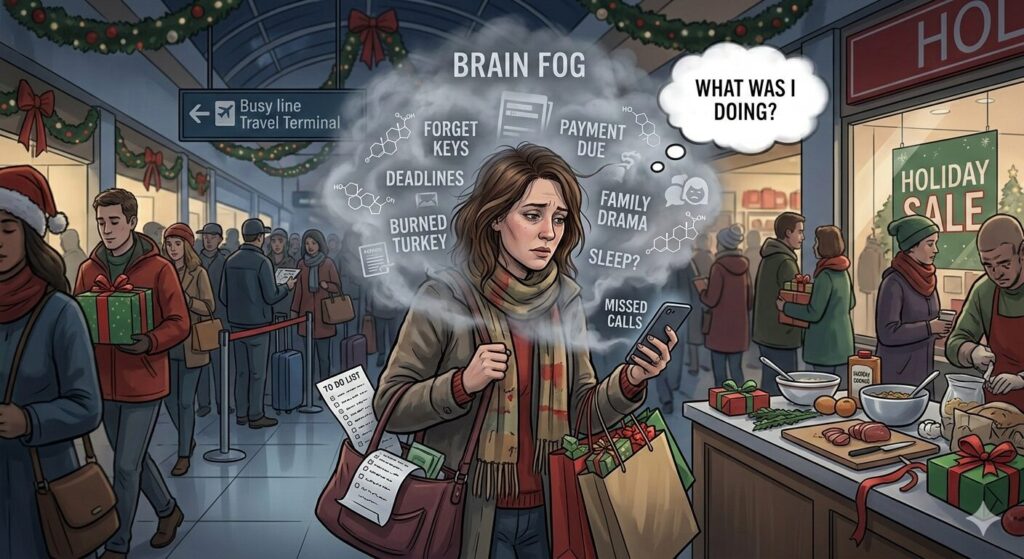
The holiday season is supposed to be a time of joy. Instead, it often feels like an exhausting race. You rush to buy gifts, pack for travel, meet deadlines, and cook for family. In this chaos, you might notice something strange happening to your mind. You forget where you put your keys. You cannot focus on simple tasks. You feel completely exhausted. This feeling is called brain fog. It happens when holiday stress causes real changes inside your body that hurt your memory and concentration. Fortunately, you can fix this. By understanding stress, you can learn simple ways to protect your focus.
What Is Brain Fog?
As the Cleveland Clinic explains, brain fog is not a true medical illness. Instead, it is a simple way to describe a group of symptoms that make thinking difficult. When you have brain fog, your mind feels cloudy. You might experience forgetfulness, making it hard to remember names or plans.
You may also have trouble concentrating on a single task. Mental fatigue is another major factor, leaving you feeling mentally fatigued even without doing any physical work. Your thinking might feel slower. This cloudy feeling is very common for busy working adults, parents trying to make the holidays perfect, and students.
The Science: How Holiday Stress Affects the Brain
Cortisol and the Stress Response
When you feel stressed about a delayed flight or a burning turkey, your body reacts to help you survive danger. It releases a chemical called cortisol. According to the MD Anderson Cancer Center, a little bit of cortisol gives you a quick burst of energy. But if you stay stressed for weeks, your cortisol levels stay too high. Constant stress damages the parts of your brain that control memory and learning.
Impact on the Hippocampus
Deep inside your brain is a small area called the hippocampus. This area is responsible for creating new memories and saving them for later. High levels of stress block this process. Because of this, the National Institutes of Health explains, your brain struggles to store new information or remember things you already know. This is why you might walk into a room and completely forget why you went there.
Sleep Disruption
During the holidays, you stay up late wrapping gifts or talking with friends. Your mind becomes too excited to rest properly. When you do not get enough deep sleep, your brain cannot clean itself or organize your thoughts. This lack of rest greatly reduces your ability to focus and slows down how fast you can process information the next morning.
Why the Holidays Make It Worse
The holidays create a perfect storm for mental exhaustion. First, there is heavy financial pressure. Buying gifts, food, and travel tickets makes you worry constantly about money. Second, there are many social events. Spending time with relatives can create quite a bit of tension that drains your energy. You also tend to schedule too many things, leaving no time to sit quietly.
On top of this, your diet changes. You eat more sugar, drink more alcohol, and rely on extra caffeine to stay awake. Add in the tiredness from long car rides, and your brain has too much to handle. Your mind gets overloaded, making it impossible to think clearly.
Signs Your Holiday Stress Is Hurting Your Brain
It is easy to ignore the signs that your brain is struggling. You might start misplacing everyday items, like your phone, much more often. You might find yourself forgetting conversations you just had. Trying to do two things at once, like cooking while talking, might suddenly feel impossible. You may feel easily annoyed or notice that your mind feels incredibly heavy.
Sometimes, you might feel detached, like you are just watching the holidays happen instead of joining in. Thankfully, this is usually temporary. Once the holiday rush ends, your brain can heal and return to normal.
How to Protect Your Memory and Focus During the Holidays
Prioritize Sleep
The best way to clear your mind is to get 7 to 9 hours of sleep every night. Try to go to bed and wake up at the same time every day, explains the Mayo Clinic. Consistent sleep gives your brain the time it needs to repair itself.
Manage Cortisol Naturally
You can lower your stress chemicals with simple actions. Taking deep breaths when you feel overwhelmed tells your body that you are safe. Light exercise, like taking a short walk after a meal, helps calm your nervous system. Taking small breaks helps prevent stress from building up.
Stabilize Blood Sugar
Eating too many sweet holiday treats can make your energy crash, which makes brain fog worse. Try to limit refined sugar. Eat balanced meals that include protein and fiber to keep your brain energy steady all day long.
Reduce Cognitive Overload
Do not try to keep everything in your head. Write your tasks down on paper or use digital reminders on your phone. Most importantly, learn to say no to events or chores you do not really need to attend or do.
Limit Alcohol and Excess Caffeine
Drinking too much coffee makes you anxious, and alcohol ruins your sleep. Keep these drinks to a minimum to help your mind stay sharp and clear.
When Brain Fog Is More Than Holiday Stress
Usually, your thinking returns to normal after you resume your routine. However, you should pay attention if your symptoms persist long after the season ends. Severe memory problems or major changes in your mood are not normal. Sometimes, brain fog is a sign of a physical illness, such as a thyroid problem or a vitamin deficiency. If your mind stays cloudy, you should visit a doctor.
Bottom Line
It is perfectly normal to feel a little scattered during the busiest time of the year. The holiday season brings extra demands that naturally tire out your mind. Just remember that your brain will recover once the stress goes away. Give yourself permission to rest and set realistic goals for what you can achieve. By making simple, healthy choices, you can easily protect your mental clarity and focus.
Frequently Asked Questions
How long does holiday brain fog last?
It usually goes away within a few days to a few weeks after the busy season ends. Once your stress drops and you return to a normal sleep schedule, your mind will naturally clear up.
Can drinking water help with brain fog?
Yes, your brain needs plenty of water to work its best. Drinking water throughout the day can quickly improve your focus and give you more energy.
Is brain fog a sign of dementia?
No, brain fog caused by stress is temporary and very different from a serious disease like dementia. However, if your memory problems do not go away after you have rested, you should visit a doctor to be safe.
Sources
Cleveland Clinic. Brain fog: Why your mind feels like it’s buffering. Cleveland Clinic. Published May 14, 2024. https://my.clevelandclinic.org/health/symptoms/brain-fog
Dantzer R. 4 things to know about cortisol and stress. MD Anderson Cancer Center. Published December 2, 2024. https://www.mdanderson.org/cancerwise/4-things-to-know-about-cortisol-and-stress.h00-159703068.html
Kim EJ, Pellman B, Kim JJ. Stress effects on the hippocampus: a critical review. Learning & Memory. 2015;22(9):411-416. doi:https://doi.org/10.1101/lm.037291.114
Mayo Clinic. 6 Steps to Better Sleep. Mayo Clinic. Published January 31, 2025. https://www.mayoclinic.org/healthy-lifestyle/adult-health/in-depth/sleep/art-20048379
