




4 Common Foods Linked to Cancer Risk (And What to Eat Instead)


Discover which common foods are linked to higher cancer rates. Learn why processed meats, alcohol, and sugary drinks may increase your risk, and find simple, healthy swaps in this easy-to-read guide.
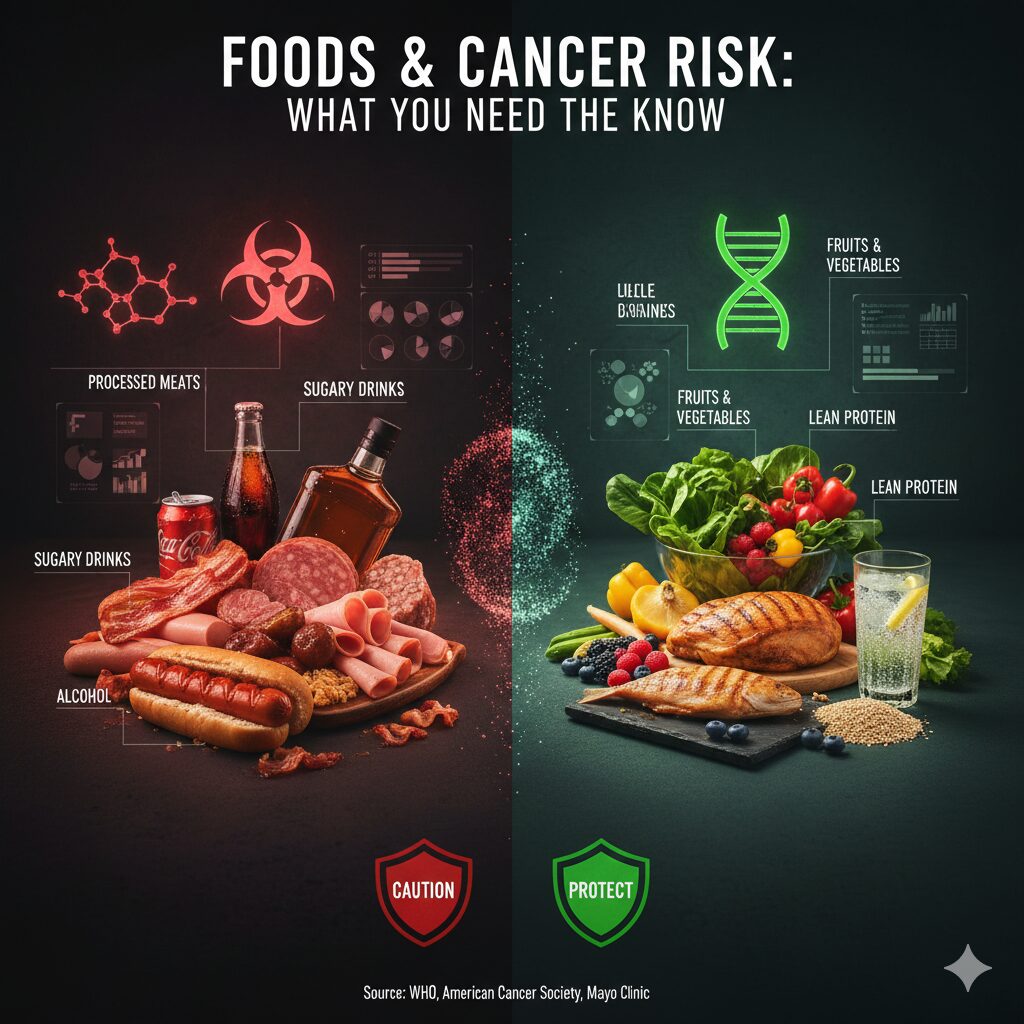
Foods and Cancer Risk: What You Need to Know
We all know that what we eat affects how we feel. But did you know that your diet can also change your risk of developing cancer? While no single food can prevent or cause cancer on its own, research shows that eating certain foods often can increase your risk.
The good news is that you have the power to make healthier choices. Here is a simple guide to the foods you should limit, based on research from the World Health Organization (WHO), the American Cancer Society, and the Mayo Clinic.
1. Processed Meats
If there is one group of foods to watch out for, it is processed meats.
What are they? Processed meat is any meat that has been treated to change its flavor or extend its shelf life. This includes:
- Bacon
- Sausages and hot dogs
- Deli meats (like ham, turkey, and salami)
- Pepperoni
- Beef jerky
Why are they risky? The International Agency for Research on Cancer (IARC) classifies processed meat as a “Group 1 carcinogen.” In simple English, this means there is strong evidence that it causes cancer, specifically colorectal (bowel) cancer. These meats often contain chemicals called nitrates and nitrites, which can damage the cells in your body.
What to do: Try to save these foods for special occasions only. For breakfast, try eggs or oatmeal instead of bacon. For lunch, try leftover roasted chicken or tuna salad instead of deli meat.
2. Red Meats
Red meat is a good source of iron and protein, but eating too much of it can be a problem.
What are they? Red meat includes beef, pork, lamb, and goat.
Why are they risky? The WHO classifies red meat as “probably carcinogenic.” This means it likely increases cancer risk, especially for colon cancer. The risk is lower than with processed meats, but it remains if you eat it often.
What to do: You do not have to give up steak or burgers forever. The American Institute for Cancer Research recommends eating no more than three portions (about 12-18 ounces) of red meat per week. Try swapping a beef burger for a turkey burger, fish, or a bean burger.
3. Alcohol
Many people are surprised to learn that alcohol is strongly linked to cancer.
Why is it risky? When you drink alcohol, your body breaks it down into a chemical that can damage your DNA. This stops your cells from repairing themselves properly. The American Cancer Society warns that alcohol use is linked to cancers of the:
- Mouth and throat
- Liver
- Breast
- Colon
What to do: The less you drink, the lower your risk. It is best to avoid alcohol or drink it only in moderation. This means up to 1 drink a day for women and up to 2 for men.
4. Sugary Drinks and Ultra-Processed Foods
Sugary sodas, energy drinks, and packaged snacks (like chips and cookies) do not usually cause cancer directly. However, they lead to a bigger problem: obesity.
Why are they risky? These foods are high in calories but low in nutrients. Eating them often can lead to unwanted weight gain. Being overweight or obese is a leading cause of at least 13 different types of cancer, according to the CDC. Fat tissue produces hormones that can promote the growth of cancer cells.
What to do: Make water your main drink. If you crave something sweet, try eating a piece of fruit. The fiber in fruit helps your body handle sugar much better than it does in a soda.
Frequently Asked Questions (FAQs)
Q: Can I ever eat bacon or hot dogs again? Yes, you can. The goal is not to be perfect, but to be better. Having a hot dog at a baseball game or bacon on a holiday morning is likely fine. The danger comes from eating these foods every day or several times a week.
Q: Is grilled meat bad for you? It can be. Cooking meat at very high temperatures (like on a charcoal grill) creates chemicals that may increase cancer risk. The Mayo Clinic suggests marinating your meat first and flipping it often to prevent it from burning or charring.
Q: Does sugar “feed” cancer? This is a common myth. All cells in your body, including cancer cells, use sugar (glucose) for energy. Cutting out all sugar will not starve cancer, and eating fruit is healthy. However, eating too much added sugar leads to weight gain, which does increase cancer risk.
Q: Are organic foods better for preventing cancer? Currently, there is no substantial evidence that organic foods prevent cancer better than conventionally grown foods. The most important thing is to eat plenty of fruits and vegetables, whether they are organic or not.
Q: What should I eat to lower my risk? Focus on a “plant-based” diet. This does not mean you have to be a vegetarian. It just means that plants (vegetables, fruits, whole grains, and beans) should cover at least two-thirds of your plate, while meat and dairy should take up one-third or less.
Sources
National Cancer Institute. Red Meat and Processed Meat Consumption. progressreport.cancer.gov. Published March 2024. https://progressreport.cancer.gov/prevention/diet_alcohol/red_meat
Fred Hutch Cancer Center. WHO classifies red meat “probably carcinogenic,” links it to higher colon cancer risk. Fred Hutch. Published October 26, 2015. https://www.fredhutch.org/en/news/center-news/2015/10/red-meat-processed-meat-cancer-risk.html
Rosenbloom C. Does Red Meat Cause Cancer? American Institute for Cancer Research. Published August 23, 2024. https://www.aicr.org/resources/blog/does-red-meat-cause-cancer/
American Cancer Society. Alcohol Use and Cancer. www.cancer.org. Published June 9, 2020. https://www.cancer.org/cancer/risk-prevention/diet-physical-activity/alcohol-use-and-cancer.html
CDC. Obesity and Cancer. Cancer. Published May 13, 2024. https://www.cdc.gov/cancer/risk-factors/obesity.html
Sparks D. Get Grilling With These Tips - Mayo Clinic News Network. Mayo Clinic News Network. Published August 29, 2014. Accessed January 25, 2026. https://newsnetwork.mayoclinic.org/discussion/get-grilling-with-these-tips/



Comments are closed.