




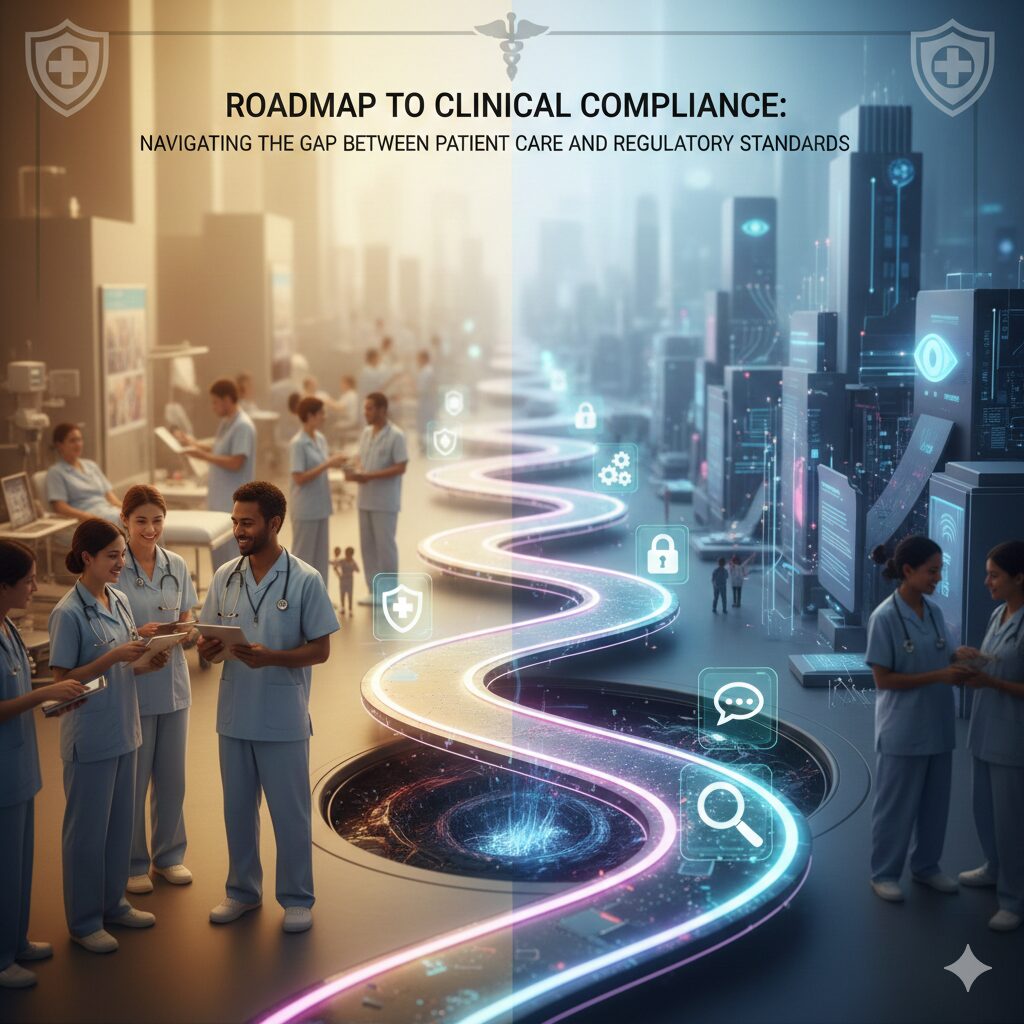
The Roadmap to Clinical Compliance: Navigating the Gap Between Patient Care and Regulatory Standards


Keeping a medical clinic running smoothly is about more than just helping patients feel better. There are also many rules and laws that doctors and nurses must follow. This is called clinical compliance.
Think of compliance like the rules of the road. If everyone follows the speed limit and stops at red lights, everyone stays safe. In a clinic, these rules ensure every patient receives safe, high-quality care every time they visit.
What is Clinical Compliance?
In simple terms, clinical compliance means ensuring your clinic follows all legal and professional standards set by the government and health experts. These rules cover many areas, including:
- How patient information is kept private.
- How clean must the exam rooms be?
- How doctors must write down what happens during a visit.
- The way medicines are stored and given to patients.
When a clinic has a good compliance roadmap, it creates a bridge between the busy world of patient care and the strict world of government regulations.
Why the Gap Exists
It can be hard for healthcare workers to follow every rule perfectly. This is because patient care is fast-paced and unpredictable. A doctor might be so focused on helping a person with a broken bone that they forget to sign a specific form right away.
This “gap” between caring for people and following rules usually happens for three reasons:
- Too Much Paperwork: Doctors and nurses want to spend time with patients, not computers.
- Rules Change Often: The government updates healthcare laws frequently, and it is hard to keep up.
- Lack of Training: Sometimes, staff members do not know that a specific rule has changed.
Closing this gap is important because if a clinic fails to follow the rules, it can face hefty fines or even be forced to close.
Step 1: Put Safety First
The best way to stay compliant is to remember that these rules are actually about safety. For example, the rules about washing hands or cleaning tools are there to stop germs from spreading.
When a clinic sees compliance as a way to protect patients rather than just “extra homework,” the whole team stays more motivated. Every staff member should understand that following the Know Before You Go guidelines for patient communication is not just a suggestion; it’s a way to ensure patients know exactly what is happening with their health and their bill.
Step 2: Protecting Digital Privacy (HIPAA)
In today’s world, most patient records are kept on computers. A considerable part of compliance is following the Summary of the HIPAA Privacy Rule. This law protects your “Protected Health Information” (PHI), which includes your name, address, and medical history.
For a clinic to stay compliant with digital records, it must use “technical safeguards.” This means they use strong passwords, encryption (a way of scrambling data so only the right people can read it), and automatic log-offs to keep your info safe from hackers.
You also have rights under these rules. You can request a copy of your electronic records at any time, and the clinic usually has 30 days to provide it. This digital bridge makes it easier for you to view your health data while keeping it from unauthorized users.
Step 3: Use Better Technology
Old-fashioned paper charts make it very easy to lose information or make mistakes. Modern clinics use digital systems to keep track of everything.
Good software can help bridge the gap by:
- Reminding doctors to fill out mandatory forms.
- Checking that insurance information is correct.
- Safely storing patient records so they do not get lost.
When technology handles the “boring” parts of the rules, doctors can spend more time with their patients and less time staring at a screen.
Step 4: Regular Training
Compliance is not something you learn once and forget. It is a “living” part of the job. Every clinic should hold regular meetings to discuss new rules.
Instead of long, boring lectures, clinics can use “micro-learning.” This means giving the staff tiny bits of information every week. For instance, one week could be devoted to safely handling patient emails. The following week could be about properly labeling lab samples.
Step 5: Simple Communication
One of the most significant parts of clinical compliance is being honest with patients about costs and care. This is especially true when it involves insurance.
Clinics must be clear about which insurance plans they take. If a patient has a specific plan, the clinic should help them understand their Urgent and Emergency Care coverage. This prevents “surprise bills,” which are a significant issue in modern healthcare compliance.
Step 6: Audits and Check-ups
Just like a person goes to the doctor for a check-up, a clinic needs a “compliance check-up.” This is called an audit.
During an audit, someone reviews the clinic’s records to ensure everything is being done correctly. They check to see if:
- All staff licenses are up to date.
- Patient privacy is being protected.
- The facility is clean and safe.
Finding a mistake during a check-up is actually a good thing! It allows the clinic to fix the problem before it hurts a patient or results in a fine.
Helping Patients Save Money Safely
Part of being a compliant clinic is helping patients navigate the costs of care. When clinics are transparent, they often show patients how to negotiate their medical Bills.
This builds trust. A patient who trusts their clinic is more likely to follow their doctor’s advice, which leads to better health outcomes. Compliance and care go hand-in-hand.
Bottom Line
Navigating the roadmap to clinical compliance is not always easy, but it is necessary. By using technology, training staff, and keeping communication simple, clinics can close the gap between rules and care.
When a clinic is compliant, it creates a safe space where patients can focus on getting better, and healthcare professionals can focus on healing. It turns a complicated set of rules into a successful way to deliver the best possible healthcare.
Frequently Asked Questions
- What happens if a clinic fails a compliance audit? If a clinic fails an audit, it is usually given a specific amount of time to fix the mistakes. This might involve retraining staff or updating their computer systems. However, if the problems are dire or remain unfixed, the clinic could face costly fines or lose its license to practice medicine.
- How does clinical compliance protect my personal information? Compliance rules such as HIPAA require clinics to use specialized security tools for digital records. This includes encryption, which hides your data from hackers, and strict regulations on who is allowed to view your file. It ensures that your private health history stays between you and your healthcare team.
- Why do healthcare rules change so often? Rules change because technology and medicine are constantly improving. New laws are frequently passed to keep pace with evolving digital threats (such as cyberattacks) or to make healthcare costs more transparent for patients. Regular training helps clinic staff stay up to date on these changes so they can continue providing safe care.
Sources
Higuera V. 6 Things to Know About Urgent Care Before You Go. Healthline. Published 2022. https://www.healthline.com/health/right-care-right-time/know-before-you-go
U.S. Department of Health and Human Services. Summary of the HIPAA privacy rule. HHS.gov. Published March 14, 2025. https://www.hhs.gov/hipaa/for-professionals/privacy/laws-regulations/index.html
Horizon blue. Urgent & Emergency Care - Horizon Blue Cross Blue Shield of New Jersey. Horizonblue.com. Published 2024. https://www.horizonblue.com/members/education-center/understanding-your-coverage/understanding-your-hmo-plan/your-coverage/urgent-emergency-care
Segarra M, Chang A. Here’s how to eliminate, reduce or negotiate a medical bill. NPR. Published October 16, 2025. Accessed January 4, 2026. https://www.npr.org/2025/10/16/nx-s1-5574356/heres-how-to-eliminate-reduce-or-negotiate-a-medical-bill




Comments are closed.